


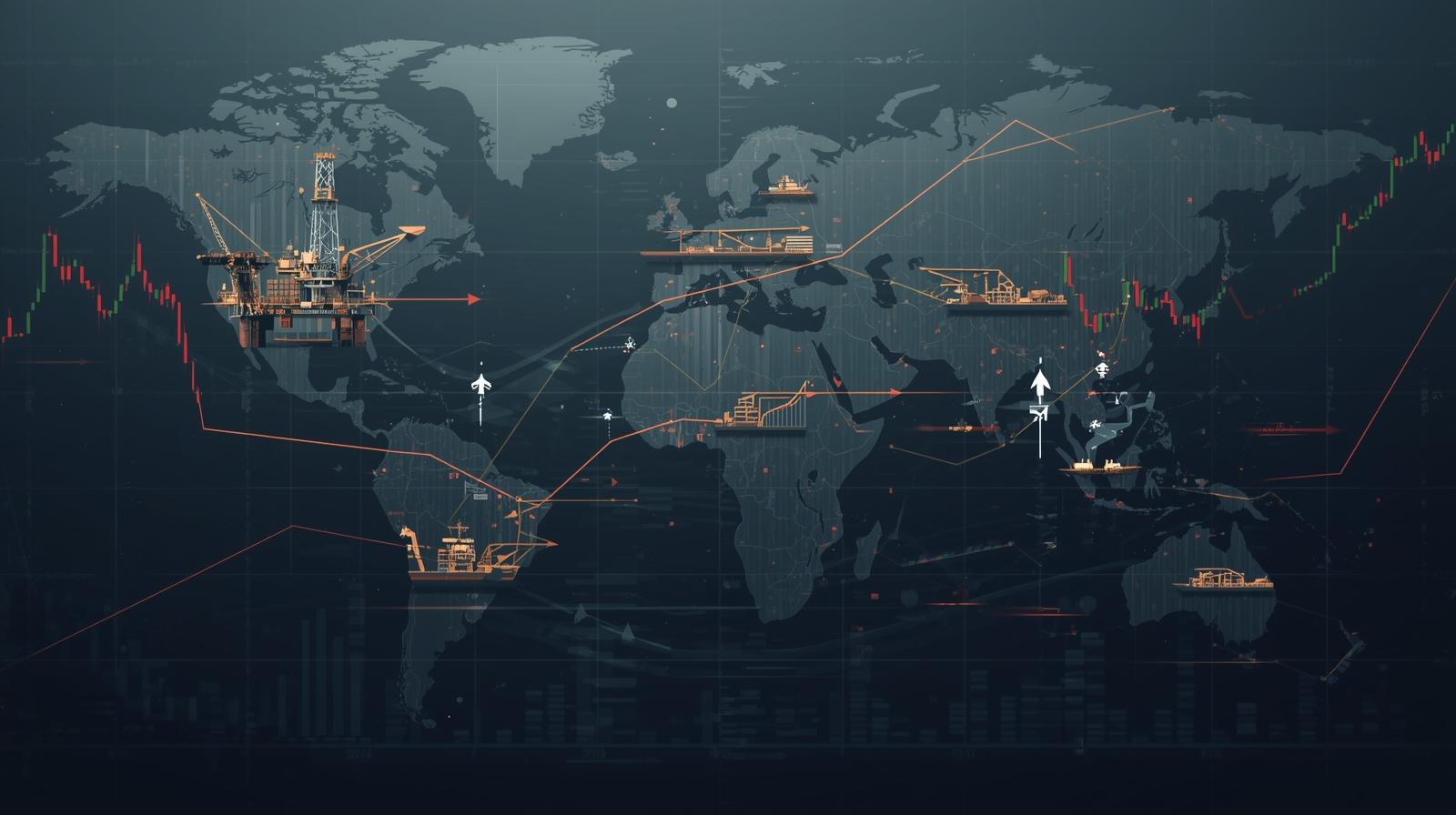
Markets are positioned on edge as conflict in the Middle East escalates, with analysts increasingly framing portfolios around a “war shock” scenario. Recent strikes involving U.S., Israeli, and Iranian forces have heightened concerns about prolonged instability, especially around key global energy conduits like the Strait of Hormuz — a chokepoint essential to roughly 20% of global oil flows.
Risk-Off Mode Takes Hold
Investors are shifting into so-called risk-off postures as uncertainty rises:
- Energy prices are surging sharply as tanker traffic through the Strait of Hormuz collapses and production disruptions mount — Brent crude jumped significantly in response.
- Gold and other safe-haven assets have rallied, a classic flight-to-quality reaction when geopolitical risk spikes.
- Equity markets have seen volatility increase, with cyclical tech stocks underperforming and defensive sectors, like defense contractors, outperforming.
Inflation and Policy Implications
Heightened geopolitical risk carries direct macroeconomic consequences:
- Surging energy costs could drive broader inflation — the European Central Bank has flagged a potential inflation uptick if tensions persist.
- Higher shipping costs and insurance premiums are rippling through global trade networks as maritime insurers withdraw cover for vessels in conflict zones.
For investors — including institutional money that flows into real estate credit and infrastructure — these shifts translate to:
- Higher capital costs if central banks perceive inflation risk rising.
- Potential disconnects between risk appetite and traditional asset allocation, especially in credit markets tied to leveraged mortgages, REITs, and corporate bonds.
Where Investment Sentiment Is Headed: Long-Term Stock Picks for 2026
Even amid geopolitical volatility, brokerages and market strategists are still identifying long-term opportunities, suggesting that parts of the market may be priced attractively for buy-and-hold investors through the end of 2026:
Analysts Highlight Growth and Stability Sectors
Across multiple market research pieces and investment screens:
- Long-term investing guides emphasize growth stocks with strong fundamentals in technology, healthcare, and consumer services as potential 10–20%+ return candidates over multi-year horizons.
- Many analysts point to diversified portfolios or broad index exposure as a core underpinning for long-term wealth creation, especially where individual stock picking involves elevated risks.
Sector Themes Driving Long-Term Potential
Key themes shaping which stocks or sectors might outperform:
- Technology and Innovation Leaders — firms with competitive moats and secular growth tailwinds are core picks for patient investors.
- Healthcare & Industrials — sectors often less sensitive to geopolitical swings and more tied to stable long-term demand.
- Value or “Physical Asset” Stocks — in some markets (notably UK and Europe), investors are rotating toward companies with tangible assets and stable cash flows.
Volatility as Opportunity
While short-term price swings remain elevated, many strategists argue:
- Long-term perspectives capture the compounding benefits of owning companies through volatility rather than reacting to every geopolitical headline.
- Index returns, such as for the S&P 500, are still projected to show meaningful gains over 2026 according to consensus forecasts — reflecting durable fundamentals outside of headline noise.
What This Means for Finance and Capital Markets
1. Funding Costs and Capital Allocation
- Geopolitical risk can increase funding costs across credit markets, pushing banks and institutional lenders to tighten credit standards or demand higher spreads.
- For real estate professionals, this tends to eventually feed into mortgage pricing, cap rates, and investor risk premiums on larger commercial deals.
2. Risk Models Are Being Re-evaluated
- Portfolio managers and banks are increasingly modeling geopolitical shocks alongside macroeconomic variables, with machine learning and risk analytics adjusting exposures in real time.
- This may affect how REITs, mortgage-backed securities, and global property funds are weighted in diversified portfolios.
3. Sentiment and Market Positioning
- Even with elevated risk, capital rotations toward quality and long-duration growth assets signal that many investors are not abandoning risk entirely — just repricing it.
- That reallocation can push capital toward sectors seen as more resilient, including parts of the real estate sector tied to stable cash flows and essential services.
Bottom Line
Global financial markets in early 2026 are being reshaped by geopolitical risk and shifting investor sentiment:
- Short-term volatility is elevated, largely due to geopolitical frictions and energy supply concerns.
- Long-term investment opportunities remain, with analysts identifying sectors and strategies expected to outperform over the horizon toward year-end and beyond.
For real estate professionals watching finance markets, these developments underscore the importance of monitoring capital costs, credit spreads, and investor risk appetite — especially as they influence financing conditions and asset valuations.