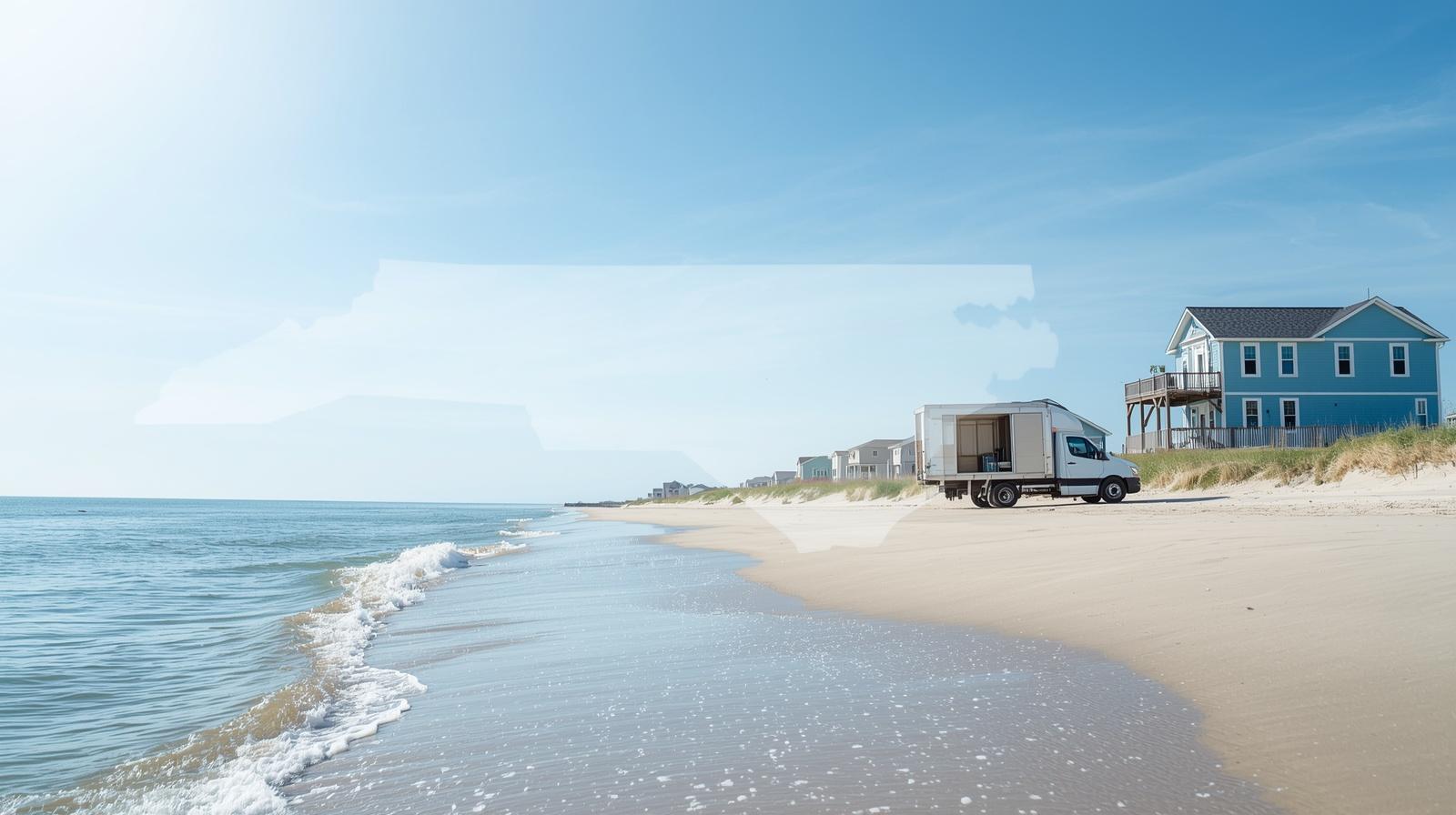
A striking scene recently unfolded on a North Carolina highway: a full-sized beach house, carefully lifted onto a flatbed truck, slowly made its way inland. Traffic backed up as it crossed a narrow bridge, turning heads and drawing attention across social media.
But beyond the spectacle, the story points to something much bigger happening along the state’s coastline.
This wasn’t just a one-time move. It’s part of a growing pattern. In parts of coastal North Carolina, especially along barrier island communities, homeowners are increasingly making the difficult decision to relocate entire houses away from the shoreline. The reason is simple — the risk of keeping them there is rising.
A Changing Reality Along the Coast
The home in question was moved from Holden Beach roughly 14 miles inland. While unusual to see on a highway, moves like this are becoming more common in coastal markets where erosion and storm exposure are intensifying.
In many cases, these relocations are a last attempt to preserve value. Instead of waiting for damage or collapse, some owners are choosing to physically move structures out of harm’s way. Once the home is removed, the original lot is often redeveloped, typically with newer construction designed to better withstand coastal conditions.
This reflects a broader shift in how coastal property is being used, valued, and redeveloped.
Why Homeowners Are Taking Action
North Carolina’s coastline has always been dynamic, but recent years have accelerated the pace of change. Shorelines are retreating in certain areas, and storms — both hurricanes and seasonal systems — are placing more pressure on already vulnerable properties.
For homeowners, the risks are no longer abstract. In multiple cases along the Outer Banks, homes that once sat safely back from the water have gradually been overtaken by erosion. Several have collapsed into the ocean in recent years, sometimes during a single storm event.
That reality is forcing decisions that wouldn’t have been considered a decade ago. Move the home, invest heavily in upgrades, or accept the growing risk of loss.
The Cost of Staying vs. the Cost of Moving
Relocating a house is not a small undertaking. It requires permits, specialized equipment, and a high upfront cost. In many cases, those costs are not covered by insurance, especially when the move is preventative rather than the result of damage.
But for some property owners, the math is changing. As erosion risk increases and insurance premiums climb, the long-term cost of staying in place can outweigh the cost of moving.
In that sense, these relocations are less about convenience and more about preserving long-term value.
A Market That’s Quietly Adjusting
For real estate professionals, what’s happening along the coast is a clear signal that risk is starting to influence pricing more directly.
Buyers are becoming more aware of flood zones, erosion patterns, and insurance requirements. What used to be secondary considerations are now part of the core decision-making process. In some cases, deals are being shaped as much by insurance quotes and environmental risk assessments as by the home itself.
At the same time, developers are adapting. New construction is increasingly designed with elevation, durability, and long-term resilience in mind. In higher-risk areas, redevelopment is often replacing older homes with newer, more expensive builds that can better withstand coastal conditions — at least for now.
Looking Beyond the Coastline
What’s happening in North Carolina isn’t isolated. It reflects a broader shift across the housing market, where environmental risk is becoming a more visible and measurable factor in real estate decisions.
From coastal flooding to storm damage and rising insurance costs, these pressures are starting to shape where people buy, how they invest, and how long they plan to stay in a property.
In North Carolina, the image of a house moving down a highway may seem unusual. But in reality, it’s a visible sign of a deeper transition — one where location is no longer just about lifestyle or views, but also about long-term stability and risk.