


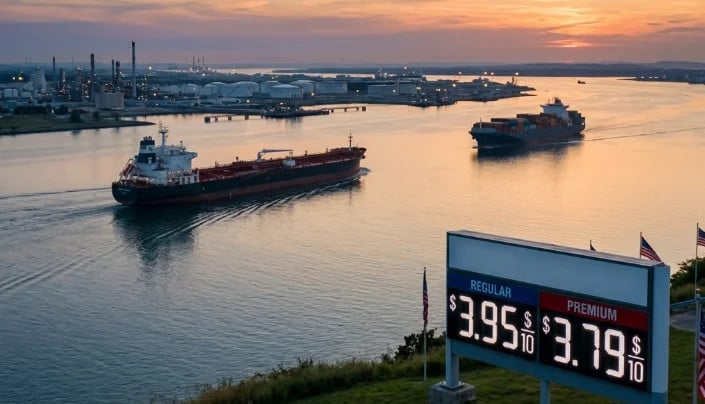
A two-week ceasefire between the United States and Iran, brokered by Pakistan, was officially announced last night. The news immediately reverberated through global markets, offering a much-needed reprieve from the soaring energy costs that have dominated headlines for months. For residents across the country the question isn’t whether this is good news: it’s when that good news will finally show up at the local gas pump.
The conflict pushed retail gas prices to painful levels, with many states seeing averages between $4.30 and $5.00 per gallon. While the diplomatic breakthrough is a significant step toward stability, the relationship between a ceasefire in the Middle East and the price of a gallon of regular in the U.S. is rarely a direct, instant line.
The Immediate Market Reaction
As soon as Reuters and BBC News confirmed that the Strait of Hormuz would be reopened for safe passage, the global oil market responded with a sharp correction. Crude oil prices, which had been trading at significant premiums due to the risk of a full-scale blockade, dropped approximately 15% almost overnight.
West Texas Intermediate (WTI) and Brent crude, the two primary benchmarks, both fell below the $100 per barrel mark. This drop reflects the removal of the "war premium": the extra cost traders add to oil when they fear supply will be physically cut off. The Strait of Hormuz is the world's most important oil chokepoint, and its closure had effectively strangled the flow of energy from the Persian Gulf to the rest of the world.
However, a drop in the price of crude oil is like a drop in the price of flour for a bakery. It doesn’t mean the bread on the shelf gets cheaper five minutes later.

The Reopening of the Strait of Hormuz
The primary driver of the recent price spikes was the restricted access to the Strait of Hormuz. According to CNBC, this waterway handles roughly a fifth of the world’s total oil consumption. When conflict threatens this passage, the entire global supply chain feels the squeeze.
The ceasefire agreement includes a specific provision for the safe passage of tankers. This allows millions of barrels of oil that were essentially "trapped" or diverted to long, expensive routes around Africa to finally reach their destinations. While the physical flow of oil has resumed, it takes time for these tankers to reach refineries, for that oil to be processed into gasoline, and for that gasoline to be distributed to local stations.
Why You Won't See a Drop Yet
If crude oil prices fell 15% this last night, why are you still seeing $4.50 on the sign down the street? This phenomenon is often referred to by economists as "rockets and feathers." Gas prices tend to shoot up like a rocket when news is bad, but they drift down slowly like a feather when news improves.
There are three primary reasons for this lag:
- Inventory Costs: The gas currently sitting in the underground tanks at your local station was purchased by the owner days or even weeks ago at the higher, pre-ceasefire price. Station owners are rarely willing to sell that inventory at a loss, so they wait until they have to refill their tanks with cheaper fuel before lowering their prices.
- Supply Chain Stabilization: The Energy Information Administration (EIA) has noted that it takes time for the logistical ripple effects of a conflict to settle. From shipping insurance rates to refining schedules, the entire system has been in "emergency mode."
- Refinery Transitions: We are currently in April, which is traditionally the time when refineries switch from winter-grade to summer-grade fuel. This transition often involves maintenance shutdowns, which can keep supply tight even if crude oil is plentiful.
The Timeline: How Many Months?
Based on historical data from previous energy shocks and current projections from the EIA and independent market analysts, the timeline for significant relief at the pump follows a specific trajectory.
Months 0–1 (The Current Phase): We are seeing the "geopolitical floor" established. Crude oil has dropped, and wholesale prices are beginning to soften. You might see a slow trickle-down of 5 to 10 cents per gallon as stations compete for business, but the "big" drop hasn't happened yet.
Months 1–2: This is the window where the bulk of the relief usually occurs. As tankers that left the Strait of Hormuz this week begin to arrive at U.S. refineries, the cost of raw materials for fuel stays consistently lower. If the ceasefire holds beyond its initial two-week period, retailers will feel more confident lowering prices to attract customers.
Months 2–3: This is the timeframe for full supply chain stabilization. By early summer, if no new escalations occur, retail gas prices should fully reflect the lower crude oil costs. Experts predict it could take up to 90 days for the market to completely "digest" the impact of the conflict and return to a more normalized pricing structure.

The Geopolitical Floor Concept
It is important to manage expectations regarding a return to "cheap" gas. Analysts warn of a "geopolitical floor": a price level that the market refuses to drop below because the underlying tension hasn't been permanently resolved.
Because the ceasefire is currently a two-week window brokered by Pakistan, there is still a high level of uncertainty. Markets hate uncertainty. As long as there is a risk that the Strait could be closed again, oil traders will keep a small "risk premium" baked into the price. We may not see prices return to where they were two years ago, but we will certainly move away from the emergency highs seen during the peak of the tension.
Practical Impact: What This Means for You
Energy prices don't just affect your commute; they impact the entire economy, including the real estate market. High gas prices act like a hidden tax on every household, reducing the amount of money people have for mortgages, renovations, or savings.
For Homeowners
Lower fuel prices mean lower costs for home services. Whether you are hiring a landscaper or a contractor for a major project, their overhead: and therefore your quote: is influenced by fuel costs. Now is a great time to review your home maintenance checklist and see what projects might become more affordable as transport and material costs stabilize. You might also consider creating a more energy-efficient home to protect yourself against the next inevitable price swing.
For Buyers
If you've been looking at homes further away from city centers: perhaps looking for that perfect spot where you can love nature but still need wifi: lower gas prices make those commutes much more palatable. High energy costs often cool buyer demand for outlying areas; a drop in prices could reignite interest in those markets.
For Sellers
Improved consumer sentiment is a powerful driver for the real estate market. When people feel less "squeezed" at the pump, they feel more confident making large life changes, like selling their current home. If you're wondering if now is the right time to sell, the stabilizing energy market is a point in your favor. Just make sure you know how to maximize your home's value before you hit the market.
For Investors
For those into multifamily or short-term rentals, utility costs and shipping for renovation materials are major line items. A ceasefire and the resulting drop in oil prices can help protect your margins. This is especially relevant if you are deciding whether to renovate or relist in the current environment.
For Realtors
Lower gas prices mean more people out touring homes. It also means lower marketing costs for those who rely on physical travel for staging and showings. It’s a good time to sharpen your real estate marketing tips and get ready for an uptick in activity.
What to Watch Moving Forward
While the April 2026 ceasefire is a massive win for diplomacy and the global economy, the situation remains fluid. To understand where gas prices: and by extension, your household budget: are headed, keep an eye on these three factors over the next 60 days:
- The Duration of the Truce: The initial agreement is for two weeks. If Pakistan can help extend this into a long-term peace framework, we will see the most significant and sustained drop in prices.
- Refinery Output: Watch for reports on U.S. refinery capacity. If refineries can stay online and transition smoothly into the summer months, the price drop will happen faster.
- Infrastructure Health: There are reports of minor damage to oil infrastructure in the region. If repairs happen quickly, supply will return to 100% sooner than expected.
The "hidden costs" of geopolitical conflict are often felt most at the kitchen table. For more on managing your finances in an unpredictable economy, check out our guide on the hidden costs of homeownership.
A Realistic Outlook
We are moving in the right direction. The 15% drop in crude is the lead indicator that relief is coming. However, don't expect the numbers on the sign at your local station to change by 50 cents overnight.
Expect a slow, steady decline over the next 30 to 90 days. By June, we should have a much clearer picture of whether the "war premium" is gone for good or if we are simply in a temporary lull. For now, the reopening of the Strait of Hormuz is a signal that the worst of the 2026 energy crisis may be behind us. Stay informed, keep an eye on the headlines from Reuters and the EIA, and plan your summer budgets with a bit more optimism than you had last month.