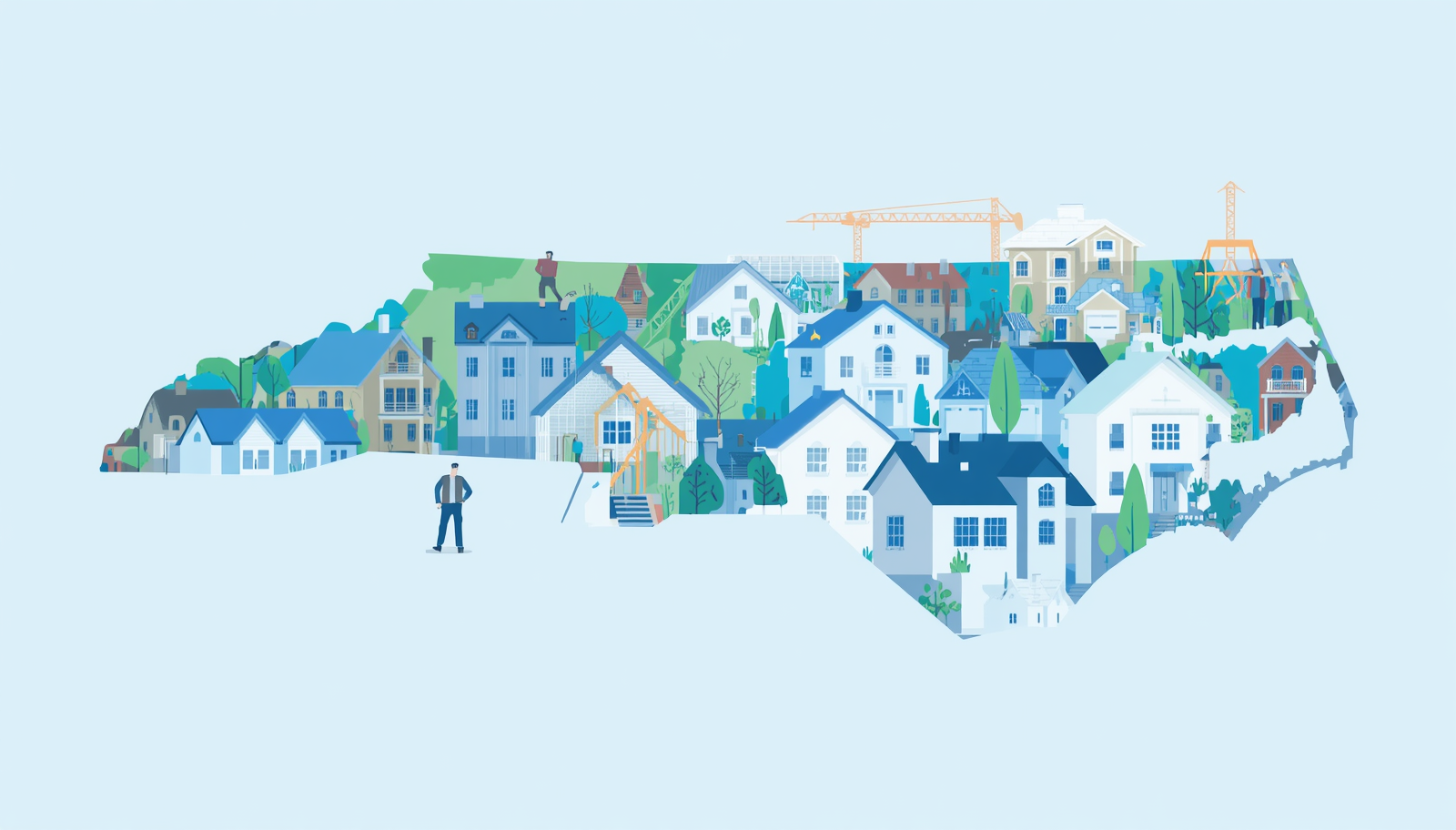
A new report from the University of North Carolina system is drawing attention to a growing issue that could quietly shape the state’s real estate market in the years ahead: North Carolina isn’t producing enough graduates to meet the demands of its rapidly expanding economy.
According to the UNC System’s latest Workforce Alignment Report, the state needs to generate an additional 5,000 to 10,000 degrees each year to keep up with employer demand — particularly in high-growth fields like healthcare, engineering, and education.
At first glance, this might seem like a workforce or education issue. But in reality, it has direct implications for housing demand, development patterns, and long-term market stability across the state.
A Fast-Growing Economy Outpacing Its Workforce
North Carolina has been one of the fastest-growing states in the country, attracting businesses, new residents, and investment across major metros like Raleigh, Durham, and Charlotte.
But that growth is starting to create friction.
State officials say the economy is expanding faster than the local workforce can keep up. In practical terms, that means companies are creating jobs faster than the state is producing qualified workers to fill them.
So far, North Carolina has been able to bridge that gap by attracting talent from other states and even internationally. But relying on migration alone isn’t seen as a long-term solution. Expanding in-state education and workforce training is becoming increasingly important to sustain economic momentum.
Why This Matters for Real Estate
The connection between workforce trends and housing isn’t always obvious — but it’s critical.
Housing demand is fundamentally tied to employment. When companies grow and hire, people move into the area, creating demand for homes, apartments, and rental properties. But when there aren’t enough workers available locally, that growth can slow.
In some cases, businesses may delay expansion plans or choose other markets where talent is more readily available. That can reduce the pace of job creation — and, by extension, the pace of housing demand.
In high-growth regions like the Triangle and Charlotte, where housing markets have been fueled by job expansion, this dynamic becomes especially important.
A Structural Issue, Not a Short-Term Problem
What makes this situation notable is that it’s not just a temporary imbalance.
The report highlights ongoing gaps in several key sectors. Engineering, education, accounting, and nursing are among the fields where degree production is falling short of demand.
At the same time, demographic trends could make the issue more challenging. High school graduation rates in the state are expected to peak around 2025–2026 and then begin to decline, potentially reducing the pipeline of future college graduates.
That creates a scenario where demand for skilled workers continues to rise, while the supply of new graduates may tighten.
What the State Is Doing About It
North Carolina is already taking steps to address the gap.
The UNC System has begun investing in expanding programs tied to high-demand fields. For example, nearly $29 million has been allocated to expand nursing programs across multiple universities, a move aimed at addressing one of the most urgent shortages.
There are also discussions around accelerating degree pathways, improving alignment between education and job demand, and creating more flexible training programs designed to get workers into the labor force more quickly.
These efforts reflect a broader strategy: not just increasing the number of graduates, but ensuring those graduates are entering fields where demand is strongest.
The Real Estate Ripple Effect
For real estate professionals, the implications of this trend are subtle but significant.
If workforce shortages persist, they could influence where and how quickly housing demand grows. Markets that successfully attract and retain talent may continue to see strong demand, while others could experience slower growth.
At the same time, the ongoing need for workers reinforces the state’s broader growth story. North Carolina isn’t struggling with a lack of opportunity — it’s struggling to keep up with it.
That distinction matters. It suggests that long-term housing demand is still supported by strong economic fundamentals, even if short-term growth may face occasional constraints.
A Market Still Supported by Growth
Despite the workforce gap, the overall outlook remains positive.
The fact that North Carolina needs thousands more graduates each year is, in many ways, a sign of economic strength. It reflects a state where industries are expanding, jobs are being created, and demand for skilled labor remains high.
For housing, that typically translates into continued demand — especially in regions tied to major employment centers.
The challenge moving forward will be balance: ensuring that workforce development keeps pace with economic growth so that housing demand can remain steady and sustainable.