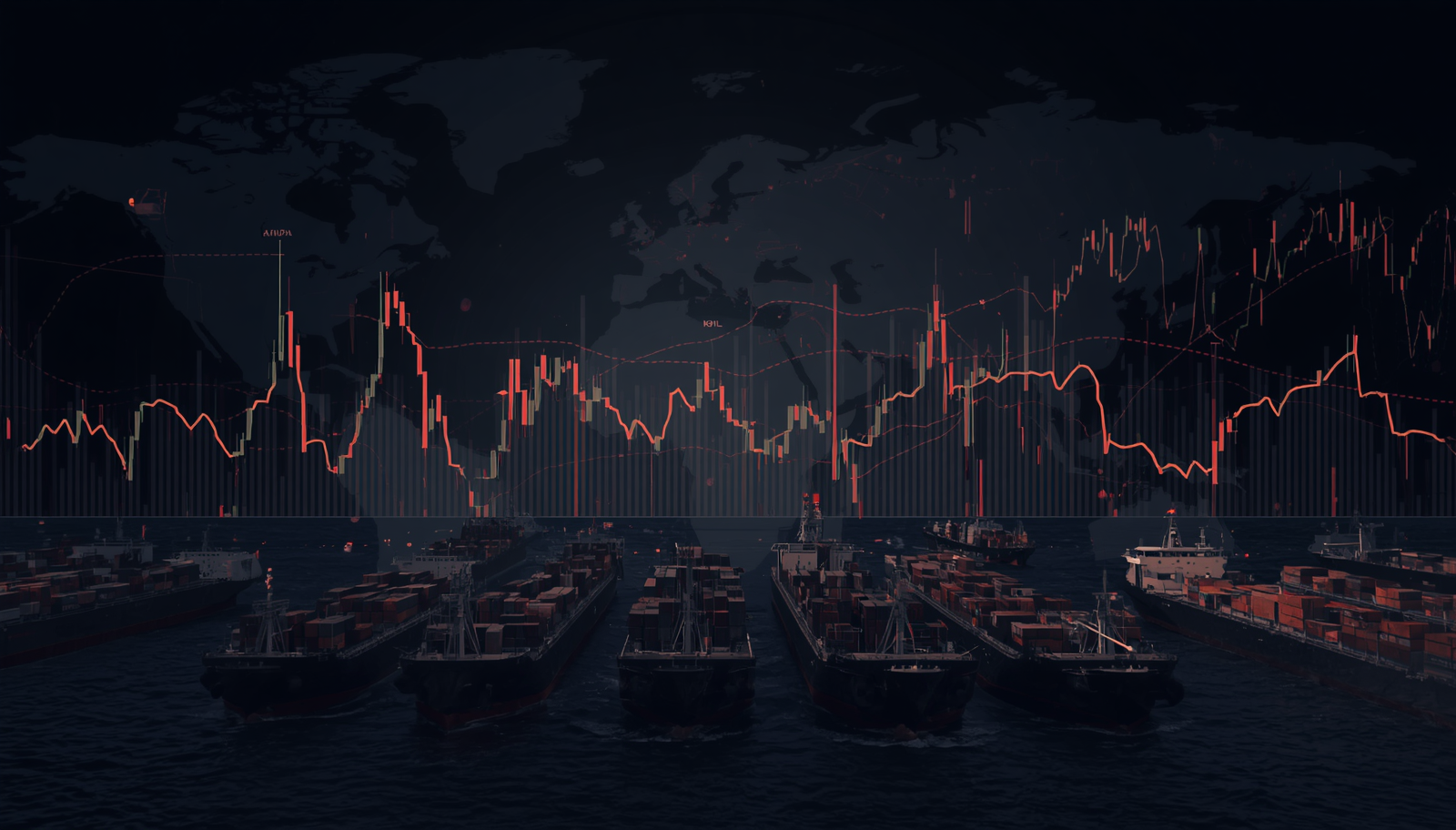
Global markets reacted with volatility this week as investors struggled to interpret what the Iran ceasefire actually means—and whether it will hold.
At first glance, the ceasefire between the U.S. and Iran should have brought stability. Instead, it has exposed just how fragile the situation remains. Oil prices surged, stock markets wavered, and economic forecasts were downgraded, signaling that the global economy is far from out of danger.
A Ceasefire in Name, Not in Stability
While the ceasefire temporarily halted direct escalation, key issues remain unresolved—most importantly, the Strait of Hormuz, one of the world’s most critical energy routes.
Despite the agreement, the strait is still effectively restricted, with hundreds of ships delayed and limited oil flows continuing. This bottleneck has kept energy markets under pressure, pushing Brent crude close to $100 per barrel and U.S. oil prices even higher.
The result is a paradox: even as fighting pauses, the economic consequences of the conflict are still intensifying.
Oil Prices Are Driving Everything
Energy markets are at the center of the current instability.
Oil initially dropped sharply when the ceasefire was announced, reflecting optimism that supply would normalize. But that optimism quickly faded. Prices rebounded within hours as it became clear that supply disruptions were still in place and could persist.
Analysts now warn that continued delays in restoring oil flows could push prices even higher, especially if tensions flare again or negotiations stall.
This matters far beyond energy markets. Oil prices feed directly into inflation, transportation costs, and overall economic growth—making them one of the most powerful forces shaping global markets right now.
Stock Markets Turn Volatile
Equity markets have mirrored the uncertainty.
After an initial rally following the ceasefire announcement, global stocks quickly turned choppy. U.S. and European markets opened lower, while Asian markets showed mixed performance as investors reassessed the situation.
The core issue is not whether a ceasefire exists—it’s whether it can last. Continued military activity in surrounding regions and conflicting claims of violations have made investors cautious, leading to rapid swings in sentiment.
This kind of volatility reflects a broader shift: markets are no longer reacting to headlines alone, but to the credibility and durability of geopolitical developments.
Economic Outlook Is Already Being Downgraded
Perhaps the most significant takeaway is how quickly the economic outlook is changing.
The International Monetary Fund has warned that the conflict will leave lasting damage on the global economy, even if peace is eventually secured. Growth forecasts for 2026 are already being revised downward, reflecting weaker momentum and higher costs across multiple sectors.
Recent U.S. data also points to slowing economic activity, with weaker growth figures and rising jobless claims adding to concerns.
In other words, the economic impact of the conflict is no longer hypothetical—it is already happening.
A Ripple Effect Across Industries
The instability is spreading beyond financial markets into real-world industries.
Airlines are cutting or reducing flights across the Middle East due to safety concerns and rising costs. Energy-intensive industries are facing higher operating expenses. Even major investment projects are being paused as companies reassess risk and cost structures.
These ripple effects highlight how interconnected today’s global economy has become. A disruption in one region—especially one tied to energy—can quickly cascade across multiple sectors worldwide.
Uncertainty Is the Real Risk
The most important takeaway from this moment isn’t just higher oil prices or falling stocks—it’s uncertainty.
Markets can adapt to high prices. They can adjust to slower growth. But uncertainty makes planning difficult for businesses, investors, and consumers alike.
Right now, the ceasefire has reduced the risk of immediate escalation, but it has not restored confidence. Investors are still questioning whether the agreement will hold, whether supply chains will normalize, and whether the global economy can stabilize in the months ahead.