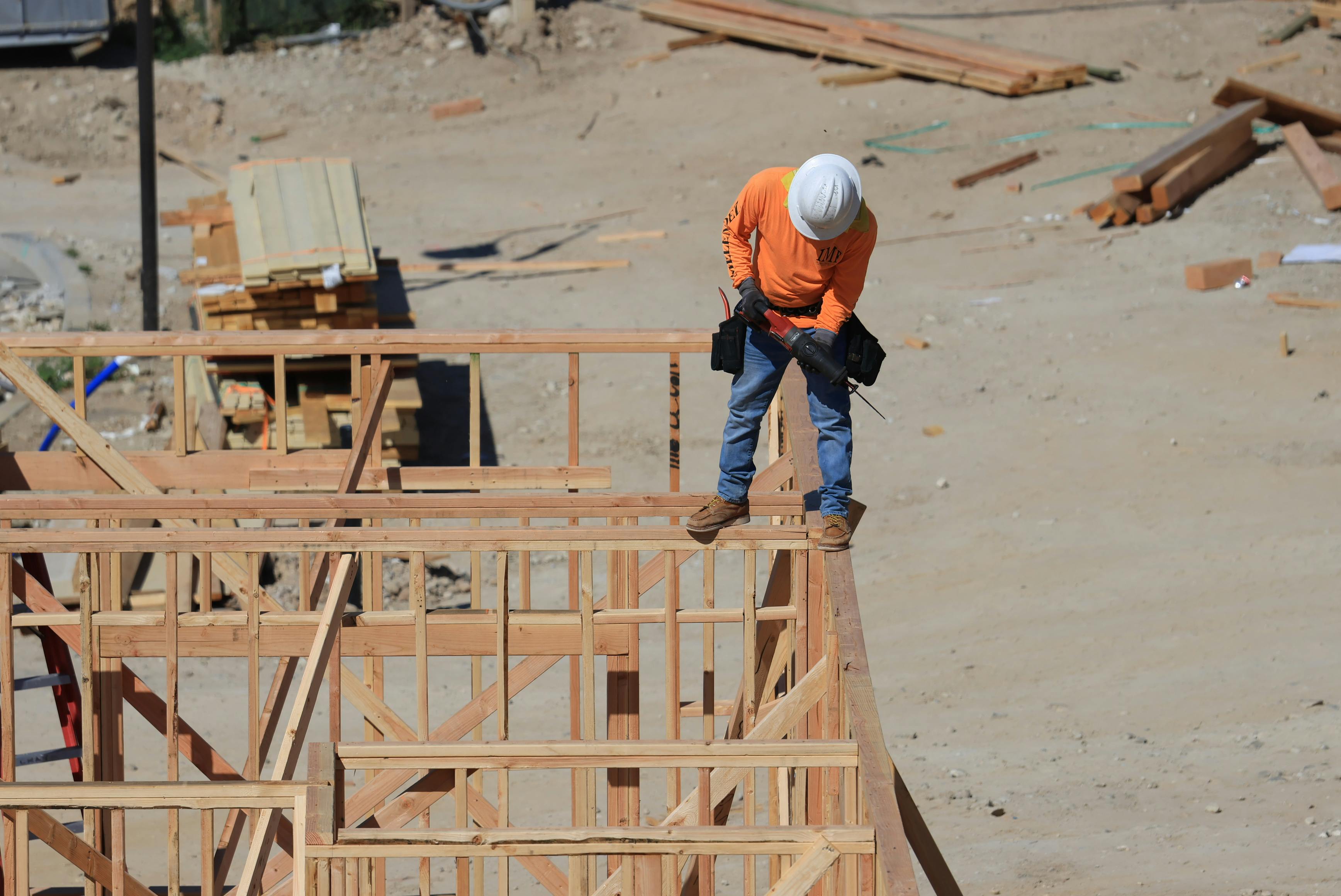
Confidence among U.S. homebuilders has taken a notable hit at a critical moment for the housing market, signaling that the supply side of housing may be weakening just as the spring buying season begins.
According to the latest data from the National Association of Home Builders (NAHB), builder sentiment fell to a seven-month low in April, with the Housing Market Index dropping four points to 34. That level is well below the neutral benchmark of 50, indicating that more builders view market conditions as poor rather than good.
This decline is significant not just because of the number itself, but because of what it represents. Builder confidence is widely considered a leading indicator for the housing market. When sentiment drops, it often points to slower construction activity, fewer new homes coming to market, and tighter supply in the months ahead.
A Market Losing Momentum at the Wrong Time
The timing of this drop is particularly important.
Spring is typically the busiest and most important season for homebuilding and home sales. Earlier in the year, there were signs that the housing market might regain momentum, with builders expressing cautious optimism.
That optimism has now faded.
Instead of accelerating into the spring season, builders are pulling back as economic uncertainty intensifies and demand becomes less predictable.
This shift suggests that the housing recovery many were expecting in 2026 is far from guaranteed.
Rising Costs Are Squeezing Builders
One of the biggest pressures facing builders right now is cost—and it’s rising quickly.
Fuel prices have surged by roughly 35% since the start of the Iran conflict, driving up the cost of transporting materials and operating construction sites.
These increases are cascading through the entire construction process. Nearly two-thirds of builders report higher material costs, while a large majority say it has become increasingly difficult to price homes accurately due to ongoing volatility.
Higher costs don’t just impact builders—they ultimately get passed on to buyers, further worsening affordability in an already expensive housing market.
Mortgage Rates and Demand Are Adding Pressure
At the same time, demand is being affected by higher borrowing costs.
Mortgage rates, which had dipped earlier in the year, have climbed back into the mid-6% range as inflation concerns and global instability pushed bond yields higher.
This has made buyers more cautious, reducing traffic to new-home developments and weakening sales expectations among builders. All three major components of the builder sentiment index—current sales, future expectations, and buyer traffic—declined in April.
The result is a market where both sides are under pressure: builders are facing higher costs, while buyers are facing higher monthly payments
Economic Uncertainty Is Freezing Decision-Making
Beyond costs and rates, a broader issue is weighing on the market: uncertainty.
The ongoing geopolitical tensions tied to the Iran conflict have contributed to rising energy prices, inflation fears, and declining consumer confidence.
For builders, this makes planning new projects more difficult. For buyers, it creates hesitation around major financial decisions like purchasing a home.
This combination is slowing activity across the housing market, even as underlying demand remains.
A Warning Sign for Housing Supply
The drop in builder confidence is more than just a short-term reaction—it’s a warning signal.
When builders lose confidence, they often:
- Delay or cancel new projects
- Scale back construction plans
- Focus on reducing risk rather than expanding supply
That behavior can lead to fewer new homes entering the market in the future, which in turn keeps inventory tight and prices elevated.
In other words, even as demand slows, supply may not improve—creating a persistent imbalance.