



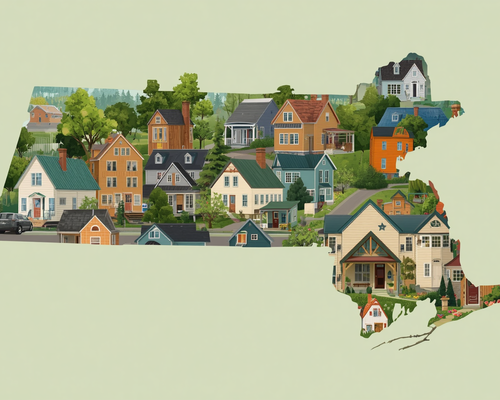
Massachusetts is doubling down on a new strategy to combat the state’s housing shortage, putting up millions of dollars to encourage homeowners to build accessory dwelling units, or ADUs, also known as backyard homes.
The effort is becoming a more important part of Massachusetts’ overall push to expand housing options and ease affordability pressures that have pushed home ownership out of reach for many residents, state officials said. The program, supported by a $10 million state investment, will assist homeowners in creating smaller independent living spaces on existing residential properties, increasing the housing supply without the need for large developments.
The move comes as Massachusetts continues to struggle with some of the highest housing costs in the nation. Home prices remain high in many parts of the state, especially in communities surrounding Boston, where tight supply and strong demand have kept affordability under pressure. With the widening gap between supply and demand, state leaders are increasingly aware that traditional housing construction may not be enough and are exploring alternative housing solutions.
The state’s ADU program has already approved more than 1,200 applications, and there are hundreds more in the pipeline as homeowners consider ways to add living space on their properties. Both builders and housing professionals are reporting increasing demand for one-bedroom as well as two-bedroom units, indicating a broad spectrum of housing needs throughout the Commonwealth.
In addition to affordability, these units are providing practical solutions for many families. Some homeowners are using ADUs to house aging parents close to family members, while others are creating independent living spaces for adult children, caregivers, or people with disabilities. Smaller units are a flexible way to add to the housing stock while preserving the character of existing neighborhoods, housing advocates say.
The administration of Gov. Maura Healey has prioritized ADUs in the state’s housing plan, considering them some of the fastest ways to create new housing opportunities without the lengthy approval process that can often be associated with larger residential projects. The state has also offered incentives for design projects to make it easier and less expensive for homeowners who want to participate.
The rising popularity of ADUs is a sign of a broader change underway in Massachusetts housing policy. Increasingly, policymakers are turning to smaller, incremental types of housing growth that can be integrated into existing communities, rather than just big apartment complexes and sprawling subdivisions.
There’s no one program that will fix Massachusetts’ housing shortage, but state officials see ADUs as an important part of the solution to expanding housing opportunities and providing more affordable options in a market that is still tough for so many residents. With affordability still a hot topic among homebuyers, renters, developers, and policymakers, the state’s investment in backyard housing is turning into one of the most-watched housing initiatives of 2026.
Discussion
Thoughts from readers and local market watchers.