



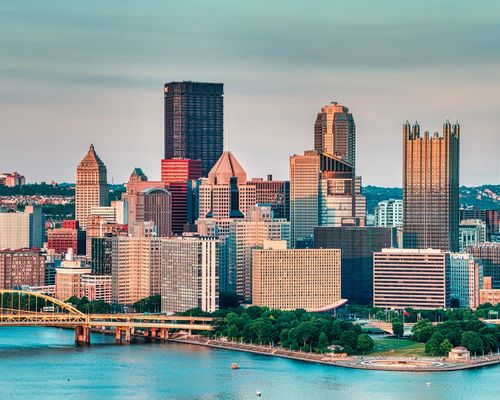
Downtown Pittsburgh's transformation continues to gain momentum, with another office building now poised to become part of the city's growing residential revival.
Developers are exploring plans to convert the upper floors of 610 Smithfield Street, a recently acquired office and retail property overlooking Mellon Square, into new apartments. While the proposal is still in its early stages, it represents another example of how Pittsburgh is reimagining aging commercial buildings to meet today's housing needs while bringing more people back into the heart of downtown.
The four-story building has long occupied a prominent location in the city's central business district. Rather than simply maintaining the property as traditional office space, the new ownership group is evaluating a mixed-use vision that would introduce residential units above the existing retail space. Plans being considered also include a rooftop hospitality venue, adding another destination for residents and visitors while helping create a more active streetscape beyond normal business hours.
The proposal comes at a time when office-to-residential conversions are becoming one of the defining trends in urban redevelopment. As remote and hybrid work continue reshaping office demand across the country, many cities are looking for ways to breathe new life into underused commercial buildings. Pittsburgh has embraced that opportunity, recognizing that adding more residents downtown can strengthen local businesses, support restaurants and retailers, and create a more vibrant, walkable community.
This project also aligns with Pennsylvania's broader $600 million downtown revitalization initiative, which encourages communities to redevelop older office buildings into housing and mixed-use destinations. State leaders have increasingly emphasized adaptive reuse as a practical way to address both downtown vacancies and the growing demand for housing without requiring large-scale greenfield development.
For Pittsburgh, projects like 610 Smithfield Street represent more than individual building renovations. They are part of a larger strategy to reshape the city's downtown for the next generation. By introducing new housing into the urban core, city leaders hope to create neighborhoods that remain active throughout the day and evening, supporting sustained economic activity rather than relying primarily on traditional office workers.
The redevelopment also reflects changing market realities. Many older office buildings were designed for a workplace environment that has evolved significantly over the past several years. Converting suitable properties into residential space offers owners an opportunity to reposition aging assets while helping address one of Pennsylvania's most pressing challenges—expanding housing supply in desirable locations.
Although the proposal remains under evaluation and final development plans have not yet been announced, the project is another encouraging sign that investment in Downtown Pittsburgh continues despite broader challenges facing commercial real estate.
As Pennsylvania communities search for creative ways to address housing shortages while revitalizing downtown districts, projects like 610 Smithfield Street are becoming increasingly important examples of how existing buildings can be transformed to meet the needs of today's residents and tomorrow's economy.
Discussion
Thoughts from readers and local market watchers.