



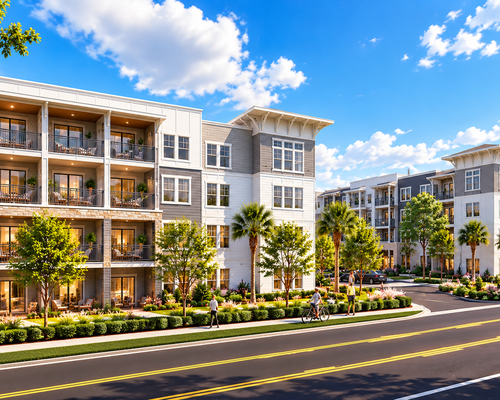
South Carolina’s Lowcountry continues to attract residential investment as Mandrake Capital Partners’ 200-home build-to-rent community in Bluffton has reached stabilization, marking a significant milestone for the development.
The community features detached three- and four-bedroom rental homes, offering residents more space and privacy than traditional apartments. Homes include features such as screened porches and private fencing, appealing to renters who want the feel of a single-family home without the financial commitment of purchasing one.
According to BTR List, the stabilization milestone highlights the development’s progress in the growing single-family rental market. While specific occupancy figures were not provided, stabilization generally indicates that a property has reached a targeted level of occupancy and operational performance.
Why Build-to-Rent Is Attracting Investors
Build-to-rent communities are becoming an increasingly important part of the housing market. Rather than constructing homes for immediate sale, developers build entire neighborhoods specifically for renters.
The approach offers potential advantages for both residents and investors. Renters can access private outdoor space and additional bedrooms without a down payment, while property owners can manage multiple rental homes within one community.
The model may appeal to families, relocating professionals and households that want more space but are not ready to buy. However, rental affordability remains a key factor, particularly in markets where housing costs and mortgage rates make homeownership more difficult.
What It Means for Bluffton’s Housing Market
Bluffton’s continued residential growth is creating opportunities for different types of housing development. Alongside traditional subdivisions and apartment complexes, build-to-rent communities offer another option for residents seeking flexibility.
For real estate professionals and investors, the development underscores the importance of watching the single-family rental sector alongside the for-sale housing market. These communities can broaden rental choices, although their impact on affordability depends on rental prices, household incomes and the supply of competing properties.
The project’s stabilization is another sign of investment activity in the Lowcountry. Future growth in the build-to-rent sector will depend on renter demand, construction costs, financing conditions and developers’ ability to offer homes at prices local households can afford.
Discussion
Thoughts from readers and local market watchers.