


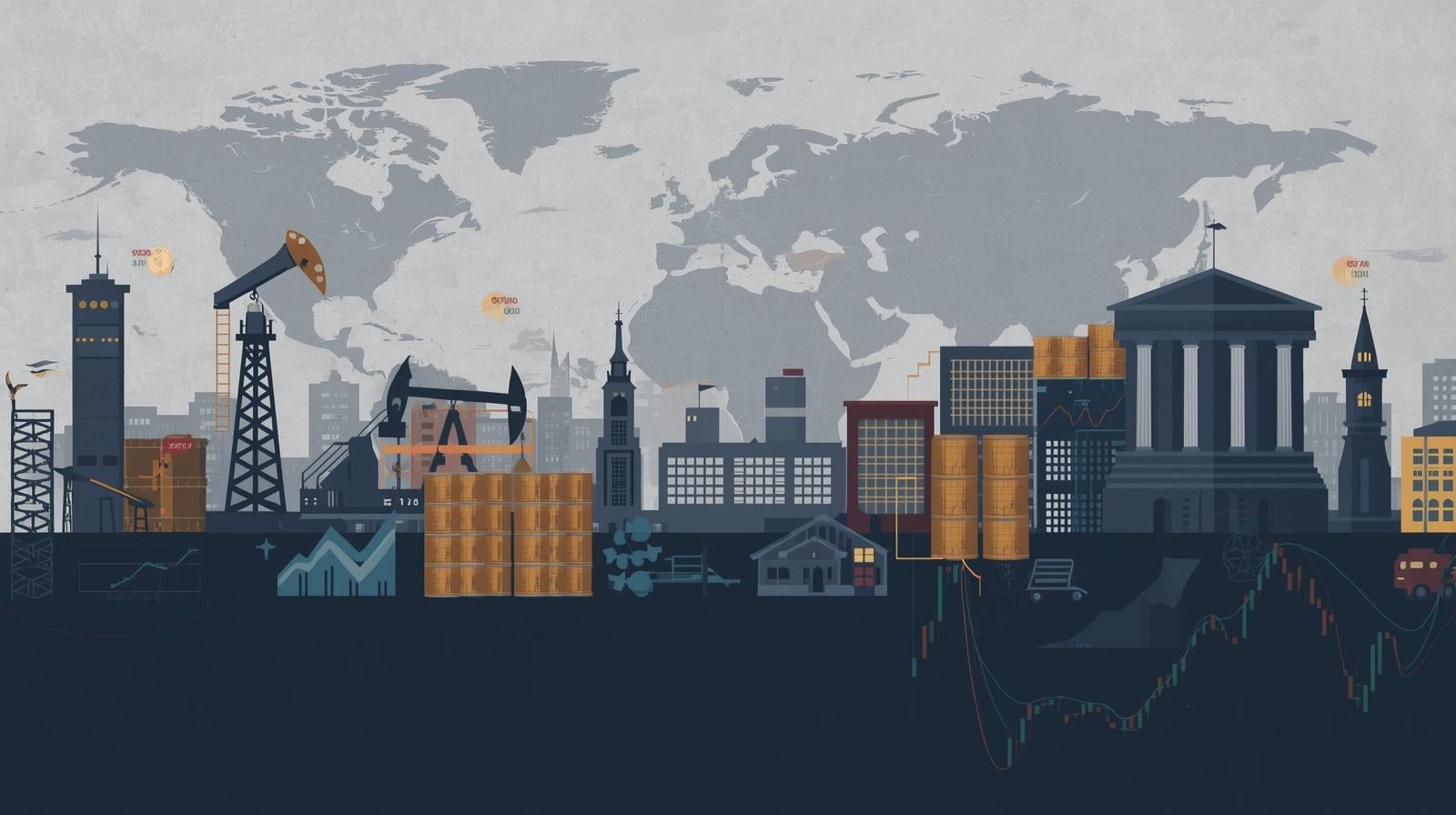
Central banks in Europe are closely monitoring the economic fallout from rising energy prices and growing volatility in global financial markets. Policymakers at the European Central Bank (ECB) say that sharp market swings tied to the Middle East conflict and surging oil prices could amplify economic shocks across the euro-zone economy.
The warning comes at a time when energy prices have climbed significantly in 2026 amid geopolitical tensions. Oil prices have risen sharply since the start of the year, fueling concerns that inflation pressures could return even as economic growth slows in parts of Europe.
Market Volatility and Economic Risks
ECB Vice President Luis de Guindos said that financial market volatility can intensify economic disruptions by magnifying the effects of external shocks. Rapid swings in asset prices, currencies, and energy markets can quickly spread through financial systems, making it harder for policymakers to assess the true state of the economy.
Such volatility can affect a wide range of economic indicators, including investment activity, consumer spending, and borrowing costs. When markets become unstable, businesses may delay investment decisions, and banks may tighten lending standards, potentially slowing economic growth.
For central banks, these conditions make forecasting much more difficult. Policymakers must consider multiple potential scenarios for growth and inflation as global economic risks evolve.
Energy Prices Driving Policy Concerns
A key driver of the current uncertainty is the surge in oil prices linked to geopolitical tensions in the Middle East. Energy costs have historically played a major role in inflation trends across Europe because the region relies heavily on imported energy.
ECB officials warn that sustained increases in oil and gas prices could push inflation higher and complicate monetary policy decisions. A prolonged energy shock could also weaken economic growth, creating a difficult balancing act for policymakers.
While energy-driven inflation spikes are sometimes temporary, central bankers remain cautious because similar shocks in the past eventually spread into broader consumer prices and wages.
ECB Taking a “Wait-and-See” Approach
Despite the growing risks, ECB policymakers have signaled that they are not planning immediate interest-rate changes. Instead, they are closely monitoring market developments and analyzing how energy prices and financial conditions evolve before making policy adjustments.
Officials emphasize that monetary policy decisions will remain data-driven. If inflation expectations begin to rise significantly, the ECB could tighten policy sooner than expected. On the other hand, if the energy shock fades and inflation remains contained, policymakers may avoid aggressive action.
Lessons from Previous Energy Crises
The ECB’s cautious stance reflects lessons learned from recent economic shocks, including the energy crisis that followed Russia’s invasion of Ukraine in 2022. That episode demonstrated how rapidly rising energy prices can ripple through the broader economy, pushing inflation far above central-bank targets.
As a result, policymakers today are paying closer attention to how energy markets interact with financial conditions and inflation expectations.
Implications for Global Financial Markets
The current situation highlights how closely financial markets and macroeconomic policy are linked. Rising oil prices, volatile asset markets, and geopolitical tensions can reinforce each other, creating complex challenges for central banks.
For investors and businesses, the key issue is whether the energy shock will prove temporary or evolve into a longer-lasting inflationary trend. If energy costs remain elevated, borrowing costs for mortgages, corporate loans, and government debt could remain higher for longer, shaping economic conditions across Europe and beyond.