



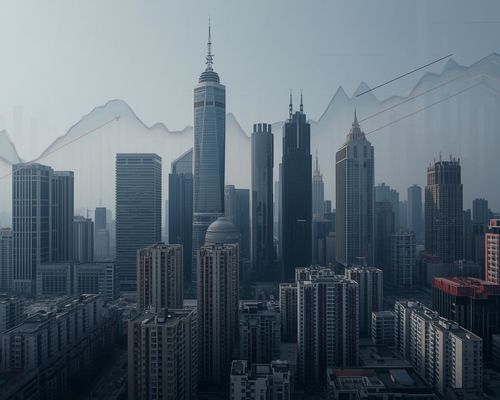
China’s real estate sector is undergoing one of the most significant transformations in the country’s modern economic history. After years of rapid expansion fueled by speculation, heavy borrowing, and massive construction activity, the Chinese government has spent much of the past decade attempting to deflate what had become an enormous housing bubble.
While these efforts have helped reduce some systemic financial risks, they have also triggered a painful adjustment across the economy. Developers, banks, local governments, and homebuyers are all feeling the effects as the country navigates the aftermath of one of the world’s largest property booms.
A Property Boom That Fueled Economic Growth
For decades, China’s housing market has played a central role in the country’s economic development. Rapid urbanization created enormous demand for new homes as millions of people moved from rural areas into expanding cities. Developers responded with large-scale construction projects that transformed skylines across the country.
Real estate soon became deeply embedded in China’s economic model. Housing construction drove demand for industries such as steel, cement, glass, appliances, and home furnishings. Local governments relied heavily on land sales to developers to fund infrastructure and public services.
At its peak, analysts estimated that real estate and related sectors accounted for roughly a quarter of China’s total economic activity. Property ownership also became one of the most important forms of wealth for Chinese households, with many families investing heavily in residential property.
The Government Moves to Deflate the Bubble
Despite the sector’s economic importance, Chinese leaders became increasingly concerned about the risks created by rising debt levels and speculative investment. Home prices climbed rapidly in many cities, and developers accumulated massive liabilities as they borrowed aggressively to finance new projects.
In 2016, President Xi Jinping signaled a shift in policy when he declared that “houses are for living in, not for speculation.” That statement laid the groundwork for a series of policies designed to cool the market and reduce financial risks.
The most significant intervention came in 2020 when regulators introduced a policy framework known as the “three red lines.” These rules imposed strict limits on how much debt property developers could carry relative to their assets, equity, and available cash. Developers that failed to meet these thresholds faced restrictions on additional borrowing.
The new regulations abruptly ended the highly leveraged growth model that had fueled China’s property boom for years.
A Wave of Developer Defaults
As credit conditions tightened, many developers that relied heavily on borrowing quickly ran into liquidity problems. Several companies struggled to refinance their debts or raise enough funds to continue construction projects.
One of the most high-profile casualties was Evergrande, once one of China’s largest property developers. The company accumulated more than $300 billion in liabilities before ultimately entering liquidation in 2024. Its collapse sent shockwaves through the industry and highlighted the risks created by years of aggressive expansion.
Other large developers also defaulted or underwent major restructuring efforts as the sector grappled with the consequences of tighter financial controls.
Debt Levels Decline Across the Sector
Although the adjustment has been painful, the government’s crackdown has succeeded in reducing leverage across much of the industry. Data shows that the combined debt of dozens of major Chinese developers has fallen significantly since the new borrowing rules were introduced.
Many companies have sold assets, cut back on expansion plans, or renegotiated loans with creditors in order to stabilize their balance sheets. In some cases, lenders have agreed to accept losses or convert debt into equity as part of restructuring agreements.
These changes are gradually reshaping the industry, with financially stronger developers gaining market share while weaker firms exit the market.
Property Investment and Sales Drop Sharply
The slowdown in development activity has been dramatic. Property investment in China has fallen sharply in recent years as developers scale back new construction projects.
Sales activity has also declined significantly compared with the peak years of the housing boom. The value of contracted sales among the country’s largest developers has dropped steeply, reflecting weaker demand and reduced buyer confidence.
This downturn has affected not only developers but also a wide range of industries tied to construction and housing.
Weak Confidence Among Homebuyers
Homebuyer sentiment has also been shaken by the sector’s turmoil. Falling home prices in some areas and concerns about unfinished housing projects have made many households cautious about purchasing property.
Because real estate represents a large share of household wealth in China, declining property values can have broader economic consequences. When homeowners feel that the value of their primary investment is falling, they may cut back on spending in other areas of the economy.
This dynamic has contributed to slower consumer spending and weaker overall economic momentum.
Broader Economic Consequences
The slowdown in the property sector has begun to weigh on China’s broader economic performance. Construction activity has cooled, and local governments have seen declining revenue from land sales.
Economists estimate that the sharp drop in property investment has slightly reduced China’s overall economic growth in recent years. Although the impact may appear modest in percentage terms, it highlights just how important housing has become to the country’s economic expansion.
Policymakers Try to Stabilize the Market
Recognizing the importance of the housing sector, Chinese officials are now working to stabilize the market without reigniting speculative excesses.
Policymakers have signaled plans to manage new housing supply more carefully while also addressing the large inventory of unsold homes in some regions. Authorities are also encouraging developers to complete unfinished projects to rebuild confidence among buyers.
The challenge for policymakers is finding a balance between supporting the housing market and maintaining stricter financial discipline within the industry.
A Delicate Path Forward
China’s property reset represents a major shift in how one of the world’s largest real estate markets operates. The government’s reforms are aimed at reducing financial risks and creating a more sustainable housing sector over the long term.
However, rebuilding confidence will take time. Housing remains deeply ingrained in China’s economy and culture, and many households still view property ownership as one of the most important ways to build wealth.
As a result, China now faces a delicate challenge: stabilizing the housing market and restoring buyer confidence while ensuring that the speculative excesses of the past do not return.
For global investors and real estate professionals, the outcome of this transition will continue to shape international housing markets and economic trends for years to come.