


Connecticut has spent years talking about transit-oriented development.
In 2026, the conversation is finally turning into something more tangible: cranes, permits, and real construction activity near rail corridors.
For investors, buyers, and real estate professionals paying attention to where density is actually being approved, this shift represents one of the clearer structural plays emerging in the Northeast. The opportunity isn’t simply “near transit.” It’s concentrated in specific train-station pockets where policy, infrastructure, and demand are beginning to align.
The question is no longer whether TOD is coming to Connecticut.
It’s which towns are truly executing — and which corridors are positioned to benefit over the next several years.
Connecticut’s Transit Zone: A Small Footprint with Outsized Weight
Connecticut’s transit zone — defined as areas within roughly half a mile of a rail station or a quarter mile of a bus stop — accounts for just 9% of the state’s land area.
Yet that relatively small footprint contains nearly half of the state’s households and close to two-thirds of its jobs.
That concentration is revealing.
Economic activity is already clustered around transit infrastructure. Employment centers, healthcare networks, universities, and commercial districts are largely located within these corridors. The imbalance isn’t where people work — it’s where housing density has historically been allowed.
Only about 22% of Connecticut’s housing stock currently sits in areas dense enough to sustain reliable transit operations. Even within transit-rich zones, a significant share of neighborhoods lack the residential density required to fully support frequent service.
In simple terms, Connecticut has long had the trains and the bus routes.
What it lacked was the zoning framework to build enough housing to make those systems function efficiently.
The Policy Pivot: From TOD Talk to Development Mechanism
That constraint is beginning to loosen.
Connecticut’s housing growth legislation now allows municipalities to establish transit-oriented development districts and priority housing zones designed to streamline approvals. Projects within these districts can move through as-of-right or summary review processes, reducing timelines and lowering the uncertainty that has historically discouraged developers.
This is not a statewide mandate.
It is an incentive-driven shift.
Towns willing to adopt TOD-friendly zoning gain access to development momentum. Towns that hesitate risk losing capital and construction to neighboring municipalities.
Early 2026 is already showing signs of this divergence.
Some towns are actively rezoning around train stations. Others remain stuck in prolonged debate cycles that delay meaningful progress.
Infrastructure Investment Reinforces the Trend
Policy changes are being reinforced by infrastructure commitments.
Connecticut’s continued investment in rail modernization along the Metro-North New Haven Line, Shore Line East, and Hartford Line reflects a long-term strategy centered on mobility, commuter reliability, and corridor efficiency. Upgrades to CTfastrak and broader transit electrification initiatives further signal that the state’s transportation framework is not being treated as static.
Improved transit reliability changes housing behavior.
When commute times stabilize and service frequency improves, proximity to stations becomes a stronger pricing and demand driver.
Combined with zoning flexibility, this creates the structural conditions TOD requires to gain traction.
Not Every Train Station Is a TOD Opportunity
A common misconception surrounding TOD is that every rail stop automatically becomes an investment play.
Reality is far more selective.
Successful TOD corridors typically require three ingredients:
- Zoning that genuinely allows density
• Reliable transit service tied to employment hubs
• Existing infrastructure capable of supporting growth
The towns drawing the most consistent attention are those where these factors are already converging.
The Established Leaders: Stamford, Norwalk, New Haven
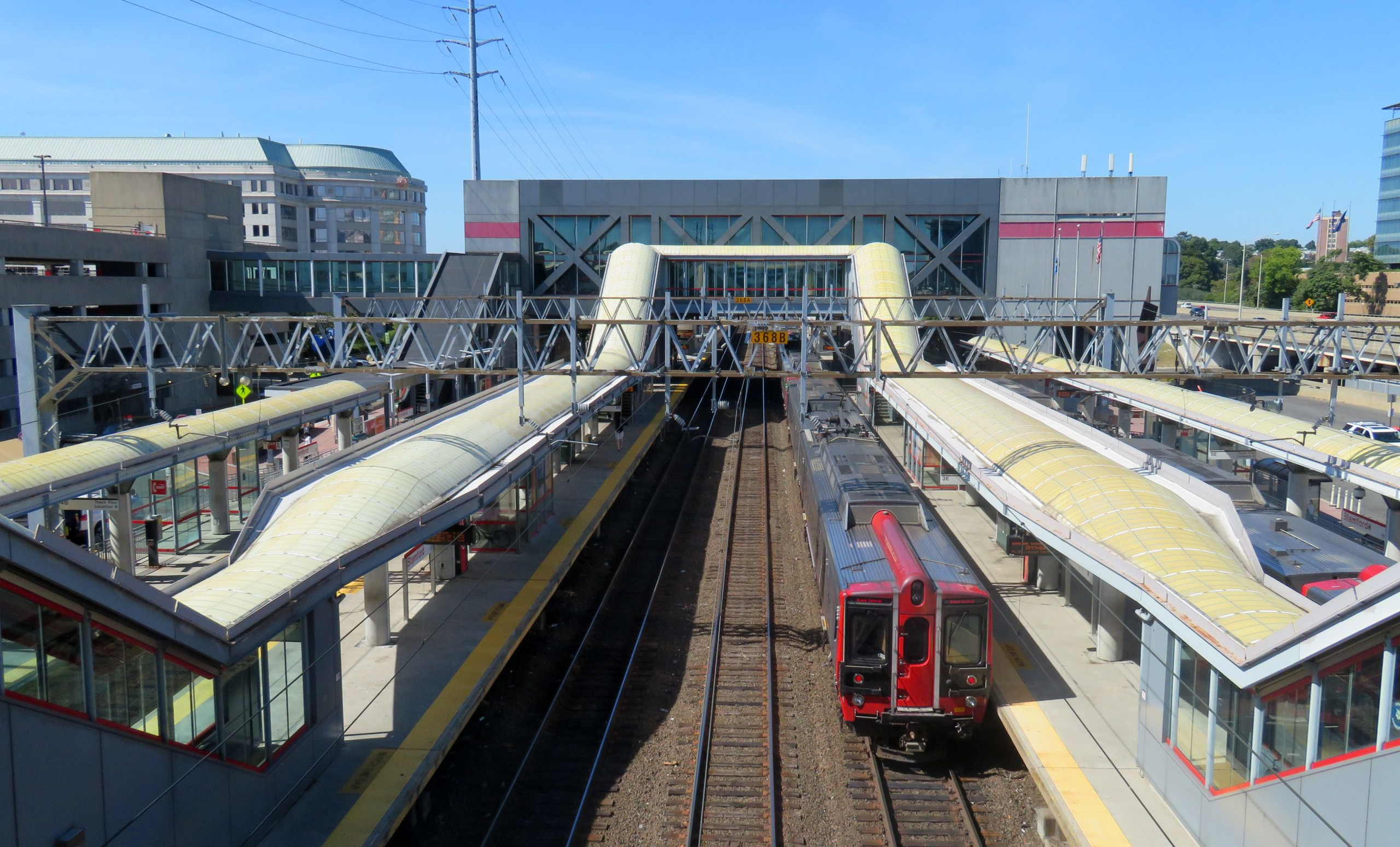
Stamford and Norwalk remain the state’s most visible TOD anchors.
Both benefit from strong Metro-North connectivity, established downtown ecosystems, and a demonstrated willingness to approve multifamily and mixed-use development. Stamford’s South End continues evolving as a density-driven growth corridor, while Norwalk’s SoNo district is attracting sustained developer interest.
New Haven operates differently but serves a similar role.
With multiple transit lines converging downtown and one of the state’s most concentrated employment bases, the city offers the scale and economic gravity required for true urban-style TOD. Investor activity here remains strong, though acquisition costs and compressed cap rates limit accessibility.
The Emerging Tier: Milford and West Haven
Milford and West Haven represent a different stage of the TOD cycle.
Both towns benefit from Shore Line East access and are increasingly seeing multifamily proposals tied to station-area development. Milford, historically cautious on density, is gradually opening zoning pathways near its transit core. West Haven, supported by comparatively affordable land, is positioning itself as a value alternative within the broader New Haven orbit.
These markets are less about immediate premium pricing.
They are about early-phase corridor transformation.
The Longer-Term Plays: Wallingford and Meriden
Wallingford and Meriden sit firmly in the longer-horizon category.
Located along the Hartford Line, these towns offer lower acquisition bases and growing TOD policy alignment. If rail frequency expands as planned, commuter patterns could materially reshape demand dynamics. Investors targeting these areas are effectively underwriting future connectivity improvements layered onto currently accessible pricing.
The thesis is patience-driven rather than momentum-driven.
The Investor Equation: Appreciation vs. Cash Flow
Connecticut’s TOD markets naturally divide into two strategic profiles.
Stamford, Norwalk, and New Haven function primarily as appreciation-focused plays. Pricing is higher, competition is stronger, and cash-flow margins are tighter. Investors here are typically betting on sustained demand tied to job access, lifestyle migration, and limited supply elasticity.
Secondary towns like Milford, West Haven, Wallingford, and Meriden present more cash-flow-oriented opportunities. Land costs are lower, development math is more manageable, and rental demand tends to be steadier relative to entry pricing.
Neither strategy is inherently superior.
They simply reward different capital structures and risk tolerances.
The Execution Risk No One Can Ignore
TOD policy adoption alone does not guarantee performance.
Towns can streamline zoning while still introducing design constraints, approval friction, or political resistance that slows real progress. The markets most likely to outperform are those demonstrating consistent permitting velocity and predictable development pathways.
Investors increasingly need to track approvals, not announcements.
A TOD district that repeatedly stalls projects is materially different from one that consistently issues permits.
What This Means on the Ground
For buyers, proximity to transit is regaining relevance as a long-term value driver. Station-area neighborhoods are likely to see amenity expansion, walkability upgrades, and evolving density patterns.
For sellers, homes near active transit corridors carry stronger narrative positioning, particularly when targeting out-of-state buyers familiar with rail-driven pricing premiums.
For homeowners, appreciation potential often arrives alongside neighborhood change. Increased density reshapes traffic patterns, streetscapes, and community dynamics.
For investors, the most compelling plays frequently sit one step ahead of visible construction momentum — where zoning has shifted but pricing has not fully adjusted.
For realtors, local zoning literacy is becoming a competitive advantage. Clients are no longer evaluating transit access in isolation but as part of a broader development story.