

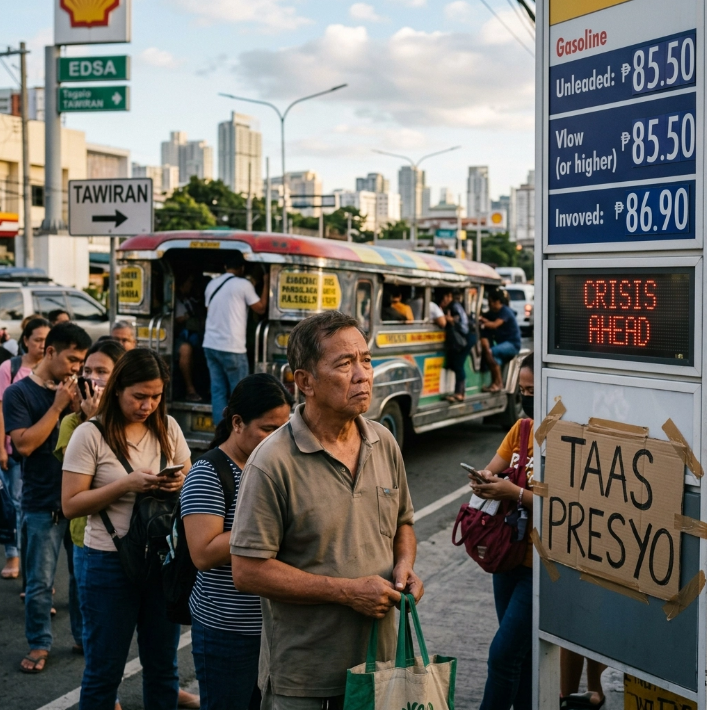
The Philippines is currently navigating its most significant economic challenge since the 2020 pandemic. Following the closure of the Strait of Hormuz on March 4, 2026, the country has officially entered a national energy emergency. With nearly 98% of its crude oil sourced from the Middle East, the sudden disruption of this critical maritime corridor has sent shockwaves through the local economy, forcing the government into survival mode.
President Ferdinand Marcos Jr. issued an executive order this month to address what has become a race against time. As of late March, the nation is operating on a razor-thin margin, with only 40 to 45 days of oil supply remaining in reserve. For a country that relies on these imports not just for transport, but for the very stability of its power grid and manufacturing sectors, the situation is precarious.
For global real estate investors and market observers, the Philippine crisis serves as a case study in how energy vulnerability can rapidly reshape property markets and investment sentiment. When fuel prices surge by 50% to 100% in a matter of weeks, the ripple effects touch everything from construction costs to the purchasing power of the average household.
The Logistics of a Lockdown
The Strait of Hormuz is the world's most important oil transit point. When geopolitical tensions in Iran led to its closure, Brent Crude prices quickly surged past $120 per barrel. For the Philippines, this was a direct hit to the jugular. Because the archipelago lacks significant domestic oil production, it is almost entirely at the mercy of global supply chains and Middle Eastern stability.
The immediate result was panic at the pumps. Diesel prices have climbed by nearly 40% in some regions, while gasoline prices in Manila have doubled in certain high-demand zones. This is not just a headache for commuters; it is a systemic threat to the movement of goods. In an island nation where inter-island shipping and trucking are the backbones of the economy, high fuel costs translate directly to higher food and material prices.
The government’s response has been swift but limited by fiscal reality. A special committee has been established to prevent hoarding and oversee the equitable distribution of remaining fuel stocks. There are already talks of fuel rationing and the suspension of certain transport fees to keep the public transit system from collapsing entirely.
Currency Volatility and the Cost of Living
The energy crisis has triggered a secondary crisis in the foreign exchange markets. On March 19, 2026, the Philippine Peso hit a record low of 60.1 PHP per USD. This devaluation makes every barrel of oil even more expensive to import, creating a feedback loop of inflation that is difficult to break.
Economists are warning that GDP growth could drop below 3% in the second quarter if the blockade persists. This mirrors a broader trend across developing Asia, where the Asian Development Bank suggests that prolonged energy disruptions could shave a full percentage point off regional growth while pushing inflation up by more than 3%.
For those watching housing affordability reaching extreme levels, this currency dip is a double-edged sword. While it makes Philippine assets cheaper for those holding US dollars, it destroys the domestic capacity to save for down payments and manage mortgage interest rates, which are expected to rise as the central bank attempts to defend the Peso.
Real Estate and Infrastructure Under Pressure
The construction sector is often the first to feel the heat during an oil crisis. Cement, steel, and glass production are energy-intensive industries. When electricity prices spike: as they are expected to do during the high-demand summer months: the cost of building materials follows suit.
Furthermore, the transport of these materials to job sites across the islands has become prohibitively expensive. Many developers are already flagging potential delays in project completion dates. For investors who have used the essential guide on how to buy like a pro, this is a time to scrutinize the balance sheets and fuel-resiliency of the firms managing their assets.
The aviation sector is also in the crosshairs. President Marcos recently warned that flights might be grounded if jet fuel shortages worsen. Philippine Airlines has secured supplies only through June. For a real estate market that thrives on tourism and the mobility of Overseas Filipino Workers (OFWs), a breakdown in aviation would be a major setback for short-term rental markets and luxury developments in vacation hubs like Palawan and Cebu.
Practical Impact Section
The volatility in the energy sector creates specific challenges and opportunities for different players in the real estate landscape.
For Buyers
Purchasing power is currently being squeezed by inflation. However, for foreign investors or those with dollar-denominated income, the Peso's drop to 60.1 provides a significant entry discount. If you are looking at the Philippine market, focus on finished properties rather than pre-construction units to avoid the risk of developer delays or "escalation clauses" in contracts due to rising material costs.
For Sellers
Liquidity may dry up in the mid-market as local buyers struggle with the cost of living. If you are looking to sell, targeting the "Balikbayan" market (overseas Filipinos) is your best bet, as their foreign currency now stretches much further in the local market. Check our resources for sellers to see how to position your property in a high-inflation environment.
For Homeowners
Energy efficiency is no longer a luxury; it is a survival strategy. Homeowners are seeing their utility bills climb as power companies pass on the high cost of oil-fired electricity generation. Investing in solar panels or improved insulation can provide a hedge against the domestic energy emergency.
For Investors
Diversification is key. While the residential market in Manila may face headwinds, industrial real estate: specifically cold storage and logistics hubs that have secured independent power sources: remains resilient. Watch the diplomatic shifts carefully; if the Philippine government successfully pivots to new energy partners, a market rebound could be rapid.
For Realtors
Education is your primary tool. Clients need to understand that the current price spikes are tied to a specific geopolitical event. Providing data on which developers have the strongest supply chains will help build trust during these uncertain times. You can find more on market positioning on our buyers page.
Diplomatic Shifts and the Path Forward
The Philippine government is not just sitting idle. There is a noticeable diplomatic shift occurring as the administration seeks to diversify its energy sources away from a 98% reliance on the Middle East. Strategic partnerships with regional neighbors and a renewed push for domestic renewable energy projects are now at the forefront of national policy.
There are also efforts to secure bilateral oil deals with non-OPEC nations. While these moves won't fix the 40-day supply shortage overnight, they signal a long-term commitment to energy security that could stabilize the markets in late 2026 and 2027.
The "National Energy Emergency" status allows the government to bypass certain procurement hurdles, meaning we could see a flurry of investment in alternative energy infrastructure. For the real estate sector, this could mean a future where "off-grid" capability becomes a standard feature for high-end developments.
What to Watch
The situation remains fluid. The primary metric to track is the status of the Strait of Hormuz. If diplomatic efforts fail to reopen the waterway by May, the Philippines will likely have to implement drastic fuel rationing, which would significantly slow down the economy.
Keep a close eye on the Philippine Peso. If it continues to slide past the 60.1 mark, expect the central bank to hike interest rates aggressively. This would make borrowing more expensive, potentially cooling off the hot property markets in metropolitan areas.
Finally, watch the behavior of the OFW community. If the global oil crisis leads to job losses in the Middle East, the flow of remittances: the lifeblood of Philippine real estate: could slow down. Conversely, if OFWs remain employed, the favorable exchange rate might trigger a buying spree in the residential sector.
The Philippines has proven resilient in the face of crises before. While the current energy emergency is a stern test, it is also forcing a long-overdue conversation about energy independence and economic diversification. For the savvy observer, the current volatility is not just a risk, but a signpost for where the next cycle of growth will begin.