

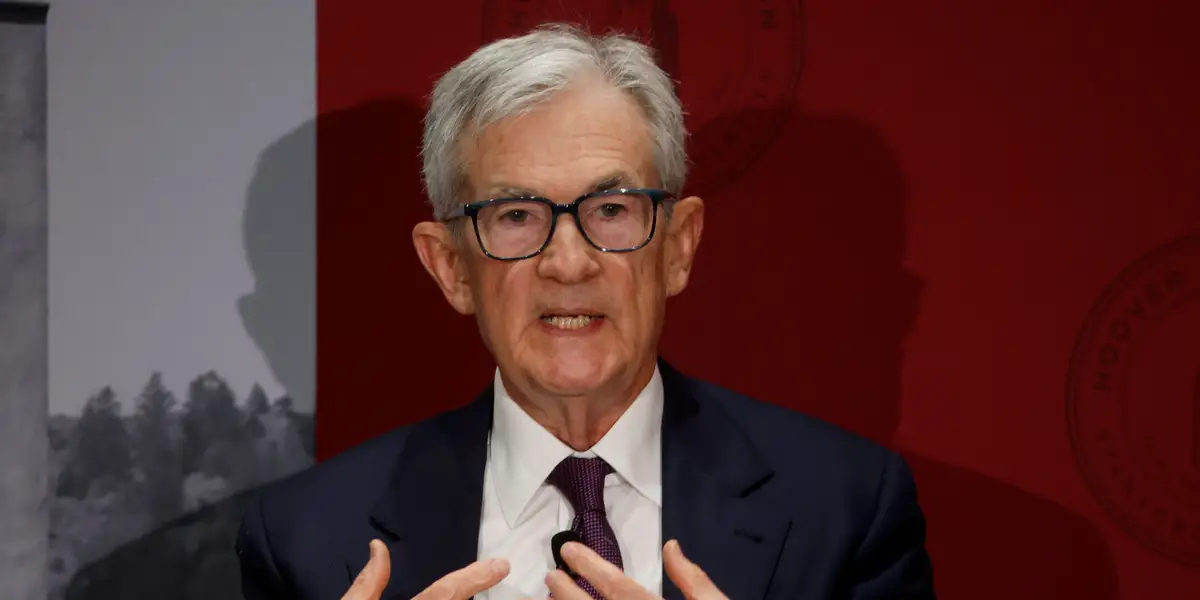
The Federal Reserve delivered another interest-rate cut on Wednesday — its third this year — but signaled that the path ahead is far less predictable. Policymakers lowered their benchmark federal funds rate by 0.25 percentage points, bringing it to a 3.50%–3.75% range, the lowest level in three years.
While the cut was largely expected, what’s emerging inside the central bank is a deeper debate about the state of the U.S. economy. Some officials argue the Fed should be doing more to protect a weakening labor market. Others warn that inflation, still running above the 2% target, makes further cuts risky.
The result: a monetary policy outlook clouded by disagreement, political pressure, and limited economic data after the longest U.S. government shutdown in history.
A Fed Split Over What Comes Next
The most notable development from the meeting wasn’t just the cut — it was the dissension behind it. Three officials broke with the majority, reflecting how divided the Fed has become.
The Dissenters:
- Stephen Miran, on leave from Trump’s Council of Economic Advisers, pushed for a larger 0.50-point cut, arguing the economy needs stronger support.
- Austan Goolsbee of the Chicago Fed and Jeffrey Schmid of the Kansas City Fed wanted no cut at all, citing inflation risks.
These splits underscore a broader challenge: the Fed is confronting two competing forces simultaneously — a cooling job market and sticky inflation. Historically, the Fed is rarely forced to address both at once, which Powell openly described as “unusual” and a source of “persistent tension.”
Despite the disagreements, Powell stressed the debates were “thoughtful and respectful,” adding that the committee ultimately reaches consensus — even if it’s not unanimous.
Why the Fed Cut Rates Again
Several data points pushed the Fed toward another rate cut:
1. A Softening Labor Market
The unemployment rate has risen from 4.3% to 4.4%, a modest shift that nonetheless signals employers are slowing hiring. With consumer spending driving most of the economy, a weakening labor market is a concern — lower rates are meant to encourage borrowing, investment, and hiring.
2. Inflation Above Target, but Not Surging
Inflation hit 3%, still well above the Fed’s 2% target. Earlier in the year, inflation fears were amplified by sweeping Trump-era tariffs, which drove up prices across a range of consumer goods.
More recent readings, however, have been milder than expected. That moderation gave the Fed enough room to prioritize the job market — at least for now.
3. Limited Data After a Government Shutdown
The months-long shutdown ended in November, but it left the Fed temporarily flying blind. Key indicators were delayed, making it harder to assess real-time economic conditions. With gaps in the data, the central bank opted to provide some insurance by easing monetary policy again.
Powell: “We Are Well-Positioned to Wait”
Despite the cut, Powell made it clear the Fed won’t be rushing into another move. He said officials want time to study how the three cuts this year filter through the economy.
The Fed’s quarterly “dot plot” shows only one projected cut in 2026, unchanged from September. That projection reflects caution: central bankers want flexibility, especially with fresh data on the labor market and inflation expected next week.
Powell’s message was straightforward — the Fed is stepping back to watch how things unfold.
Political Pressure and Trump’s Reaction
Not surprisingly, President Donald Trump, who has repeatedly pressed Powell for aggressive cuts, was dissatisfied. After the announcement, Trump said the Fed should have cut rates “at least doubled,” arguing the U.S. should have “the lowest rates in the world.”
Trump’s public pressure adds a political backdrop to what is typically an independent decision-making process. And with Powell’s term ending in May, the spotlight is growing.
Who Will Lead the Fed Next?
Trump is expected to announce his pick for the next Fed chair within weeks. The leading candidate is Kevin Hassett, a conservative economist and long-time Trump adviser. As head of the National Economic Council, Hassett has consistently defended Trump’s economic agenda.
His close relationship with the president raises questions:
- Will markets trust his independence?
- Will he prioritize Trump’s calls for lower rates?
- How will other Fed officials respond under his leadership?
Other names in the mix include Kevin Warsh, Christopher Waller, and Treasury Secretary Scott Bessent. Analysts warn that the next chair must project independence to avoid market volatility.
Powell, for his part, insisted the ongoing search has no bearing on his decisions. “No,” he said flatly when asked if the process was influencing him.
What to Watch in the Weeks Ahead
The Fed’s next steps will hinge largely on incoming data. Key indicators coming next week — including updated inflation and labor market reports — could shift the outlook significantly.
If job growth weakens further or inflation cools, officials may face renewed pressure for more cuts. But if prices remain elevated or hiring stabilizes, the Fed may choose to pause.
For now, the only certainty is that uncertainty has become the dominant theme.
Check out this article next