


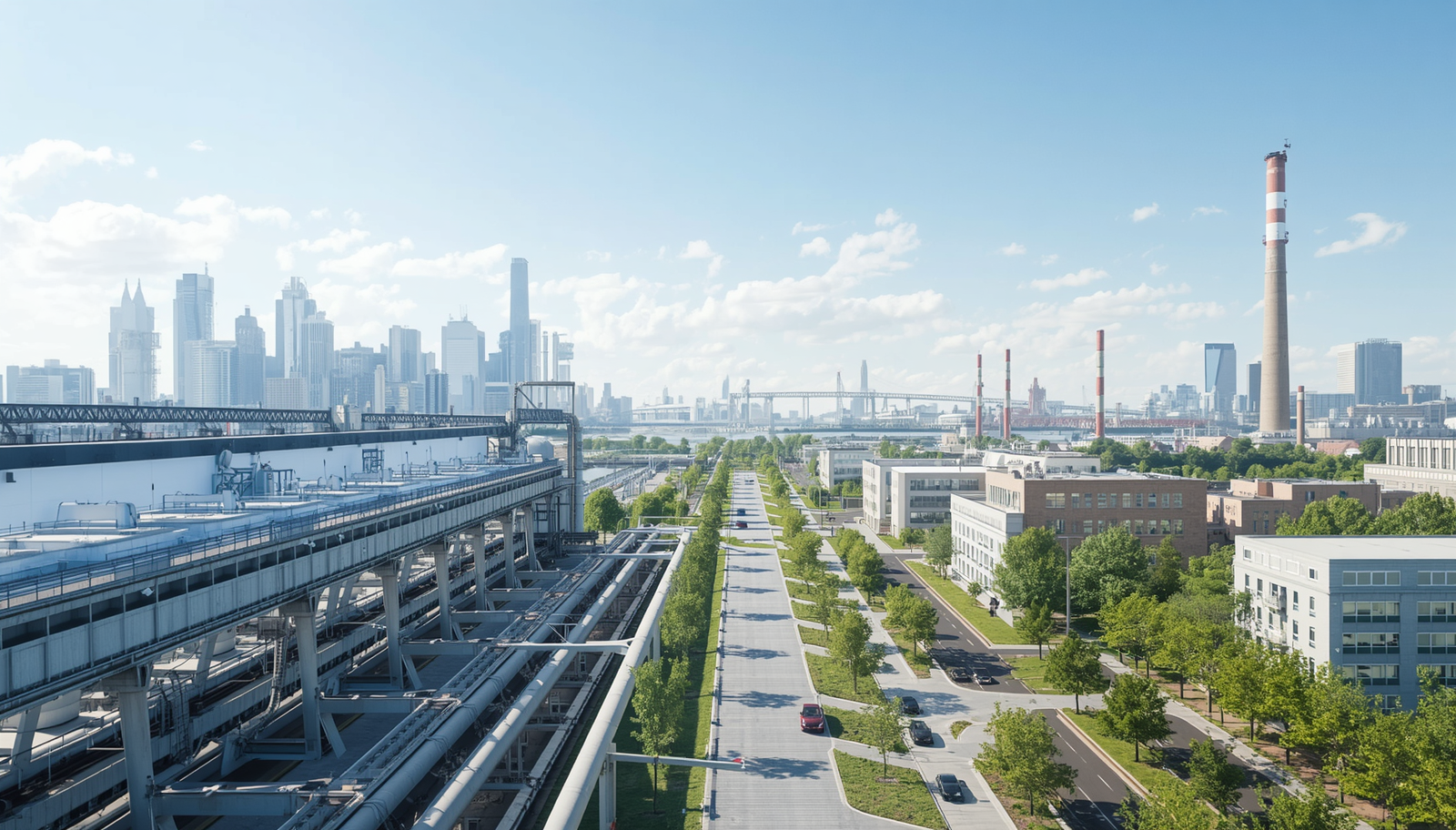
One of the most ambitious redevelopment projects in Pennsylvania is quietly reshaping the future of Philadelphia.
On a 1,300-acre site that once housed the largest oil refinery on the East Coast, a new vision is taking shape. The former Philadelphia Energy Solutions refinery — shuttered after a catastrophic explosion in 2019 — is being transformed into the Bellwether District, a massive mixed-use industrial and life sciences hub that could redefine both the city’s economy and its real estate landscape.
What was once a symbol of Philadelphia’s industrial past is now becoming a test case for what its economic future might look like.
A $450 Million Anchor Signals a New Direction
The redevelopment reached a major milestone with the announcement that TerraPower Isotopes, a company backed by Bill Gates, will invest approximately $450 million to build a specialized manufacturing facility on the site.
The facility, which will produce materials used in advanced cancer treatments, represents a clear shift away from fossil fuels and toward high-value, innovation-driven industries. It also establishes the Bellwether District as more than just a logistics or industrial park — it positions it as part of a growing life sciences ecosystem in the Philadelphia region.
This kind of anchor investment is critical. It not only brings immediate job creation but also signals to other companies and investors that the site is viable for long-term growth.
A Decade-Long Transformation in Motion
The scale of the project is difficult to overstate.
Developers have already spent years preparing the site, dismantling more than 100 buildings, removing hundreds of storage tanks, and clearing nearly 950 miles of pipeline left behind from decades of industrial use.
The cleanup alone highlights one of the biggest challenges of projects like this: transforming contaminated “brownfield” land into usable, modern space requires time, capital, and a willingness to take on risk that many investors avoid.
Looking ahead, the full redevelopment is expected to take another decade, eventually delivering up to 14 million square feet of industrial, manufacturing, and logistics space.
At full build-out, the project could support around 19,000 jobs and generate tens of millions of dollars in annual tax revenue, making it one of the most economically significant developments in the state.
A New Model for Industrial Redevelopment
The Bellwether District reflects a broader trend that is gaining momentum across Pennsylvania and the U.S.: the transformation of obsolete industrial land into modern, multi-purpose economic hubs.
Instead of abandoning large industrial sites, developers are increasingly repositioning them for new uses — blending logistics, advanced manufacturing, and life sciences. In Philadelphia’s case, the site’s proximity to major highways, rail lines, and the airport makes it particularly attractive for this kind of hybrid development.
This model also aligns with changing economic priorities. Cities are looking to attract industries that offer long-term growth, higher wages, and technological innovation, rather than relying solely on traditional manufacturing or energy sectors.
Ripple Effects on Housing and Local Communities
Projects of this scale rarely exist in isolation. Their impact extends well beyond the boundaries of the site itself.
As the Bellwether District develops, it is expected to drive increased housing demand in surrounding neighborhoods, particularly in South and Southwest Philadelphia. New jobs — especially in higher-paying sectors like life sciences and advanced manufacturing — tend to attract workers who need nearby housing, putting pressure on local inventory.
At the same time, the redevelopment includes commitments to community investment, workforce development, and local economic support. These efforts are intended to ensure that nearby neighborhoods benefit from the project’s growth, rather than being left behind by it.
Still, large-scale redevelopment often brings complex challenges, including concerns about affordability, displacement, and long-term environmental impacts — all of which will need to be managed as the project evolves.
Why This Project Matters Now
The timing of the Bellwether District’s rise is particularly important.
Across Pennsylvania, housing shortages and affordability pressures remain major issues. At the same time, the state is actively working to attract new industries and expand economic opportunities. Projects like this sit at the intersection of those two goals.
They create jobs and economic activity, but they also reshape local housing markets, infrastructure needs, and community dynamics.
For real estate professionals, the takeaway is clear: developments of this scale can influence everything from property values to rental demand and long-term investment potential.