



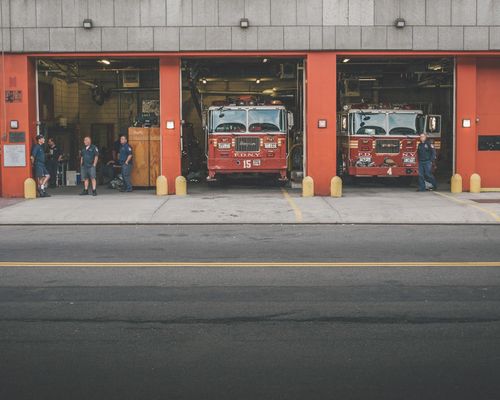
A century-old building in downtown Brunswick is beginning a new chapter, and in the process, it is offering a glimpse into one of the housing solutions gaining momentum across Maine.
What was once Brunswick's Central Fire Station has officially been transformed into a mixed-use development featuring a local brewery on the ground floor and five affordable apartments above. The redevelopment preserves a historic landmark while adding much-needed housing in one of Maine's fastest-growing regions.
While five apartments may seem small compared to the scale of Maine's housing shortage, housing advocates and developers say projects like this are becoming increasingly important as communities search for creative ways to add housing without large-scale subdivisions or major new construction on undeveloped land.
A Historic Building Gets a New Purpose
Located at 21 Town Hall Place in downtown Brunswick, the former fire station served the community for more than a century before the town's fire department relocated to a new facility in 2023. The building, originally constructed in 1919, is considered a notable part of Brunswick's architectural history and has long been a recognizable landmark near Maine Street.
Rather than demolish the structure, developers chose to preserve and repurpose it.
The completed redevelopment now houses Moderation Brewing on the first floor, while the second floor contains five affordable studio apartments designed for residents earning up to 60% of the area's median income.
The apartments include modern amenities such as heat pumps, laundry facilities, elevator access, and on-site parking while maintaining the character of the historic structure. One unit is also fully ADA-accessible.
The project reflects a growing trend in Maine and across New England: preserving historic buildings while adapting them to meet current housing needs.
Affordable Housing Remains a Critical Need
The redevelopment arrives at a time when housing affordability remains one of Maine's biggest challenges.
Over the past decade, home prices across the state have risen dramatically while rents have continued climbing in many communities. As a result, affordable housing development has become a major priority for municipalities, developers, and state policymakers.
In Brunswick and the surrounding Midcoast region, population growth and strong demand have added additional pressure to the housing market. Cumberland County is expected to need as many as 8,600 additional housing units by 2030, according to statewide housing projections.
The new apartments at the former fire station will not solve that shortage on their own, but they contribute to a broader effort taking place throughout Maine.
Housing experts increasingly argue that addressing the state's housing deficit will require projects of every size—from large apartment developments to small infill projects and adaptive reuse efforts like this one.
Supporting Maine's Larger Housing Goals
The Brunswick project also ties into Maine's broader housing strategy.
A statewide housing needs study found that Maine will need at least 76,400 new housing units by 2030 to address historic underproduction and meet future demand.
Meeting that goal will require a combination of approaches.
New subdivisions and apartment complexes will certainly play a role, but communities are increasingly recognizing that underutilized buildings can also become valuable housing assets.
Former schools, mills, office buildings, and municipal facilities are all being examined as potential redevelopment opportunities.
For developers, these projects often present unique challenges. Historic preservation requirements, renovation costs, and financing complexities can make adaptive reuse more difficult than new construction. However, when successful, these projects can add housing while preserving local character and reducing pressure to develop open land.
Why Adaptive Reuse Is Gaining Attention
The Brunswick redevelopment highlights an idea that is becoming more popular throughout Maine: creating housing from buildings that already exist.
Adaptive reuse projects offer several advantages.
First, they can help preserve community history and architectural character. Many residents prefer seeing historic structures repurposed rather than demolished.
Second, these projects often place housing directly into established downtown areas where residents can walk to businesses, services, and public amenities.
Third, redevelopment can strengthen local economies by combining residential and commercial uses in a single project.
In Brunswick's case, the addition of a local brewery alongside affordable housing creates activity in the downtown area while supporting both housing and small-business growth.
This type of mixed-use development has become increasingly attractive to communities looking to encourage downtown revitalization.
A Model Other Communities May Watch Closely
As housing shortages continue affecting communities across Maine, projects like the former Brunswick fire station may receive growing attention from local leaders.
Many towns have aging public buildings, vacant commercial properties, or underused structures that could potentially be converted into housing.
The success of these projects often depends on partnerships between municipalities, developers, lenders, and housing organizations. In Brunswick's case, financing support came through multiple organizations, including MaineHousing and other development partners.
That collaborative approach is becoming increasingly common as communities search for ways to add housing despite rising construction costs and ongoing development challenges.
What This Means for Maine Real Estate Professionals
For Realtors, developers, and investors, the Brunswick project illustrates an important shift occurring across Maine's housing market.
The conversation is no longer focused solely on large-scale residential developments. Increasingly, communities are exploring smaller, creative projects that can add housing where infrastructure already exists.
Adaptive reuse, mixed-use redevelopment, and infill housing are becoming larger parts of Maine's strategy for addressing housing shortages.
As affordability remains a central concern throughout the state, opportunities may increasingly emerge from properties that were never originally intended to serve as housing.
Discussion
Thoughts from readers and local market watchers.