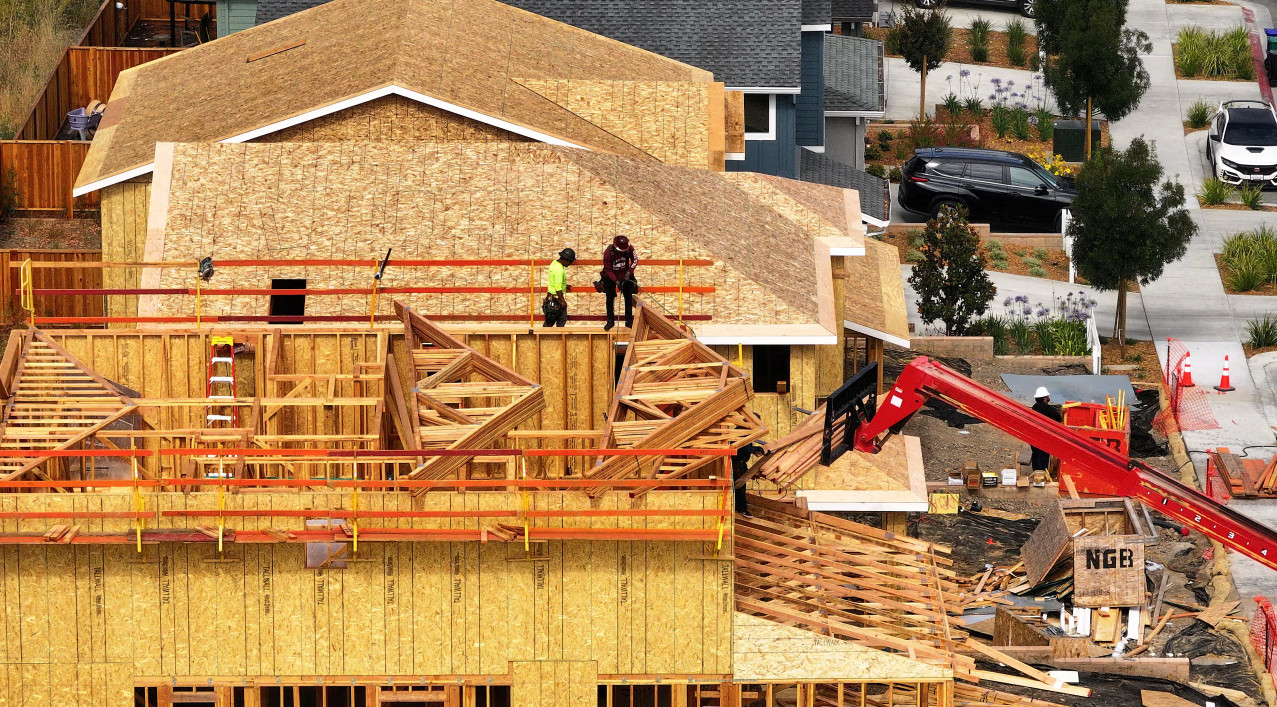
At the start of 2026, something unusual has been happening in the U.S. financial markets: home‑builder stocks are outperforming nearly every corner of the broader stock market. As of mid‑January, the iShares U.S. Home Construction ETF — a barometer for homebuilder equity performance — was up roughly 13 % year to date, far outpacing the S&P 500’s gain of about 1.7 %.
Investors are clearly responding to a narrative that housing may finally be recovering after years of sluggish sales, tight inventory, and affordability woes. Underpinning much of this optimism is a set of high‑profile policy moves by the Trump administration that have thrust housing front and center in economic and political debates. But what’s driving the rally isn’t just brighter fundamentals — it’s also policy uncertainty and questions about how government intervention could reshape the industry.
Why Builder Stocks Have Rallied
Several factors have combined to light a fire under homebuilder shares:
1. Lower Mortgage Rates Lift Demand Expectations
Mortgage rates have been cooling from recent highs, and a key catalyst was President Donald Trump’s highly publicized directive asking government‑sponsored enterprises — Fannie Mae and Freddie Mac — to buy up to $200 billion in mortgage‑backed securities. That move was intended to push mortgage yields lower and help bring down borrowing costs for homebuyers and refinancers. In the wake of the announcement, the widely cited 30‑year mortgage rate briefly dipped to around 6 %, its lowest level in years.
Lower rates generally stimulate demand for homes because monthly payments fall and more buyers qualify for loans. For stock market participants, this prospect makes the business outlook for homebuilders and mortgage intermediaries more attractive.
2. Broader Economic Tailwinds
Analysts also point to real macroeconomic improvements as part of the backdrop: stronger‑than‑expected GDP growth, solid payroll gains, and inflation moderating more quickly than feared all feed into confidence that the housing market may see a healthier spring selling season than it has in recent years.
A Policy Wild Card: Housing Reform Ideas From the White House
While optimism has boosted stocks early in the year, the Trump administration’s housing agenda injects uncertainty into the equation — particularly for builders’ profit margins and capital allocation strategies.
Here are the key pieces of the policy picture:
1. Pressure on Share Buybacks
The Federal Housing Finance Agency — led by Director Bill Pulte, who was appointed during the Trump administration — has publicly criticized homebuilders for aggressive stock buybacks. Major builders like D.R. Horton, Lennar, and PulteGroup returned billions to shareholders in recent years, even as housing affordability deteriorated.
Pulte’s remarks — and the broader anti-buyback sentiment expressed by the administration — signal possible regulatory scrutiny or political pressure on how builders choose to allocate capital. Reducing buybacks could encourage companies to divert more cash toward building homes or lowering prices, rather than boosting share prices.
Investors reacted negatively in the short term when these critiques surfaced; stocks of several major builders dipped on the news.
2. Banning Institutional Investors in Single‑Family Homes
Another controversial idea being floated is a ban on large institutional investors buying single‑family homes — a policy Trump has publicly supported and signaled he might ask Congress to codify. The logic is that Wall Street firms and private equity landlords have been competing with individual buyers, pushing prices up and making inventory scarcer for people who want to live in their homes.
However, independent data shows that truly “institutional” ownership in single‑family homes remains a relatively small share of the overall market. While investors of many sizes accounted for a record portion of purchases in recent years, the largest groups still control a modest percentage overall.
Limiting institutional buyers could remove a segment of demand, but critics warn it could also reduce liquidity and make financing more complicated, without necessarily solving underlying supply shortages.
Profit Margins vs. Public Policy Goals
This tension — between helping would‑be homeowners and preserving corporate profitability — is at the heart of why analysts call the current situation a wild card for homebuilder stocks.
Investors are excited about the demand‑side effects: lower rates, greater buyer participation, and a potentially more vibrant market in 2026. But the supply‑side and policy risk narrative could undercut that enthusiasm:
- Regulatory or political pressure to reinvest capital in new housing supply could squeeze profit margins if builders are forced to build more or change their capital distribution strategies.
- Government intervention perceived as heavy‑handed could dent investor confidence, particularly among long‑term shareholders who value buybacks and dividends.
In other words, while rising sales demand could be good for business, policy moves that reduce financial flexibility could offset those gains in unexpected ways.
The Bigger Picture: Housing Policy Doesn’t Solve Structural Shortages
Economists and housing experts often point out that the U.S. housing market’s problems run deeper than interest rates or institutional investor activity. Inventory shortages — especially of affordable homes — are the result of long‑term underbuilding, zoning restrictions, rising material costs, and labor constraints. Lower mortgage rates help stimulate demand, but they don’t necessarily create more homes where people need them.
That means any policy focused only on demand stimulation or investor constraints without addressing supply bottlenecks is only a partial fix. This reality tempers enthusiasm for housing policy as a cure‑all and helps explain why markets are responding with both optimism and caution at the same time.
How Investors and Homebuyers Might Navigate This Environment
For market participants — whether individual investors, builders, or aspiring homebuyers — the current landscape brings both opportunity and uncertainty:
- Homebuyers might see real rate relief if mortgage costs continue downward, making monthly payments more affordable and enabling more buyers to enter the market.
- Long‑term investors in builder stocks need to monitor both economic conditions and policy shifts: growth expectations can change rapidly if regulatory pressures intensify.
- Builders themselves face a strategic choice between maintaining strong shareholder returns or committing more capital to construction and land acquisition.
As the spring selling season approaches — traditionally a peak period for housing activity — many in the real estate and investment community will be watching closely. Will lower mortgage rates translate into higher sales volumes? Will policy proposals become legislative actions that reshape the industry? And will homebuilders be able to balance profitability with expanded production?
The answers to these questions could define not just stock performance in 2026 but the longer‑term trajectory of the U.S. housing market — a sector that touches the lives of millions of Americans and remains a central barometer of economic health.