

Charlotte has spent years wrestling with the same housing math problem facing most fast-growing U.S. metros: population growth is moving faster than housing affordability. Now, one new project in the city’s core is becoming a real-world test of what the next phase of housing policy might look like — not just locally, but across the Sun Belt.
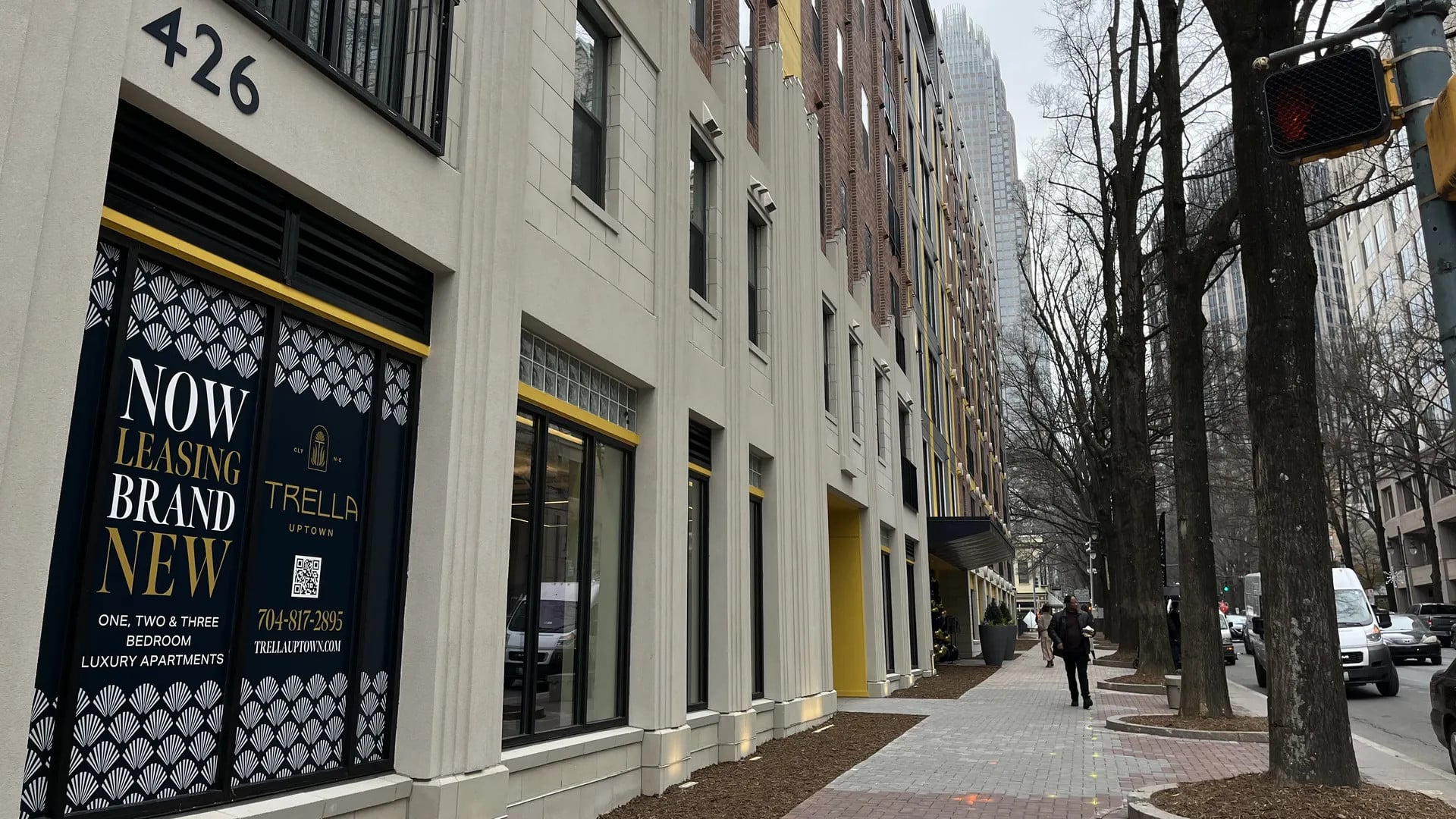
At the center of the conversation is Trella Uptown, a newly completed 353-unit mixed-income tower in Charlotte’s Uptown district. But this isn’t a typical affordable housing project tucked away with minimal amenities. Instead, it’s designed to blur the lines between affordable and market-rate housing in ways that were rare just a few years ago.
A Different Kind of Affordable Housing Project
Trella Uptown mixes market-rate apartments with 106 income-restricted units, targeting residents earning roughly 30% to 80% of the area median income. The building sits at Eighth and North Tryon — prime urban real estate — and replaces the former Hall House public housing tower that was demolished in 2022.
What makes Trella stand out isn’t just the income mix. It’s the design philosophy.
Residents — regardless of income — share access to amenities that would normally be reserved for high-end luxury buildings, including:
- Rooftop recreation space
- Pickleball court
- Creative spaces like podcast studios
- Modern common areas are typically associated with Class-A urban housing
This “shared lifestyle” approach is intentional. Developers and housing officials are trying to reduce the visible and social divide between affordable and market-rate residents.
Why Charlotte Is Trying This Now
The timing isn’t random. Charlotte’s affordability gap has widened dramatically in the past decade.
The city is currently estimated to be short more than 40,000 affordable housing units, creating intense competition for anything priced below market.
Meanwhile:
- Starter homes under $150K now make up less than 2% of sales
- Low-cost rentals under $800/month represent only about 8% of the inventory
- More than half of renters are considered cost-burdened
These trends are being driven by population growth, rising construction costs, and wages that haven’t kept pace with housing prices.
Charlotte’s growth is relentless — roughly 117 new residents per day moving into the region in recent years.
That kind of demand pressure makes purely subsidized housing almost impossible to scale fast enough on its own.
The Financing Model: Public + Private + Corporate Capital
Trella also reflects a shift in how affordable housing is funded.
The project was developed through a partnership between:
- Inlivian (Charlotte’s housing authority)
- Private developer Urban Atlantic
- Public subsidies and corporate financing layers
This kind of stacked financing has become more common nationwide, especially as federal programs like the Low-Income Housing Tax Credit expand flexibility through tools like income averaging.
The goal: stretch public dollars further while still delivering high-quality housing that attracts private investment.
A National Trend Is Emerging
Charlotte isn’t acting alone. Across the U.S., affordable housing construction has surged in recent years, with nearly 310,000 units built between 2020 and 2024 — a massive jump compared to prior periods.
Sun Belt cities, including Charlotte, have been major players in this expansion as migration shifts housing demand toward lower-cost, high-growth regions.
But simply building more units hasn’t fully solved affordability. That’s why mixed-income integration is becoming more attractive to policymakers.
The Philosophy Shift: From Separation to Integration
Historically, affordable housing often meant separate developments — sometimes physically and socially isolated from market-rate communities.
The new model is based on a different idea:
Put affordable units directly inside high-amenity, high-location-value housing.
The benefits supporters see include:
- Better Access to Opportunity
Residents get access to better transit, jobs, schools, and services by living in high-demand urban areas. - Financial Sustainability
Market-rate rents help offset operating costs, reducing reliance on long-term subsidies. - Reduced Stigma
Shared amenities and mixed resident populations help normalize affordable housing as part of the standard housing ecosystem.
Charlotte has already started pushing this direction by encouraging private developers to include affordable units in market-rate projects through voluntary commitments and incentives.
The Real-World Challenges
This model isn’t without risk or criticism.
Some housing advocates worry that:
- The total number of deeply affordable units may remain too small
- Mixed projects can still price out the lowest-income residents
- Public subsidies could unintentionally support luxury development
There’s also the broader economic question: if population growth continues to outpace construction, even mixed-income housing may struggle to keep up.
Why Other Sun Belt Cities Are Watching
Cities like Raleigh, Nashville, Austin, Phoenix, and Tampa face nearly identical pressures:
- Rapid population growth
- Rising home prices
- Limited land near job centers
- Political resistance to large public housing expansions
If Trella proves successful — meaning high occupancy, financial stability, and positive community outcomes — it could become a blueprint.