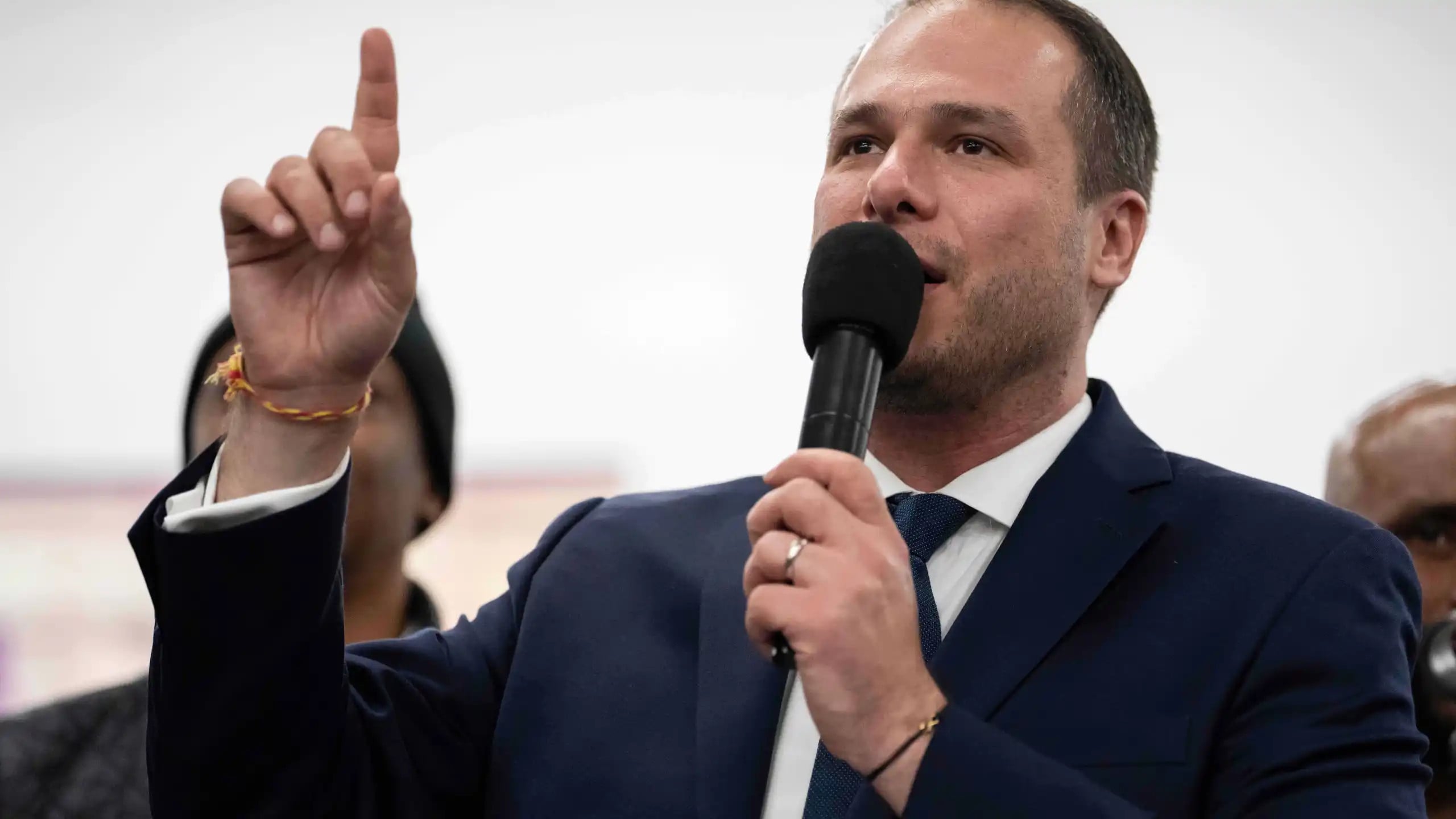
Jersey City enters 2026 at a pivotal moment. After years of rapid development, rising rents, and shifting demographics, voters delivered a clear mandate in the 2025 election: change the direction of City Hall. That mandate arrives in the form of Mayor-elect James Solomon, who officially takes office in mid-January 2026 after defeating the candidate backed by outgoing Mayor Steve Fulop.
Even before being sworn in, Solomon has already begun shaping the narrative of his administration through transition decisions, staffing announcements, policy signals, and early executive planning. While no mayor can fully reshape a city overnight, the tone and priorities set in the first weeks often determine whether an administration builds momentum — or resistance.
This article takes a clear-eyed look at the pros and cons of Solomon’s early moves and stated orders, what they mean for residents, homeowners, renters, developers, and small businesses, and how broader national and international news cycles — from immigration debates to global headlines involving figures like Maduro or strategic regions such as Greenland — can indirectly shape local policy outcomes in cities like Jersey City.
A City Ready for a Shift
Jersey City has transformed dramatically over the last decade. Luxury towers reshaped the skyline, especially along the waterfront, while long-time residents in neighborhoods like Greenville, Journal Square, and the Heights increasingly felt priced out. Under Mayor Fulop, the city saw growth, but also growing frustration around affordability, taxes, and uneven development.
James Solomon built his campaign around that frustration.
His platform emphasized:
- Housing affordability
- Tenant protections
- Worker and labor rights
- Public safety reform
- Immigrant protections
- Greater transparency at City Hall
While these themes resonated with voters, they also raised concerns among developers, landlords, and fiscal conservatives. As January 2026 unfolds, the debate is no longer theoretical — it’s about execution.
Early Actions and Signals from the Solomon Transition
Although Solomon has not yet signed a large volume of formal executive orders as of early January, his transition actions function as de facto policy signals.
1. Transition Team and Staffing Decisions
One of Solomon’s first concrete steps was announcing his communications director and senior transition staff, signaling an administration focused on message discipline and transparency.
Pros
- Establishes clear communication early, avoiding confusion during leadership change
- Allows the administration to control the narrative around housing, taxes, and safety
- Signals preparedness rather than improvisation
Cons
- Critics argue that staffing announcements without immediate policy action may feel symbolic
- Raises expectations that tangible change will follow quickly
Still, in modern municipal governance, staffing choices often reveal more than speeches. Solomon’s early picks suggest a progressive but organized administration, rather than a purely activist one.
Housing Affordability: Promise vs. Pressure
Housing is the issue most closely tied to Solomon’s election — and the one with the highest risk.
What Solomon Is Pushing Early
While formal ordinances are still forthcoming, Solomon’s transition materials and pre-inaugural statements emphasize:
- Stronger inclusionary zoning
- Real affordability requirements (not income tiers that still price out locals)
- Workforce housing for teachers, firefighters, and city employees
- Expanded tenant protections
Pros
- Directly addresses Jersey City’s most urgent problem
- Aligns with working-class and middle-income residents
- Could stabilize neighborhoods at risk of displacement
- Helps retain essential workers who increasingly cannot afford to live where they serve
Cons
- Developers warn stricter affordability mandates may slow new construction
- Reduced development could worsen long-term supply shortages
- Legal challenges from property owners are likely
- City revenue from development fees may decline short term
The tension mirrors national debates. Just as global markets react to uncertainty when geopolitical stories dominate headlines — whether it’s the removal of Maduro in Venezuela or renewed strategic focus on Greenland — local housing markets also react quickly to perceived risk. Developers are highly sensitive to regulatory signals, and even modest policy changes can freeze investment if poorly communicated.
Tenant Protections and Rent Stability
Solomon has been explicit about strengthening tenant protections, a move that appeals strongly to renters, who make up a majority of Jersey City residents.
Pros
- Greater security for renters facing steep rent increases
- Stronger enforcement against negligent landlords
- Encourages long-term community stability
Cons
- Small landlords fear increased compliance costs
- Could discourage maintenance if margins shrink
- Enforcement capacity may lag behind promises
If executed carefully, tenant protections can balance fairness and market stability. If rushed, they risk creating the very housing stagnation they aim to prevent.
Public Safety: A Delicate Reset
Public safety is where Solomon faces his most delicate balancing act.
Before he even took office, key public safety leadership from the previous administration resigned, signaling a reset in approach.
What’s Being Discussed
- Reassessing police leadership structure
- Hiring additional officers while expanding accountability
- Reviewing the role of civilian oversight
Pros
- Fresh leadership can rebuild community trust
- Signals seriousness about both safety and reform
- Opportunity to modernize policing practices
Cons
- Any perception of instability could concern residents
- Police unions may resist reforms
- Crime narratives — even when inaccurate — spread quickly
In a media environment where international crises dominate attention — from Middle East conflicts to stories involving Maduro or Arctic security concerns tied to Greenland — local public safety issues can be easily amplified or distorted. Solomon will need consistent messaging to keep public confidence intact.
Immigration and Sanctuary Policies
Jersey City’s diversity is one of its defining strengths, and Solomon has made clear he intends to maintain and strengthen sanctuary policies.
Pros
- Builds trust between immigrant communities and city services
- Encourages crime reporting without fear
- Supports workforce stability in construction, service, and healthcare sectors
Cons
- Draws political criticism at the state and federal levels
- May face funding or legal pressure depending on national policy shifts
- Requires sustained investment in legal services and training
Worker Protections and Labor Policy
Solomon has consistently supported stronger labor protections, including fair scheduling and worker rights enforcement.
Pros
- Improves the quality of life for hourly and gig workers
- Aligns with progressive economic values
- Could reduce employee turnover in local businesses
Cons
- Small businesses worry about compliance costs
- Enforcement mechanisms may strain city resources
- Risk of businesses relocating if costs rise too quickly
The challenge will be pacing. Phased implementation could soften resistance while preserving intent.
Fiscal Reality: The Budget Question
All ambitious agendas eventually meet the same obstacle: money.
Pros
- Solomon inherits a city with a strong tax base
- Waterfront development still provides revenue
- Federal and state grants may support housing and infrastructure
Cons
- Expanded services require sustained funding
- Property tax sensitivity remains high
- Economic downturns — often influenced by global instability — could reduce revenue
Real Estate Market Implications
For homeowners, investors, and real estate professionals, Solomon’s administration represents a recalibration rather than a collapse.
Likely Short-Term Effects
- Developers pause to assess policy direction
- Increased focus on compliance and affordability models
- Greater scrutiny of rezonings
Long-Term Outlook
- Stable neighborhoods may support long-term value
- Workforce housing could expand the buyer pool
- Balanced growth may outperform boom-and-bust cycles
Political Capital and Public Patience
Solomon enters office with strong political capital — but that capital is finite.
Pros
- Clear mandate from voters
- Unified message across major policy areas
- Strong grassroots support
Cons
- Expectations are extremely high
- Early missteps could be magnified
- Opposition will frame delays as failures
As of January 2026, James Solomon’s Jersey City administration is defined more by direction than by decrees — but direction matters. His early actions suggest a city government pivoting toward affordability, inclusion, and reform, while still facing real constraints from budgets, markets, and political opposition.
The pros are clear: a renewed focus on residents who felt left behind, a commitment to transparency, and a willingness to challenge the status quo.
The cons are equally real: execution risk, economic uncertainty, and the delicate task of balancing reform with stability.
In a world where global headlines — from Maduro to Greenland — can dominate attention and shape economic sentiment overnight, local leadership matters more than ever. Jersey City’s next chapter will depend not just on ideals, but on whether those ideals can be translated into policies that work — block by block, budget by budget, and year by year.
Check out this article next