


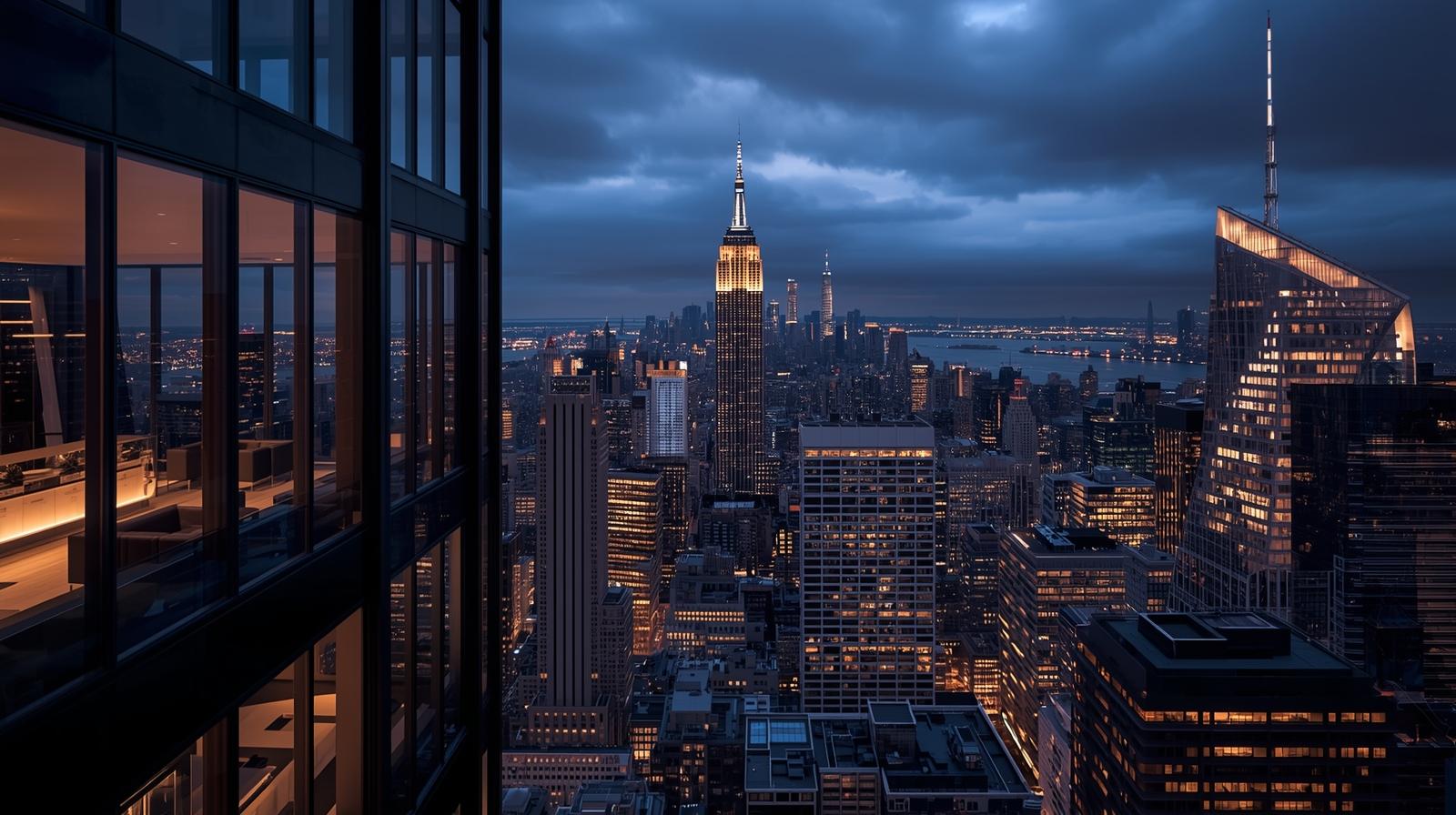
While much of the national housing discussion has centered on interest rates, affordability issues, and decreasing transaction volumes, New York City’s luxury housing market tells a different story. Throughout Manhattan, multimillion-dollar deals are still occurring at a steady rate, reaffirming that the city’s top-tier properties remain highly attractive to wealthy buyers.
In early 2026, several high-profile transactions have once again highlighted the strength of the luxury segment. These deals indicate that although some parts of the housing market face uncertainty, the luxury end of New York real estate continues to show strong resilience.
A Market Driven by Global Wealth
New York has long been one of the world’s premier destinations for luxury real estate investment. High-net-worth buyers from across the globe view Manhattan properties not only as residences but also as long-term assets—often comparable to blue-chip investments.
For this buyer pool, factors such as mortgage rates or short-term economic fluctuations tend to have less influence on purchasing decisions. Many luxury deals are completed with cash or large equity positions, insulating buyers from the financing challenges affecting more traditional homebuyers.
As a result, the luxury segment frequently operates somewhat independently from the broader housing market. Even when entry-level or mid-range sales slow, premium properties often continue to trade hands.
Recent transactions in Manhattan illustrate exactly how that dynamic is playing out.
A $12 Million Sale at 200 Amsterdam
One of the notable deals in recent weeks involved a full-floor apartment at 200 Amsterdam Avenue, a prominent luxury condominium tower on Manhattan’s Upper West Side.
The residence sold for approximately $12 million, reflecting continued demand for high-end homes offering expansive layouts, skyline views, and premium building amenities.
Located near Lincoln Center and Central Park, 200 Amsterdam is part of a newer wave of luxury residential towers that have reshaped Manhattan’s skyline over the past decade. These buildings are designed to cater to affluent buyers seeking both privacy and full-service living environments.
Residences in buildings like this typically offer:
- Private elevator access
- Floor-to-ceiling windows with panoramic city views
- Luxury fitness facilities and spa amenities
- Concierge services
- Private outdoor space
For buyers seeking exclusivity and high-end design, properties like this represent the pinnacle of Manhattan living.
The $12 million sale demonstrates that demand remains strong for homes that combine location, design, and prestige.
Annie Leibovitz Penthouse Sale Draws Attention
Another headline-grabbing transaction involved renowned photographer Annie Leibovitz, whose Manhattan penthouse recently sold for about $19.5 million.
The off-market sale was particularly notable because it generated an estimated $3 million profit in less than a year. That kind of appreciation in such a short period is relatively uncommon, especially in a market where price growth has moderated compared with the rapid increases seen earlier in the decade.
The property itself is considered a trophy residence, offering a combination of architectural character, prime location, and privacy that appeals strongly to high-end buyers.
Boutique buildings—smaller residential properties with limited numbers of units—often command strong demand among luxury purchasers. Unlike larger condo towers, boutique properties offer a greater sense of exclusivity, which can be a major selling point for wealthy buyers.
The fact that the penthouse sold off-market also reflects a common dynamic in luxury real estate: many deals occur privately, with buyers and sellers working through networks of brokers rather than public listings.
Why the Luxury Market Is Holding Strong
Several key factors explain why New York’s luxury housing market remains active even while other segments of the housing market experience slower activity.
Cash Buyers Dominate
Many luxury buyers pay cash or finance only a portion of the purchase price. This reduces sensitivity to mortgage interest rates, which have affected affordability in lower price brackets.
Limited Trophy Inventory
Prime Manhattan properties—especially penthouses, full-floor residences, and landmark townhouses—are relatively scarce. Because supply is limited, well-priced luxury listings often attract strong interest.
New York’s Global Appeal
Despite economic cycles, New York remains one of the world’s most desirable cities for wealthy individuals. International buyers continue to view Manhattan real estate as both a lifestyle asset and a stable investment.
Lifestyle and Prestige
For many buyers, luxury real estate is not purely a financial decision. The prestige of owning a unique property in Manhattan—whether overlooking Central Park or located in a signature tower—adds a non-financial dimension to the purchase.
A Tale of Two Housing Markets
The strength of the luxury sector highlights a broader trend in today’s housing market: the divergence between high-end buyers and the rest of the market.
In the mid-market and entry-level segments, many buyers remain cautious. Mortgage rates remain elevated compared with the ultra-low levels seen earlier in the decade, and affordability challenges continue to affect first-time buyers.
Luxury buyers, however, are less constrained by those factors. For them, purchasing decisions are often influenced more by lifestyle considerations, long-term investment strategies, or portfolio diversification.
As a result, the New York market increasingly resembles two parallel housing markets—one driven by financing-sensitive buyers and another fueled by global wealth.
What This Means for Real Estate Professionals
For agents and brokers working in New York City, the continued activity in the luxury sector presents both opportunities and challenges.
Luxury transactions often require specialized marketing strategies, deep client networks, and strong relationships with international buyers. High-end clients expect a level of service that goes far beyond traditional real estate sales.
At the same time, luxury listings can take longer to sell because of the smaller buyer pool. Successful brokers in this space often rely heavily on private showings, targeted outreach, and global marketing campaigns.
However, when deals do close, they can significantly influence overall market statistics and generate substantial commissions.