



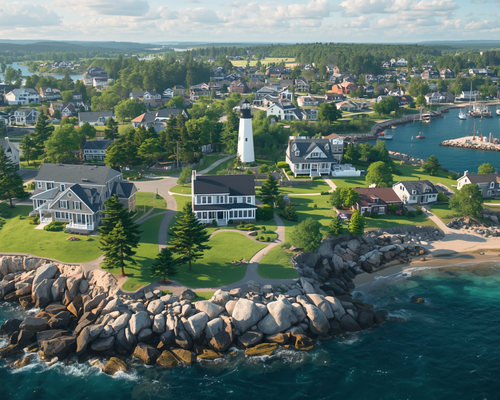
The Maine housing market has evolved over the last ten years in ways few could have imagined. A state once seen as relatively affordable for homebuyers is now one of the nation’s fastest-appreciating housing markets.
The change has been dramatic, as new housing data released this spring shows. Maine home prices have more than doubled over the past 10 years, making it one of the leaders nationwide in home price growth. For homeowners, that growth has meant big gains in equity. But for buyers, it has created a very different reality, one in which affordability has become one of the biggest challenges facing the state’s housing market.
The figures tell an extraordinary story.
In 2016, the median home price in Maine was approximately $193,000. By 2026, that figure had climbed to roughly $407,000. That represents an increase of about 111% in just ten years.
While many states experienced strong housing appreciation during and after the pandemic, the growth in Maine is notable because it was not just a one-time burst. Rather, the state has observed prices steadily rise, dramatically altering the housing landscape for residents, buyers, and real estate professionals alike.
Portland Exemplifies the Trend
When you look at some of the larger housing markets in Maine, the transformation is even more apparent.
Median home prices in Portland have more than doubled in the same period, from about $263,000 to roughly $558,000. For many who live in the area, that increase has far exceeded increases in wages and in purchasing power.
Portland has long been one of Maine’s most desirable housing markets, but the pandemic brought a surge of demand from remote workers, retirees, and out-of-staters flocking to the city and surrounding communities.
That demand helped fuel appreciation not only in Portland itself but throughout much of That demand helped fuel appreciation not just in Portland itself but throughout much of southern Maine.Why prices rocketed so fast
Why Prices Rose So Quickly
A number of factors contributed to the extraordinary rise in home values in Maine.
Supply and demand was a big driver, for sure. Maine has had a housing shortage for some time that has not kept up with population needs. Many communities had tight inventory levels even before the pandemic.
The shortage, however, intensified with the arrival of historically low mortgage rates in 2020 and a surge in buyer demand. With a limited supply of homes, buyers fought for homes, driving prices up at a rate rarely seen in the state’s history.
Meanwhile, out-of-state buyers expressed strong interest in Maine. Maine was viewed as a good place to live by many residents of Massachusetts, New York, Connecticut, and other Northeast states, with access to outdoor recreation, coastal communities, and lower housing costs.
As remote work became more common, many of those buyers didn’t need to be near major metropolitan job centers, boosting demand across much of the state.
Construction difficulties also played a part. Labor shortages, rising material costs, permitting delays, and infrastructure constraints all made it difficult for new housing supply to keep pace with growing demand.
That created a decade of housing conditions where housing demand outstripped housing supply year after year.
The Affordability Challenge
While rising home values have benefited many existing homeowners, the same trend has also generated widespread affordability concerns.
For first-time buyers, entering the market has become significantly more difficult than it was ten years ago. Higher home prices mean larger down payments, larger mortgage balances, and “First-time buyers are finding it much harder to get into the market than they were 10 years ago. Higher prices mean bigger down payments, bigger mortgage balances, and bigger monthly payments. Mortgage rates are still well above the historic lows seen during pandemic years, adding to the problem.
Many households that could easily afford a home in 2016 would find it difficult to buy a similar property today.
This affordability gap is becoming one of the defining issues in Maine’s real estate.
Housing experts continue pointing out that income growth has not kept pace with housing appreciation. While wages have increased over the past decade, they have risen far more slowly than home prices.
So for many local workers, young families, and first-time buyers, it’s becoming harder and harder to get on the property ladder.
The market is not what it was a decade ago
Maine’s 2026 housing market looks very different from the one that existed ten years ago.
Once affordable options for the larger markets, these communities have seen dramatic appreciation. Coastal towns, suburban communities, and many rural areas have also seen substantial price growth.
Inventory levels, on the other hand, remain relatively low compared to historical levels. “While the market is a little more balanced than it was at the height of the pandemic, supply challenges continue to affect pricing across much of the state.”
Buyers are more cautious today than they were a few years ago, but demand is still strong enough to prevent a big slide in values.
The market, instead, has moved toward stabilization at historically high price levels, rather than rapid appreciation.
What it means for real estate agents
For real estate professionals, the past decade has changed the way clients approach the market.
Buyers are increasingly looking for more guidance on what they can afford, the best way to finance, and what they can realistically expect. Even with demand still high, sellers need to recognize that the market today favors correct pricing and preparation more than the frenzy-driven conditions of the past several years. Local market knowledge has also never been the same.
The coastal towns are very different from the suburbs around southern Maine, which are very different from inland areas. Understanding those differences is key to helping clients successfully navigate today’s market. Perhaps most importantly, affordability is now a key part of nearly every conversation. Whether you’re working with first-time buyers, move-up buyers, investors, or retirees, housing costs have become one of the primary factors shaping decision-making.
Discussion
Thoughts from readers and local market watchers.