



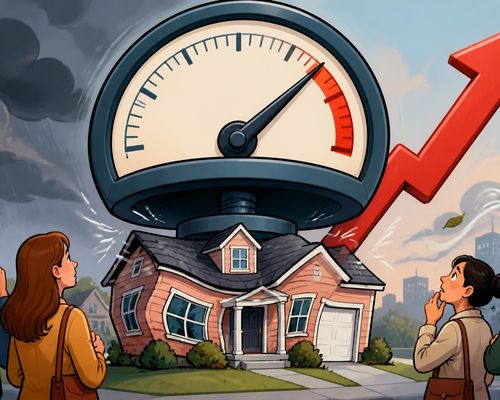
Mortgage rates have moved back above a level that could further complicate the U.S. housing market's already fragile recovery. The average 30-year fixed mortgage rate climbed to 7.12%, according to the latest data reported by HousingWire, as rising Treasury yields and higher oil prices pushed borrowing costs higher.
The move comes at an especially difficult time for homebuyers. Inventory has been improving across much of the country, giving buyers more choices and greater negotiating power, but higher financing costs are quickly offsetting some of that benefit.
The increase in mortgage rates is closely tied to broader financial markets. The 10-year Treasury yield has moved toward 5%, while oil prices have climbed above $100 a barrel. Higher energy prices can add to inflation concerns, potentially keeping interest rates higher for longer and making it more difficult for mortgage rates to decline.
For buyers, the immediate concern is the monthly payment.
A move from the mid-6% range to above 7% may appear small, but on a typical mortgage it can add hundreds of dollars to a homeowner's monthly housing expense. That can reduce purchasing power, force buyers to consider less expensive homes or cause some households to delay their purchase altogether.
Buyers Were Finally Gaining Ground
The timing is particularly significant because the housing market had begun shifting in buyers' favor.
More homes are coming onto the market, listings are taking longer to sell in many areas and sellers are increasingly offering price reductions or concessions. That has created an environment where buyers have more room to negotiate than they did during the pandemic-era housing shortage.
But more negotiating power does not necessarily mean better affordability.
A buyer may successfully negotiate a $10,000 price reduction, only to see much of that savings offset by a higher mortgage rate. For households already near the edge of their budgets, the monthly payment remains the most important factor.
This creates an unusual housing market. Buyers may have more choices than they have had in years, but those homes can still be difficult to afford.
The 7% Threshold Matters
Mortgage rates above 7% also carry a psychological impact.
Many buyers who entered the market earlier this year were hoping that rates would gradually move lower. Instead, another increase could encourage some prospective buyers to wait for better financing conditions.
That could further weaken transaction activity during the fall, traditionally an important period for the housing market.
For sellers, the latest rate increase makes accurate pricing even more important. A property that might have attracted strong interest when financing was cheaper could struggle to generate offers when buyers are facing substantially higher monthly payments.
Some sellers may respond with price cuts, closing-cost assistance or mortgage-rate buydowns to make their properties more affordable without making a large reduction to the headline asking price.
What Happens Next?
The direction of mortgage rates will depend heavily on what happens with inflation, Treasury yields and Federal Reserve policy.
If inflation pressures ease and bond yields decline, mortgage rates could eventually retreat from the 7% range. But continued increases in energy prices or other inflationary pressures could keep rates elevated.
That uncertainty leaves the fall housing market at a crossroads.
The housing market has more inventory and buyers have more leverage, but higher mortgage rates are making it harder to turn that leverage into actual affordability.
The latest move above 7% is therefore more than another rate increase. It is a reminder that the housing market's biggest obstacle remains the cost of financing.
Until borrowing costs become more manageable, a larger supply of homes alone may not be enough to bring buyers back in significant numbers.
Discussion
Thoughts from readers and local market watchers.