



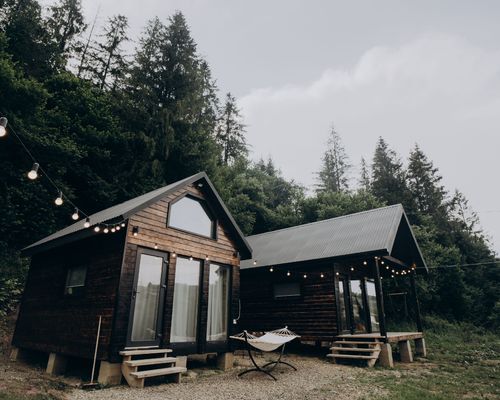
New Hampshire's tiny-home movement is moving from the State House to the real world.
A new law signed by Governor Kelly Ayotte this summer gives tiny homes and yurts a clearer legal path to be used as single-family homes or accessory dwelling units (ADUs) across New Hampshire. Before the change, property owners and builders often had to seek a municipal variance before placing a tiny home on their property, creating another hurdle for people looking for a smaller and less expensive way to live.
Now, builders are already seeing interest.
Mike Danis, owner of Tiny Houses of New Hampshire in Lyndeborough, says he has customers waiting to move forward with construction plans now that the new law provides more certainty. That's an important early indication that the legislation could translate into actual housing projects rather than simply remaining another policy change on paper.
The law stems from HB 1681, which established statewide standards for what New Hampshire calls "innovative housing structures," including tiny houses, tiny houses on wheels and yurts. The legislation also addresses construction, inspections, transportation, off-site manufacturing and wastewater requirements.
For New Hampshire homeowners, one of the biggest opportunities could be the use of these smaller structures as ADUs. A homeowner with enough land could potentially have another small residential unit without taking on the cost of building a traditional full-size house.
That could be particularly relevant in a state where housing prices have climbed dramatically. With the statewide median single-family home price recently reaching $580,000, smaller housing options are becoming increasingly important for first-time buyers, downsizers, retirees and households looking for an alternative to traditional homeownership.
But the new law does not mean every property can suddenly accommodate a tiny home.
Local requirements and site conditions still matter, particularly when it comes to issues such as wastewater, building standards and the suitability of the property. The law creates a statewide framework, but developers and homeowners still need to determine whether a particular site can support the proposed structure and meet applicable requirements.
That's an important distinction as the first projects begin moving forward.
The real test will be whether the new rules make tiny homes financially and practically viable across a wider range of New Hampshire communities. If builders can move projects forward without repeatedly seeking variances, the change could open another avenue for adding smaller homes to the state's housing supply.
It could also give homeowners another option for making better use of land they already own.
New Hampshire isn't going to solve its housing shortage with tiny homes alone. But with buyers facing record prices and limited affordable options, even relatively small additions to the housing stock can matter.
The next few months should provide a much better indication of how significant the change will be. If the early interest from builders translates into actual construction, HB 1681 could become one of the more practical housing reforms to emerge from the 2026 legislative session.
For homeowners, builders and real estate professionals, this is a story worth watching—not because tiny homes will replace traditional housing, but because New Hampshire is now giving smaller, alternative housing a much clearer place in the state's real estate market.
Discussion
Thoughts from readers and local market watchers.