


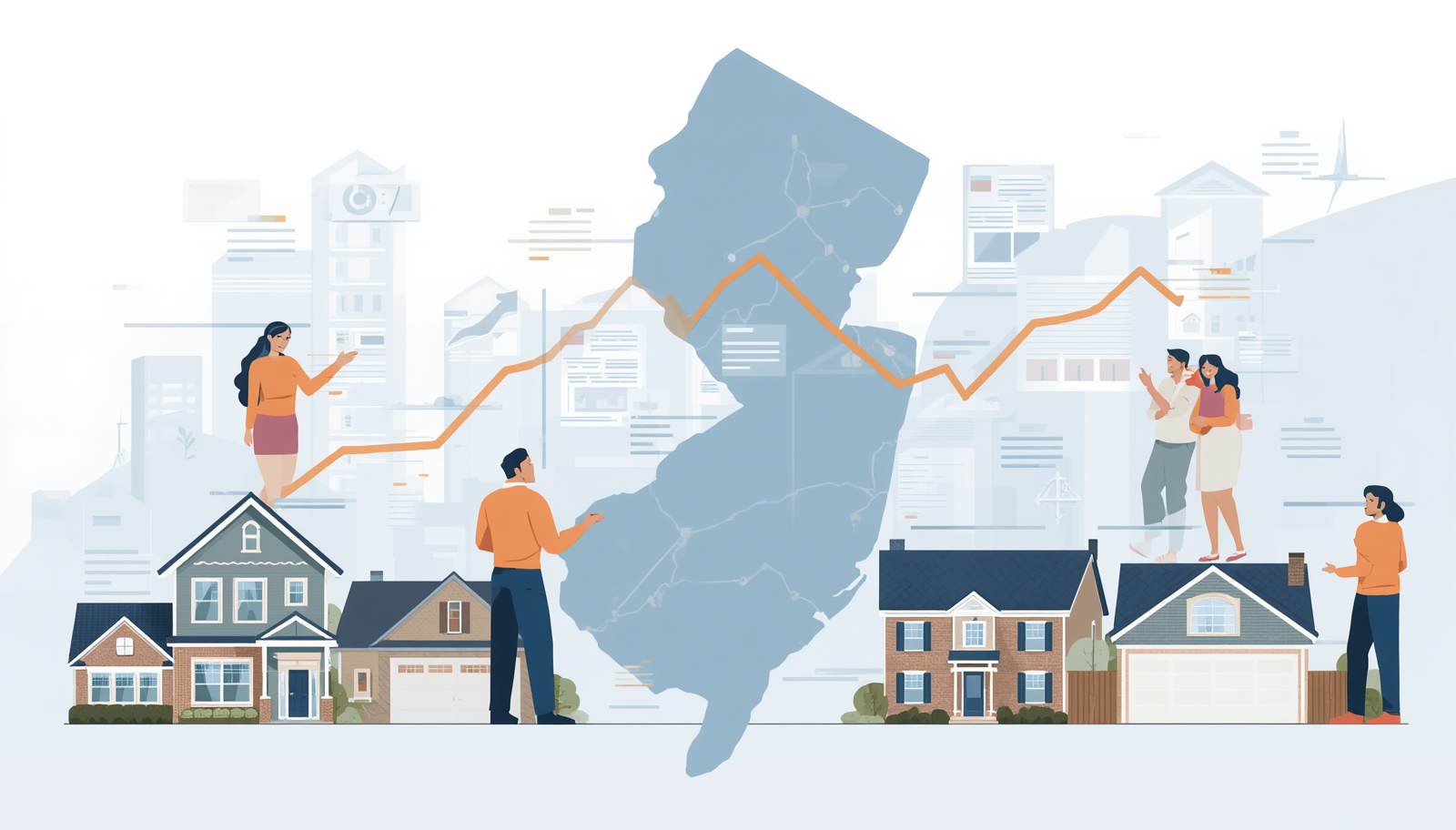
One of the most important housing stories in New Jersey right now is simple, but powerful: home prices are rising much faster than incomes. And that gap is starting to have real consequences for buyers, renters, and the overall real estate market.
Across the state, affordability is becoming harder to maintain — not because demand is weak, but because costs are accelerating faster than people’s ability to keep up.
Prices Have Pulled Far Ahead of Earnings
Recent data shows just how wide the gap has become. The median home price in New Jersey is now around $584,000, significantly higher than the national median of roughly $447,000. Housing costs in the state are about 32% higher than the national average, according to Patch.
That gap didn’t happen overnight. Over time, the relationship between income and home prices has shifted dramatically. Decades ago, a typical home might cost around four times a household’s income. Today, that ratio has climbed to more than seven times income, highlighting how much more difficult it has become to afford a home.
Even when wages do rise, they haven’t kept pace with the cost of buying property — especially in high-demand areas close to New York City.
Why This Is Happening
The affordability crunch is being driven by a combination of structural factors, not just short-term market shifts.
One of the biggest issues is the limited housing supply. New Jersey, like much of the Northeast, has struggled to build enough homes to meet demand. With fewer homes available, competition increases — and prices follow.
At the same time, demand remains strong, particularly in commuter-heavy regions. Buyers are still drawn to New Jersey for its location, job access, and suburban lifestyle, which keeps pressure on pricing even when affordability worsens.
There’s also a longer-term shift at play. The pandemic-era housing surge pushed prices significantly higher, and even though growth has moderated, those gains have largely stuck. Recent data still shows steady price increases, with the statewide median around $531,000 in early 2026, up nearly 5% year-over-year.
In short, prices may not be skyrocketing like they were a few years ago — but they’re still climbing, and they’re starting from a much higher baseline.
The Real Impact on Buyers
For buyers, the effect is immediate and tangible.
Higher home prices combined with already elevated mortgage rates mean that monthly payments are significantly higher than they were just a few years ago. As a result, many buyers are:
- Stretching their budgets further than they originally planned
- Delaying purchases while they save more
- Looking at smaller homes or different locations
In many cases, first-time buyers are the most affected. With entry-level homes becoming increasingly expensive, the barrier to homeownership continues to rise.
Even households with solid incomes are finding it harder to compete, especially in desirable areas where inventory remains tight.
A Shift Toward Renting and Alternative Strategies
As affordability declines, more people are staying in the rental market longer.
This shift is already visible in New Jersey’s rental trends, where demand remains strong, and vacancy rates are relatively low. High home prices are effectively keeping would-be buyers on the sidelines, supporting multifamily demand and rental growth.
Others are adapting in different ways. Some buyers are moving farther from major job centers in search of lower prices, while others are turning to multi-generational living or combining incomes to make purchases work.
Why This Matters for the Market
This growing gap between prices and incomes isn’t just a challenge for buyers — it’s a structural issue that affects the entire real estate ecosystem.
When affordability declines:
- The pool of qualified buyers shrinks
- Homes may take longer to sell in some segments
- Demand shifts toward rentals or lower-priced markets
At the same time, limited supply continues to support pricing, which creates a tension in the market: high demand, but constrained affordability.
That’s why the current market doesn’t feel like a downturn — it feels more like a squeeze.