


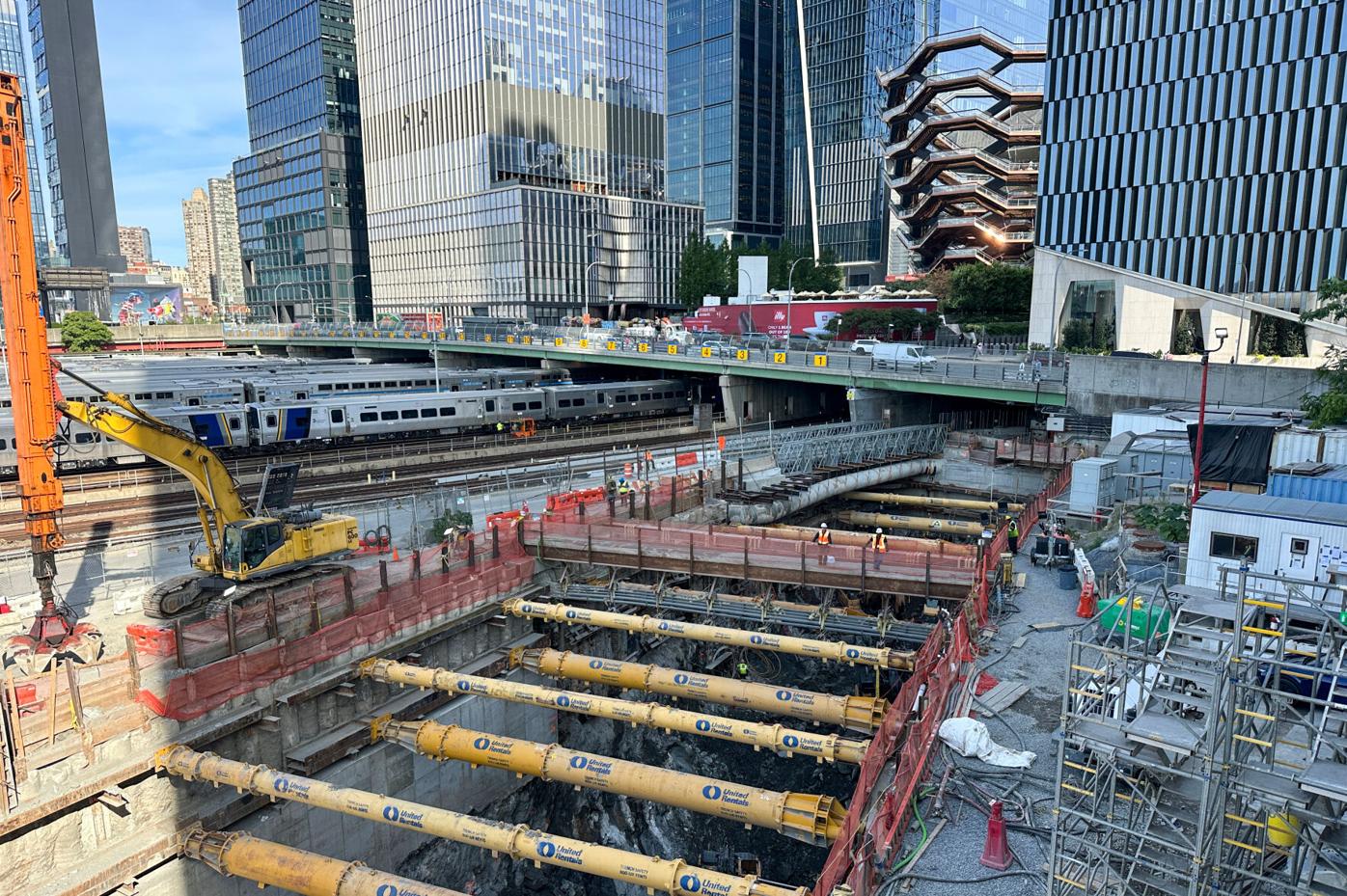
In a dramatic turn of events in early February 2026, New York and New Jersey filed a federal lawsuit against the Trump administration to stop the suspension of federal funding for the critical Hudson River rail tunnel project. This cornerstone infrastructure initiative has far-reaching implications for the Northeast’s transportation network and economy.
The legal action, filed by state officials in Manhattan federal court, reflects increasing frustration over the federal government’s refusal to release congressionally approved funds that now threaten the project’s construction and thousands of jobs. According to Reuters, the lawsuit seeks an emergency court order compelling the U.S. Department of Transportation (USDOT) to resume funding before construction at multiple sites comes to a halt.
A Vital Link for the Northeast Corridor
The Hudson River tunnel project — part of the larger Gateway Program — is designed to upgrade and expand one of the busiest rail corridors in the United States. When completed, it will include:
- A new rail tunnel beneath the Hudson River connecting New Jersey and New York,
- Rehabilitation of the aging North River Tunnel, which was opened in 1910 and damaged by Superstorm Sandy in 2012, and
- Increased capacity for Amtrak, NJ Transit, and commuter rail services that millions of people rely on daily.
This rail corridor is essential — transporting more than 200,000 riders each weekday and supporting a significant portion of the regional and national economy. A shutdown or delay would have ripple effects across travel and commerce.
What Went Wrong — Federal Funding Freeze
The Hudson River tunnel project was fully funded through a combination of federal grants, state contributions, and loans, totaling roughly $16 billion. Most of the federal share was approved under the 2021 bipartisan infrastructure law. However, in October 2025, the Trump administration halted all disbursements, including money that had been formally committed by Congress.
Officials in Washington said the pause was connected to broader budget negotiations and concerns about procedural compliance, including assertions that certain aspects of the project’s contracting did not meet recently revised federal requirements. The USDOT claimed it was reviewing the project for compliance before releasing further funds.
Critics — including New York Gov. Kathy Hochul and New Jersey Gov. Mikie Sherrill — have described the freeze as politically motivated, accusing the administration of targeting infrastructure projects in Democratic-led states for retaliation rather than on legitimate procedural grounds.
The Lawsuit: State Attorneys General Strike Back
On Tuesday, New York Attorney General Letitia James and New Jersey Acting Attorney General Jennifer Davenport filed suit in federal court, seeking an emergency ruling to restore the tunnel funding immediately. They argue that the Trump administration’s action is illegal and jeopardizes a project that has already consumed years of planning and billions of dollars in investment.
In their complaint, the states say the funding freeze lacks a valid legal basis and threatens not only the construction schedule but also the broader transportation network that millions rely on. Without the federal money, which amounts to hundreds of millions in unpaid disbursements, construction crews could be forced to stop work as soon as this week.
Gov. Hochul echoed this urgency in statements accompanying the lawsuit, calling the tunnel project “essential to the future of New York and the economy of the entire region,” and warned that halting construction would risk thousands of jobs and billions in economic activity.
Gateway Development Commission Also Sues
In tandem with the states’ legal action, the Gateway Development Commission — the bi-state panel overseeing the tunnel project — filed its own lawsuit in the U.S. Court of Federal Claims. That suit frames the federal funding freeze as a breach of contract, noting that the Department of Transportation and the commission had been legally bound by grant and loan agreements since mid-2024.
According to the commission, ongoing funding disruptions risk:
- Immediate loss of nearly 1,000 construction jobs,
- Long-term risk to about 11,000 jobs connected to the project’s broader economic impact, and
- A potential shutdown of construction could significantly increase costs if work has to be resumed later under deteriorated conditions.
The Gateway panel’s complaint seeks not only the release of the approximately $205 million in contractually obligated funds due immediately, but also compensation for damages should continued disruption occur.
Broader Stakes: Transit, Jobs, and the Economy
The Hudson River tunnel is singular in its importance. It’s not just another infrastructure project — it underpins the entire Northeast Corridor’s rail network, linking major cities, supporting daily commuters, and carrying freight that feeds into national commerce.
According to construction and economic forecasts cited by project advocates, the Gateway Program’s work supports tens of thousands of jobs and contributes billions in economic activity each year. Disrupting that work could slow regional growth, impede transportation reliability, and increase future construction costs if the project has to restart after a halt.
State officials and project leaders have also been quick to note that the existing North River Tunnel’s condition is precarious; long-term reliance on it without replacement or rehabilitation increases the risk of serious disruptions that could ripple far beyond commuters to impact interstate commerce.
Political Context and Reactions
The lawsuit comes at a time of heightened political contention over federal spending and infrastructure priorities. The Trump administration has defended its stance by tying funding decisions to compliance reviews and broader budget negotiations.
Meanwhile, leaders in both New York and New Jersey — and members of their congressional delegations — have framed the freeze as a direct threat to jobs and transportation reliability in a region that contributes disproportionately to national economic output. Their legal challenge is as much about policy as it is about preserving momentum on a project years in the making.
Democratic lawmakers, including Senator Chuck Schumer, have publicly supported the lawsuits, saying the funding freeze is unnecessary and counterproductive. They argue that honoring the federally approved commitments is both a legal obligation and a practical necessity.
What Happens Next
With work already underway at multiple sites on both sides of the Hudson River, time is running short. Construction crews — many already mobilized and active — face the prospect of stopping if federal funds are not released. Project leaders have warned that any suspension could:
- Increase costs by billions of dollars,
- Delay the anticipated expansion timeline by years, and
- Threatens job security for workers involved in the build.
Courts will play a key role in the coming weeks. If the states’ request for an emergency order is granted, funding could be restored quickly, and work could continue uninterrupted. If not, legal battles could stretch on, compounding uncertainty for project managers, labor unions, and commuters alike.
A Project With National Reach
While the Hudson River tunnel is a regional project, its impact is national. It represents one of the largest infrastructure investments in U.S. history, and its success — or failure — will shape how future federal-state collaborations on transportation are viewed.
For New Yorkers, New Jersey residents, and commuters across the Northeast, the outcome of this legal fight is more than abstract politics — it’s about whether one of the busiest rail corridors in the country remains reliable and capable of meeting the demands of the 21st century.