


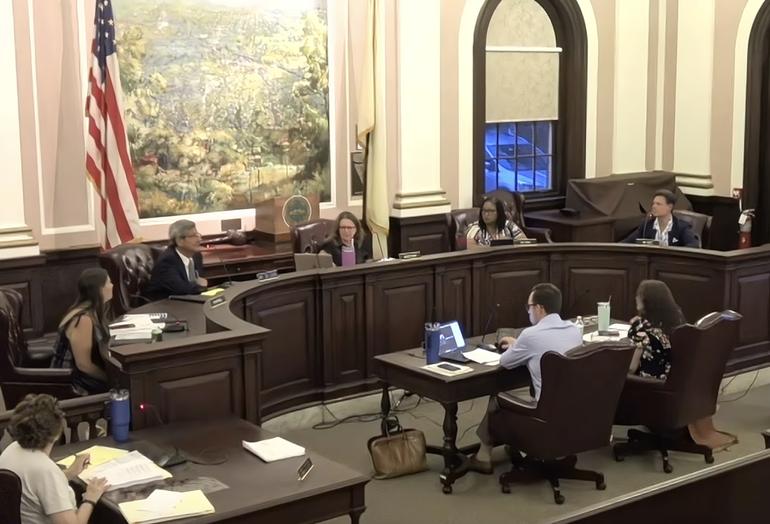
In early February 2026, the Maplewood Township Committee held a wide‑ranging public meeting that touched on transportation challenges, housing development, and key municipal decisions. The gathering offered insight into how local leaders are balancing infrastructure concerns and the ongoing need for more housing — especially affordable units — in one of New Jersey’s commuter‑oriented communities.
NJ Transit Disruptions: What Commuters Need to Know
One of the most immediate topics was transportation — specifically, anticipated disruptions to NJ Transit service beginning in mid‑February. The committee warned residents that planned “cutover” work connected to major infrastructure projects (like the Portal North Bridge effort) will affect rail schedules on lines that serve Maplewood, including the Morris & Essex line via Hoboken.
This means that for about a month starting in mid‑February, some trains may run on altered timetables, be consolidated, or have changed departure times as NJ Transit and its partners transfer rail infrastructure to the new bridge system. Commuters who rely on NJ Transit for daily travel into Newark, Hoboken, New York, and beyond were encouraged to prepare for these adjustments and explore alternate travel options, per an NJ Transit press release detailing the cutover work.
For real estate professionals and community observers, this is a reminder that transportation infrastructure directly influences housing demand and livability — commuter reliability can affect rental markets, pricing, and buyer interest in transit‑oriented neighborhoods like Maplewood.
Affordable Housing Development Continues
Affordable housing also featured prominently in the discussions. The committee’s agenda included a nod to housing proposals and municipal planning, including the review of multi‑unit housing projects. One point mentioned was a 48‑unit housing plan approved with modifications by the committee, a move that underscores Maplewood’s efforts to contribute to the state’s overall housing supply while respecting local considerations.
Affordable housing has long been a topic of local debate and planning in Maplewood. Town officials previously agreed to create hundreds of “fair share” affordable units through 2035, and recent policy changes in both Maplewood and neighboring South Orange now require developers to set aside a higher percentage of units as affordable — in some cases up to 20%. These local mandates go hand‑in‑hand with broader state requirements under New Jersey’s housing planning law, which encourages municipalities to plan for new housing of all types, including those priced for low‑ and moderate‑income families, per broader reporting on regional housing efforts.
This continued emphasis reflects the reality that even established suburban communities must plan proactively to ensure housing options for a diverse range of income levels — something that affects local market profiles and long‑term real‑estate dynamics.
Other Civic Business and Local Governance
The meeting also encompassed standard governance items that are part of Maplewood’s ongoing municipal operations. For example, the committee approved updates to bylaws and ordinances affecting salaries and local policy implementation.
While such operational decisions might sound dry at first glance, they matter because they determine how efficiently the township manages its finances, public services, and oversight — all of which can indirectly affect homeowner costs, business confidence, and development timelines. Realtors and investors pay attention to these details because efficient local governments often correlate with stable property values and predictable planning outcomes.
Why This Matters for Real Estate and Community Planning
Here are a few key takeaways from the Maplewood meeting that connect directly to real estate and community trends:
1. Transportation Reliability Shapes Demand
Metro suburbs like Maplewood rely on NJ Transit for connectivity to major job centers. Temporary service adjustments can influence commuters’ housing choices, particularly renters and buyers who prioritize transit access.
2. Affordable Housing Planning Is Active and Evolving
Maplewood — like many New Jersey towns — continues to move forward with affordable housing decisions, both through approvals of modest projects (like the 48‑unit development) and via policy planning. This ongoing work will influence neighborhood demographics and demand patterns over time.
3. Civic Decisions Have Real Impact
From salary ordinances to municipal bylaws, decisions made in town committee chambers help set the stage for how local government supports housing, infrastructure, and community services — all important factors for long‑term real estate health.
In sum, the Maplewood Township Committee’s meeting wasn’t just another local government session — it offered a snapshot of how civic leaders are juggling transportation challenges, housing supply issues, and day‑to‑day administration, all of which will have ripple effects in the housing market and in community life throughout 2026.