



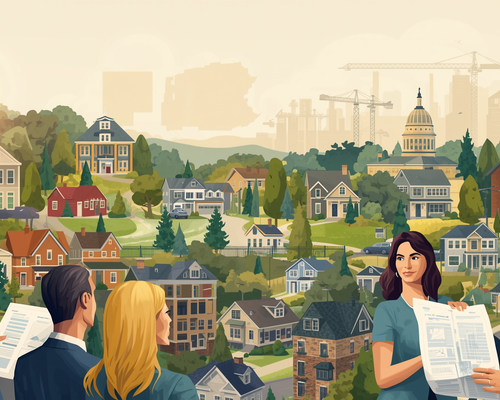
Housing affordability has become one of the biggest problems facing Pennsylvania, and state lawmakers are now saying the issue can no longer be ignored.
After months of testimony, public discussions, and expert analysis, Pennsylvania legislators recently finished a statewide series of hearings that have spotlighted the obstacles many Pennsylvanians face in buying a home and the need to find ways to help more residents achieve the dream of homeownership. The hearings brought together builders, economists, housing advocates, local officials, and industry leaders, all of whom painted a picture of a housing market under increasing pressure from rising costs, limited supply, and ever more complex development regulations.
The housing problems in Pennsylvania have been developing for decades, but the hearings drew attention to how serious the situation has become. Policymakers were warned time and time again that without major reforms the Commonwealth could struggle to provide enough housing for generations to come while losing affordability for first-time home buyers, working families, and young professionals entering the market.
A Housing Problem Years in the Making
For much of the last decade, Pennsylvania’s housing market has experienced rising home prices and a lack of new construction to meet the demand.
The hearings' testimony indicated that the median price of a home for sale in Pennsylvania went from approximately $185,000 in 2016 to about $325,000 in 2025. That dramatic run-up has priced many households out of homeownership as their incomes have failed to keep pace with the rising cost of housing.
Mortgage rates have certainly been a factor in recent affordability problems, but experts told lawmakers that the cost of financing is just one part of the equation. Of course, as long as supply remains tight and demand continues to rise, prices will be rising, housing economists said. That’s precisely what’s happening in many Pennsylvania communities. Even with some moderation in home-buying activity, the end result has been a market with low inventory levels, high competition for homes, and declining affordability. Prices go up naturally. That’s exactly what’s happening in many Pennsylvania communities.
The result has been a market with low inventory levels, high competition for homes, and declining affordability, despite some moderation in home buying activity.
Builders Blame Delays on Regulation
One of the more popular topics of discussion at the hearings was the problem builders face in marketing new housing projects.
Developers say the approval process for residential projects has become longer and more complicated. In some cases construction could be delayed for reviews and approvals by as many as 11 different regulatory agencies, boards, or governing bodies.
Industry representatives told lawmakers that projects often are delayed for years by the need to navigate multiple layers of permitting, zoning reviews, engineering approvals, environmental regulations, and public hearings, raising costs.
Perhaps most striking was testimony that projects approved in under two years are now considered unusually fast by industry standards.
For developers, those delays pose major financial risks. The costs of land acquisition keep piling up, waiting for projects to be passed. Construction materials could become more expensive; labor costs could go up. Finance charges increase. Some projects are much more expensive than originally estimated when approvals are finally received.
Builders say those costs are ultimately passed on to homebuyers and renters, compounding the affordability challenges throughout Pennsylvania.
Zoning Rules Under Increasing Fire
Local zoning rules — not just permitting delays — were another big problem that came up in the hearings.
Many Pennsylvania municipalities have zoning ordinances that were written decades ago, well before the housing shortage became a major issue. Some of these regulations, critics say, inadvertently stifle housing production by restricting where and how houses can be built.
Housing advocates told lawmakers that restrictive zoning policies can limit opportunities for...
- multi-family homes,
- townhome developments,
- mixed-use communities,
- smaller lot subdivisions,
- and workforce housing projects.
Zoning-reform advocates say if you want more housing supply, communities need to update regulations that may no longer apply to today’s market realities.
But the issue remains politically sensitive.
Many local officials and residents believe municipalities should have a lot of control over development decisions. Residents often oppose proposals for higher-density housing because they worry about increased traffic, school capacity, infrastructure, environmental effects, and the character of their neighborhood.
Lawmakers will be faced with the difficult task of balancing statewide housing needs with local control of land-use decisions.
Labor Shortages Continue to Hit Construction
The hearings also exposed another problem in Pennsylvania’s housing market: a shortage of skilled construction workers.
Builders said they were still struggling to find enough qualified workers to meet demand for new residential development. Labor shortages have become a national issue in recent years, and Pennsylvania has not been immune to those pressures.
Leaders in the industry warn that even if reforms to permitting and zoning allow for faster project approvals, shortages of labor may still limit how quickly new housing can be built.
The shortage affects a wide range of construction trades, including electricians, plumbers, carpenters, equipment operators, and other specialized workers critical to residential There is a shortage across many construction trades, including electricians, plumbers, carpenters, equipment operators and other specialized workers critical to residential development.Many industry groups are now calling for more investment in skilled trades education and expanded workforce training programs to address long-term labor shortages.killed trades education to help address long-term labor shortages.
The cost of housing is becoming a big political issue
The conclusion of the hearing series comes at a time when housing affordability is emerging as one of Pennsylvania's most important political issues.
The hearing series’ conclusion comes as housing affordability emerges as one of Pennsylvania’s biggest political issues.It’s more difficult for younger buyers to enter the market, and many existing homeowners aren’t willing to sell because they’re locked into much lower mortgage rates they secured years ago.nsurance costs, and growing property tax burdens have all contributed to affordability challenges.
It’s more difficult for younger buyers to enter the market, and many existing homeowners aren’t willing to sell because they’re locked into much lower mortgage rates they secured years ago.
The end result has been to tighten up inventory constraints and reduce options for potential buyers.
Both sides of the state legislature agree that Pennsylvania needs more housing. But there is still a big disagreement about what to do next.
Some policymakers are in favor of aggressive reforms to streamline approvals and reduce regulatory barriers. Others warn against policies that could undermine local control or reduce environmental oversight.
Lawmakers will continue to discuss possible policy tweaks through the end of 2026.
The Future of Pennsylvania Housing at a Crossroads
Ultimately, the hearings highlighted an increasing truth: Pennsylvania’s housing challenges are no longer just a concern for builders or prospective homebuyers.
Housing affordability has become a broader economic issue with implications for workforce development, business growth, community planning, and long-term competitiveness.
Housing availability is more and more frequently cited by employers as a factor in recruiting and retaining workers. Housing supply is often a critical factor in allowing future growth for communities that are interested in economic development. At the same time, residents are demanding solutions that maintain affordability and safeguard the character of their neighborhoods.
Testimony presented during the hearing series indicates there is no “one size fits all” policy solution to Pennsylvania’s housing shortage. Rather, experts say that meaningful progress is likely to require a mix of zoning modernization, permitting reforms, workforce development initiatives, infrastructure investment, and more housing production.
As the legislature shifts from hearings to potential legislation, the decisions made in Harrisburg over the next few months could have a lasting impact on Pennsylvania’s housing market for years to come.
Housing affordability is quickly emerging as one of the defining policy challenges for Pennsylvania in 2026, with home prices well above where they were a decade ago and demand still outstripping supply in many communities.
Discussion
Thoughts from readers and local market watchers.