



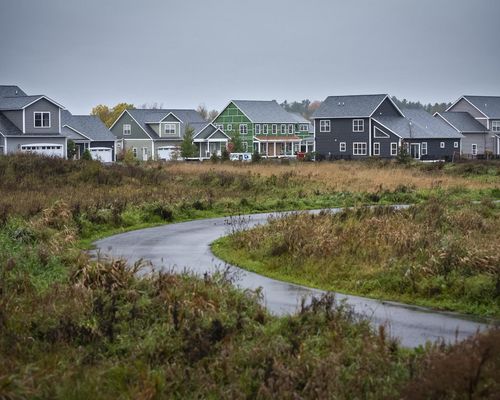
Vermont’s housing strategy is increasingly being shaped at the local and regional level, where planning efforts and targeted programs are beginning to define how — and where — new housing will actually be built.
Across the state, and particularly in regions like the Northeast Kingdom, planners and policymakers are working on updated frameworks that aim to align long-term housing goals with evolving land-use policies. These efforts reflect a broader shift in Vermont’s approach: instead of relying on one statewide solution, the state is moving toward a more localized, multi-layered strategy to address its housing shortage.
Regional Planning Takes Center Stage
One of the most important developments right now is the progression of updated regional plans for 2026, especially in less densely populated parts of Vermont.
These plans are not just administrative updates. They serve as the blueprint for how communities grow over the next decade. They include revised housing targets, updated land-use maps, and new strategies designed to align with broader state initiatives such as Act 181.
At their core, these plans aim to answer a fundamental question: where can Vermont realistically build more housing?
In regions like the Northeast Kingdom, the answer is complex. Large portions of land are environmentally sensitive, infrastructure can be limited, and population density is relatively low. As a result, regional planning efforts are focusing on identifying areas where development can be supported — particularly near existing infrastructure, village centers, and transportation corridors.
This kind of targeted planning is becoming essential in a state where buildable land is not always easy to come by.
Aligning with Statewide Policy
Regional plans are also increasingly being shaped by statewide policy changes, particularly those tied to land use and development regulation.
Policies like Act 181 are pushing communities to think more intentionally about where growth should occur. The goal is to concentrate development in areas that can support it, while protecting environmentally sensitive landscapes.
That alignment is not always straightforward. Local priorities, community concerns, and economic realities all influence how these plans are implemented. But the direction is clear: Vermont is moving toward a more coordinated system where regional planning and state policy work together.
For real estate professionals, this matters because these plans ultimately influence where future housing inventory will emerge. Areas identified for growth are more likely to see development activity, while areas with stricter protections may face continued supply constraints.
The Rise of Alternative Housing Solutions
At the same time that planning efforts are evolving, Vermont is also expanding the types of housing it is willing to support.
Programs like the Mobile Home Infill Program (MHIP) are gaining attention as practical tools for increasing supply more quickly and affordably. These programs focus on placing new manufactured homes in existing communities, often at price points that are significantly lower than traditional site-built homes.
With new units priced roughly between $85,000 and $110,000, manufactured housing is emerging as one of the few pathways to homeownership for many buyers in today’s market.
The appeal is not just affordability. It is also speed. Manufactured homes can be delivered and installed more quickly than traditional construction, making them a valuable option in a state where building timelines can be long and complex.
Infill programs also make use of existing infrastructure, which helps reduce development costs and avoids some of the barriers associated with building on undeveloped land.
A More Diverse Approach to Housing Supply
Taken together, these developments point to a broader shift in how Vermont is addressing its housing shortage.
The state is no longer relying solely on large-scale development or traditional construction methods. Instead, it is combining multiple approaches:
- Regional planning to identify where growth should occur
- Policy alignment to guide development patterns
- Alternative housing types to increase supply more quickly
This diversified strategy reflects the reality of Vermont’s housing challenge. There is no single solution that can address the shortage on its own. Instead, progress is coming from a combination of smaller, targeted efforts that collectively move the market forward.
Implications for the Real Estate Market
For real estate professionals, these changes are significant — even if they are not always immediately visible in day-to-day transactions.
Regional plans will shape the long-term supply pipeline, determining which areas see new development and which remain constrained. Programs like MHIP will introduce new types of inventory, particularly at more affordable price points.
Over time, these factors can influence pricing trends, buyer demand, and investment opportunities.
In areas where planning supports growth, increased supply could gradually improve availability and create new opportunities for buyers. In areas where development remains limited, scarcity may continue to support higher prices.
Understanding these dynamics at the local level will be critical. Vermont’s market is becoming more fragmented, with different regions moving at different speeds based on their planning frameworks and development capacity.