
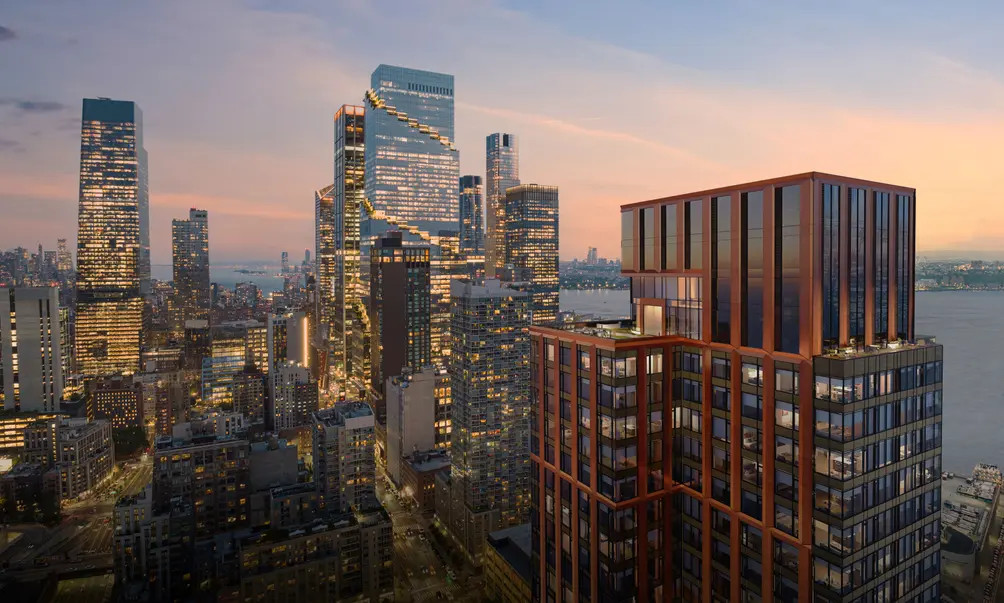
After years of tight inventory, rising costs, and regulatory friction, New York City’s housing pipeline is finally showing signs of movement. As 2025 comes to a close, newly expanded housing-friendly regulations — including zoning changes, accessory dwelling unit (ADU) allowances, and relaxed parking mandates — are beginning to translate into real construction activity.
For real estate professionals, developers, and investors, this shift matters. What gets permitted today shapes the market conditions of 2026 and beyond — influencing supply, pricing pressure, absorption, and where opportunities may emerge next.
Housing Permits Are Rising — A Meaningful Change from Recent Years
In the first ten months of 2025, New York City permitted approximately 17,600 new housing units, representing a roughly 23% year-over-year increase, per 6sqft.com. While this figure is still below the level needed to fully resolve the city’s long-standing housing shortage, it marks a clear acceleration compared to prior years when production stalled under regulatory and economic headwinds.
Much of this growth can be traced to updated land-use rules and planning reforms that aim to unlock housing in areas previously constrained by outdated zoning. These changes include more flexibility around building density, reductions in mandatory parking requirements, and broader acceptance of smaller units or accessory housing, per 6sqft.com.
For the development community, the increase in permits signals a regulatory environment that is — at least for now — more receptive to housing production.
Why 2026 Matters: From Permits to Physical Supply
Permits alone do not ease housing pressure. Completion does.
Many of the units approved in 2024 and 2025 are expected to come online in 2026, meaning next year could see a modest but noticeable increase in delivered housing stock, per 6sqft.com. If absorption keeps pace, this new supply could begin to relieve pressure in select neighborhoods — particularly in areas that have seen persistent undersupply.
However, the impact will likely be uneven. Some submarkets may benefit from additional inventory, while others — especially high-demand corridors — may continue to experience competition and elevated pricing.
For brokers and investors, this timing is critical. Understanding which projects are nearing completion — and where — will help anticipate shifts in rental dynamics, resale competition, and leasing velocity.
Adaptive Reuse & Rezoning: Where New Opportunities Are Emerging
Beyond traditional ground-up construction, a growing share of future housing may come from adaptive reuse projects. As of December 2025, multiple plans are underway to redevelop underutilized properties — including former industrial, retail, and commercial sites — into mixed-use or residential developments, per Optimal Spaces.
These conversions are particularly relevant as demand for office and retail space continues to evolve post-pandemic. Local governments are increasingly open to rezoning or reclassifying properties that no longer serve their original purpose, creating opportunities for developers who can navigate complex approvals and redevelopment costs.
For investors, adaptive reuse may offer a path to value creation — though it also requires careful underwriting, given construction risk, zoning complexity, and policy uncertainty.
Will More Supply Ease Rents? It Depends
The central question for many market participants is whether increased housing production will actually translate into meaningful rent relief.
If new supply is absorbed steadily — without being overwhelmed by population growth or household formation — it could help stabilize rents in certain segments. That said, NYC’s housing deficit has accumulated over decades, and one or two years of increased permitting will not fully reverse that imbalance.
Additionally, rising construction costs, financing constraints, and evolving rent regulations may limit how affordable newly delivered units truly are. While supply growth is a positive signal, it is not a cure-all.
What This Means for Real Estate Professionals in 2026
For developers, the current environment rewards speed, regulatory fluency, and flexible project design. Projects already entitled or permitted may enjoy a competitive advantage if policy or financing conditions tighten again.
For investors, location and asset type will matter more than ever. Newer buildings and mixed-use developments may perform differently than older, rent-regulated stock — particularly as policy risk and operating costs continue to rise.
For brokers and advisors, this shift reinforces the importance of local market intelligence. Knowing which neighborhoods are adding supply — and which are not — will be essential when advising buyers, sellers, landlords, and tenants.
The Bottom Line
New York City is entering 2026 with more housing in the pipeline than it has seen in several years. A 23% increase in permitted units, combined with zoning reforms and adaptive-reuse initiatives, signals a real — though still fragile — shift toward increased production, per 6sqft.com and Optimal Spaces.
Whether this momentum continues will depend on political stability, financing conditions, and the city’s ability to balance affordability goals with economic reality. For now, the takeaway is clear: supply is finally moving again — and that movement will shape opportunities, risks, and pricing across the market in the year ahead.
Check out this article next