In December 2025, a long-anticipated plan finally moved off the drawing board in Pittsburgh. The Esplanade Project — a bold, mixed-use redevelopment on the city’s North Shore — officially broke ground, marking a major step in transforming a neglected industrial area into a vibrant riverside neighborhood.
The scale, ambition, and potential community impact make Esplanade one of the most significant real estate developments in Pittsburgh in recent memory. This article walks you through the details of what’s planned — and why real estate professionals should be watching closely.
What Is the Esplanade Project?
- The Esplanade spans 15 acres along the Ohio River in Pittsburgh’s Chateau/North Shore area — an area formerly industrial and under-utilized.
- The overall budget is estimated at US$740 million.
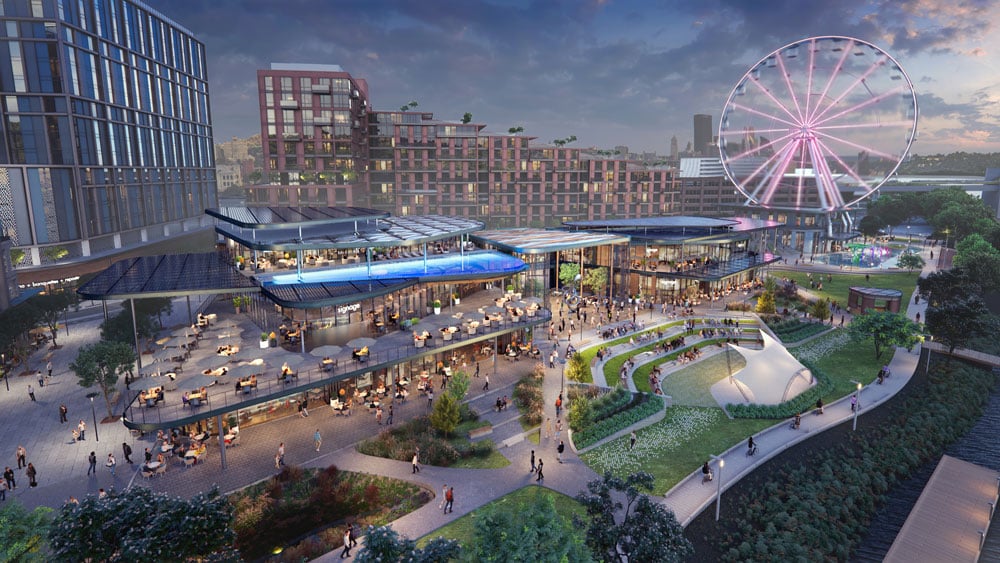
- It’s a mixed-use redevelopment — meaning it combines a variety of uses: residential, retail, entertainment, hospitality, public space, and lifestyle amenities — all in one integrated district.
Planned Components (Phase 1 and Onward)
According to recent project releases, the Esplanade will include:
- Up to 750 rental apartments, ranging from affordable units (reserved for families earning up to ~80% of the area median income) to luxury-class units.
- 126 riverfront condominiums for sale.
- Roughly 160,000 square feet of retail space — shops, dining, and other commercial uses.
- 120,000 square feet of innovation / office-workspace (in some plans).
- A 225-room hotel, offering short-term stays and hospitality capacity.
- A marina, with houseboats, day slips, a public pier, and marine-safety facilities — giving river access to residents and visitors.
- A signature Ferris wheel (~180 feet tall), with climate-controlled cabins — meant as a landmark attraction and a nod to Pittsburgh’s history (the city is tied to the inventor of the Ferris wheel).
- Public-space amenities: a splash park (which will double as an ice-skating ribbon in winter), upgraded trails (integrating with the existing riverside trail network), a riverside amphitheater, landscaping/green space, and connectivity improvements.
The development is designed to be built in phases. According to the project timeline:
- Phase 1 (site work, demolition, infrastructure, utilities, land-raising above the flood plain) began in December 2025.
- Vertical construction (apartments, retail, Ferris wheel, marina, and core public amenities) is expected to start in 2026 and open around 2028.
- Later phases — including condos, hotel, entertainment, or innovation-workspace towers — could be completed by 2029.
Why This Project Matters — for Pittsburgh and Real Estate Markets
Transforming Underused Land into a Vibrant Waterfront Community
The site was previously industrial river-front land, largely abandoned or under-utilized. The Esplanade will convert it into a mixed-use community that reconnects neighborhoods to the river, revitalizes blighted land, and creates something entirely new for Pittsburgh’s North Shore.
Turning brownfield land into desirable residential and lifestyle real estate is not just about new homes or condos — it’s about reshaping how the city interacts with its river, how people live, work, and play, and how neighborhoods evolve.
Diversified Housing Options — From Affordable to Luxury
With 750 rental units (including affordable units) and 126 condos for sale, the Esplanade brings varied housing stock. This opens opportunities for first-time renters, families, middle-income earners, as well as luxury buyers — which helps diversify the socio-economic mix of residents.
For real estate professionals, this variety means multiple target demographics — renters, investors, buyers, and even vacation- or short-term-stay clients (given the hotel + marina + amenities).
Adding Lifestyle — Amenities, Waterfront Living & Entertainment
The Ferris wheel, marina, retail spaces, waterfront trails, hotel, and public-space amenities turn Esplanade into more than just housing. It becomes a lifestyle destination — a place where people may want to live for the convenience of city + river + recreation.
That lifestyle draw could attract not only locals but also out-of-town residents, remote-workers relocating for affordability + quality of life, and people who want a “city + waterfront” balance without the premium prices of coastal metros.
Economic Stimulus — Jobs, Investment, and Long-Term Value
Per the project’s economic analysis, the construction phase is expected to support over 9,300 jobs (across southwestern Pennsylvania), and once operational, the development will support about 4,500 permanent jobs.
Estimates suggest the total economic output and spending from the project will run into hundreds of millions annually — which could positively impact the broader real estate market, local businesses, and demand for rentals and services in adjacent neighborhoods.
Urban Renewal, Neighborhood Connectivity & Riverfront Access
Part of the Esplanade’s vision is to reconnect neighborhoods — namely Chateau, Manchester, and the broader North Side — with the riverfront and with each other. The project’s planning documents highlight sustainability, mixed use, public access, and inclusion as central goals.
This renewed connectivity, access to green spaces and riverfront trails, and infusion of amenities could help stabilize nearby real estate values, increase demand for surrounding properties, and shift the perception of the area from industrial to desirable residential + lifestyle zone.
What This Means for Realtors, Investors & Market Stakeholders
If you’re a real estate professional, investor, or market watcher in Pittsburgh (or considering entering), the Esplanade presents several potential strategic moves:
- Scout nearby neighborhoods for “pre-appreciation” potential — Areas near but outside the project may benefit from spillover demand and rising valuations as the district develops.
- Rental plays — With 750 apartments (some affordable, some luxury), there’s potential for stable rental demand — particularly from young professionals, remote workers, or newcomers wanting waterfront-adjacent living.
- Condo and resale opportunities — Once the 126 condos are completed, there may be demand for resale in a new, amenity-rich district — attractive to buyers wanting newer build + lifestyle perks.
- Mixed-use & diversified portfolios — For investors: combining rental, condo investment, hospitality (hotel), and commercial/retail exposure spreads risk and may capture upside across different real estate segments.
- Long-term hold & value growth — Given the phased build-out and multi-use nature, properties here may appreciate not just because of scarcity but due to built-in amenities, infrastructure, and economic growth.
- Community/urban-development involvement — Developers and agents who engage early (marketing, local community outreach, tenant/resident attraction, public-space initiatives) can help shape the district’s identity and brand — a key advantage in such high-profile developments.
Risks & What to Watch Out For
That said — as with any big redevelopment, there are risks and uncertainties to keep in mind:
- Phased timeline — long build-out horizon. Full delivery may stretch to 2028–2029; early buyers or renters need patience.
- Market absorption risk. With hundreds of new units, retail spaces, hotel rooms — demand needs to match supply to avoid oversaturation, especially if economic or interest-rate conditions shift.
- Infrastructure, floodplain & environmental factors. The project involves raising land, redoing utilities, and mitigating former industrial contamination or flood risks — construction quality and long-term maintenance matter.
- Gentrification and affordability pressures. While 20% of rentals are designated affordable, there’s a risk that rising demand could push prices up nearby, affecting existing residents.
- Dependence on overall economic conditions. Job growth, population shifts, rates, and broader economic health will influence how well the development performs.
Key takeaway
The Esplanade Project isn’t just another building complex. It’s an ambitious attempt to transform how Pittsburgh uses its waterfront — turning old industrial real estate into a new, integrated, amenity-rich neighborhood that blends housing, lifestyle, work, and play.
For real estate professionals, investors, and developers, this could be a once-in-a-generation opportunity in Pittsburgh. But with that opportunity comes the need for vision, strategy, and patience. For buyers and newcomers, it offers a chance to live in a vibrant, modern, and accessible riverside community — potentially at a lower cost than comparable waterfronts in other U.S. metros.
If you’re considering involvement — whether through investment, sales, rentals, or urban planning — the next few years will be critical. Esplanade could reshape not only the North Shore, but how Pittsburgh thinks about riverfront real estate for decades.
Check out this article next