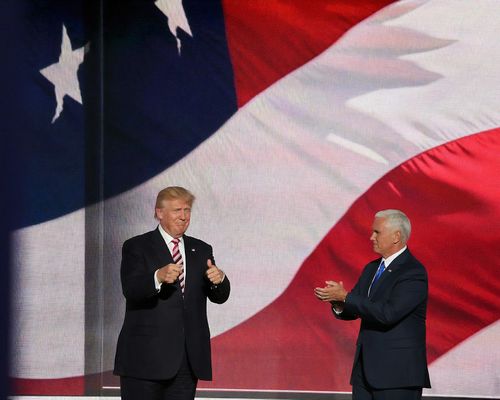
When President Donald Trump arrived in Beijing for his high-profile summit with Chinese President Xi Jinping, the expectations were huge.
Financial markets had been looking for signs of easing tensions between the world’s two biggest economies. American businesses wanted clarity on tariffs, supply chains, and technology limits. Analysts of foreign policy looked for clues on Taiwan, Iran, and artificial intelligence. Both Washington and Beijing, meanwhile, entered the meetings under increasing global pressure as geopolitical instability continues to reshape the international economy.
The summit is over, and now a new question is taking center stage in political and economic analysis around the world:
Did Donald Trump get any real wins for the US, or did Xi Jinping emerge with the more significant strategic victory?
That debate has quickly turned into one of the most talked-about developments in the summit’s wake, especially because the outcome looked so different from the dramatic breakthrough some investors and political watchers had expected at the outset.
Trump left with some modest economic agreements and public commitments on trade and agriculture, but many analysts believe Xi won something potentially more valuable: projecting China as stable, disciplined, globally influential, and unwilling to make major concessions under pressure.
Ultimately, the summit was less about transformative agreements than about which leader appeared more strategically positioned in a world that is growing more volatile, said multiple foreign policy experts.
One reason the summit garnered so much attention was the unusually business-heavy American delegation that accompanied Trump. The meetings in Beijing included executives from Tesla, Nvidia, Apple, BlackRock, Visa, and other big companies, reflecting the administration’s emphasis on economics and technology. Many American executives at the summit were looking for concrete objectives tied to market access, regulatory approvals, semiconductor cooperation, and long-term supply chain stability, Reuters reported.
The very makeup of the delegation told us much about Trump’s priorities. The administration appeared to be looking at the summit not so much as a military or diplomatic symbolic gesture but as securing practical economic outcomes while stabilizing relations enough to avoid further damage to global markets.
That strategy produced some measurable results.
Following the summit, the White House announced that China had agreed to purchase at least $17 billion annually in American agricultural products between 2026 and 2028. The agreement included expanded beef access, renewed poultry imports, agricultural certification cooperation, and additional trade access discussions. Reuters reported that Beijing also signaled willingness to ease some non-tariff barriers and continue discussions involving tariff reductions.
Politically, those agreements matter for Trump.
American farmers and agricultural exporters were among the industries most heavily affected during previous trade disputes between Washington and Beijing. Any progress involving agricultural exports gives the administration a tangible economic victory it can present to domestic audiences and financial markets.
But while Trump secured visible trade wins, many analysts believe Xi may have achieved something more important strategically.
The Washington Post reported that Xi succeeded in projecting confidence and stability throughout the summit while giving up very little publicly. Rather than appearing defensive or pressured, Xi used the summit to reinforce China’s image as a calm and indispensable global power during a period of worldwide instability.
That perception matters enormously in global diplomacy.
At a time when conflicts in the Middle East, trade uncertainty, inflation concerns, and technological competition are creating economic anxiety worldwide, China appears eager to present itself as predictable and strategically patient. Analysts say Xi’s approach during the summit aligned perfectly with that objective.
Several major issues also remained unresolved despite the high-profile meetings.
No sweeping tariff agreement emerged. The deeper trade imbalance between the United States and China remains largely intact. Restrictions tied to advanced semiconductors and artificial intelligence technologies continue. Competition over rare earth minerals and strategic supply chains remains intense. And perhaps most importantly, tensions surrounding Taiwan remain as dangerous as ever.
Taiwan quickly became one of the most discussed topics after the summit concluded, largely because of what was missing from the White House’s public summary.
Reuters reported that Xi warned Trump during private discussions that mishandling Taiwan could push U.S.-China relations into a “dangerous place.” Yet despite the issue reportedly dominating major portions of the talks, Taiwan was largely absent from the White House’s official post-summit messaging.
The omission immediately set off a flurry of speculation among analysts and geopolitical observers.
Some experts say the White House intentionally softened its public messaging on Taiwan to avoid inflaming tensions in the wake of the meetings. Some think the administration wanted to keep alive the delicate atmosphere of economic cooperation made at the summit. Some say the absence is part of a wider strategic shift to dial down public confrontation while continuing competition behind the scenes.
Whatever the reason, the Taiwan question has quickly become one of the most closely watched outcomes of the summit, because Taiwan is still the single most dangerous flashpoint in the U.S.-China relationship.
Analysts also believe that artificial intelligence was quietly a central part of the meetings, even if it received less public attention than tariffs and trade.
The summit attracted executives such as Nvidia CEO Jensen Huang and Tesla CEO Elon Musk, underlining the summit’s deep links to the future of AI infrastructure, semiconductor manufacturing, advanced computing, and industrial supply chains. Both governments know that the race for technological supremacy will determine global economic power for decades.
At the same time, US firms are heavily dependent on Chinese manufacturing and consumer markets, making for a tricky balancing act for Washington. Trump has to keep up the political tough-on-China act without creating economic shocks that could damage American businesses and financial markets.
That balancing act helps explain why many experts now characterize the summit less as a transformational diplomatic breakthrough and more as a stabilization effort designed to prevent relations from deteriorating further.
Reuters summarized the summit as producing “stability and stalemate” rather than major geopolitical progress.
Perhaps that was the real goal all along in many respects.
The Washington-Beijing relationship is too important economically and too globally dangerous for either side to allow uncontrolled escalation. The two countries remain deeply intertwined through trade, technology, finance, manufacturing, and energy markets even as they compete more aggressively than ever for geopolitical influence.
That reality shaped nearly every aspect of the summit.
Trump secured economic headlines and modest trade victories that could help him politically at Trump has seized economic headlines and modest trade wins that could help him politically at home. Xi raised China’s profile on the world stage without major concessions. Financial markets were reassured that tensions would not flare up immediately.
But the core issues driving rivalry between the United States and China remain unresolved, and experts say the long-term competition between both powers is still accelerating.
Which is why the biggest takeaway from the summit may not be who won a particular agreement or trade negotiation.
It may be the growing realization that the world’s two most powerful economies are no longer trying to become partners again—they are simply trying to prevent competition from becoming outright confrontation.