



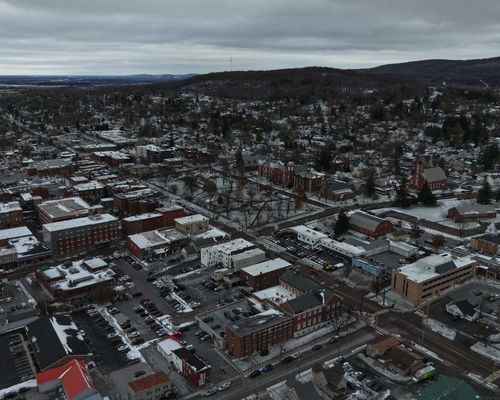
One of the more notable housing stories emerging in Vermont this week involves the growing recognition of Reid Commons, a 33-unit affordable senior housing development in St. Albans that is increasingly being viewed as a model for the future of housing across the state.
The project recently received a major “Best of the Best” award from Efficiency Vermont during the organization’s annual Better Building by Design conference, where projects were recognized for innovation in affordability, energy performance, and resilience. Per Vermont Business Magazine, Reid Commons earned the award for Residential New Construction in the multifamily category, highlighting its combination of affordable housing, fossil fuel-free infrastructure, and environmentally focused design.
But what makes the project especially significant is not just the award itself. It is the way Reid Commons brings together several of the biggest themes currently shaping Vermont real estate and housing policy.
A Different Kind of Affordable Housing Project
Located in St. Albans, Reid Commons provides 33 affordable apartments for adults age 55 and older, including 27 one-bedroom and six two-bedroom units. The development serves low- and moderate-income residents and was designed specifically to support aging Vermonters who need stable, energy-efficient housing options. Per Vermont Business Magazine, the project opened in fall 2025 and was developed on the former Fonda-Solo manufacturing site after more than 16 years of environmental remediation efforts.
That detail is important because the site itself represents one of the clearest examples of a growing Vermont trend: adaptive reuse of older industrial land.
Instead of expanding outward onto undeveloped land, the project transformed a former industrial brownfield into housing. In a state where buildable land can be limited by geography, infrastructure, and environmental regulation, redevelopment of underused sites is becoming an increasingly important part of the housing conversation.
Projects like Reid Commons show how communities can create new housing supply while also revitalizing land that may otherwise remain vacant or unusable.
Climate-Focused Development Becoming More Common
Another major reason the project is receiving attention is its energy design.
Reid Commons is Cathedral Square’s first completely fossil fuel-free building. Heating, cooling, and hot water are powered through a closed-loop geothermal system connected to deep underground wells, while the building also includes rooftop solar capacity and a highly efficient thermal envelope. Per Vermont Business Magazine, the project exceeds Efficiency Vermont’s High Performance building standards and includes features such as triple-pane windows, dense insulation, and advanced ventilation systems.
This reflects a broader shift happening in Vermont housing development. Increasingly, new projects are being designed not only around affordability, but also around long-term operational efficiency and climate resilience.
Energy costs remain a major affordability concern for many households, particularly seniors living on fixed incomes. Buildings that reduce heating and utility costs can improve affordability over the long term, even if construction costs are initially higher.
At the same time, Vermont continues pushing toward more aggressive climate and electrification goals, making fossil fuel-free development more attractive from both a policy and market perspective.
Senior Housing Demand Continues to Grow
The project also highlights the growing need for age-specific housing in Vermont.
Vermont has one of the oldest populations in the country, and demand for affordable senior housing continues to increase. Many older residents are looking for housing that allows them to age in place without the maintenance burdens or financial pressure associated with larger homes.
According to previous reporting from Vermont Business Magazine, Reid Commons received more than 150 applications for its 33 apartments, illustrating the level of unmet demand for this type of housing.
The development includes services and amenities designed specifically for older adults, including wellness support programs, accessible design features, community spaces, walking paths, and proximity to downtown St. Albans.
Importantly, the project is also helping free up existing housing inventory. Some residents who moved into Reid Commons transitioned from homeownership, potentially opening additional homes for other buyers and families in the market. Per Vermont Business Magazine, 11 households sold their homes to move into the development.
Why Real Estate Professionals Are Watching Projects Like This
For realtors, developers, and housing professionals, Reid Commons represents more than a single successful project. It reflects the direction Vermont housing may increasingly move toward over the next decade.
Several statewide trends are converging at once:
- redevelopment of underused land
- Demand for affordable housing
- aging demographics
- climate-focused building standards
- infrastructure-efficient development
Projects that successfully combine these priorities are becoming increasingly important because they align with both market demand and public policy goals.
In a state where large-scale suburban expansion is often difficult, smaller infill and redevelopment projects may become one of the most practical ways to add housing supply.
A Broader Shift in Vermont Housing Strategy
What makes Reid Commons especially notable is how integrated the project feels within Vermont’s broader housing strategy.
Rather than focusing only on unit production, the development addresses multiple long-term goals simultaneously:
- affordability
- sustainability
- adaptive reuse
- An aging population needs
- community-centered planning
This multi-purpose approach is becoming more common as Vermont tries to solve its housing shortage within the realities of environmental regulation, infrastructure limits, and demographic change.
Developments that can accomplish several goals at once are increasingly likely to attract support, funding, and public attention.