


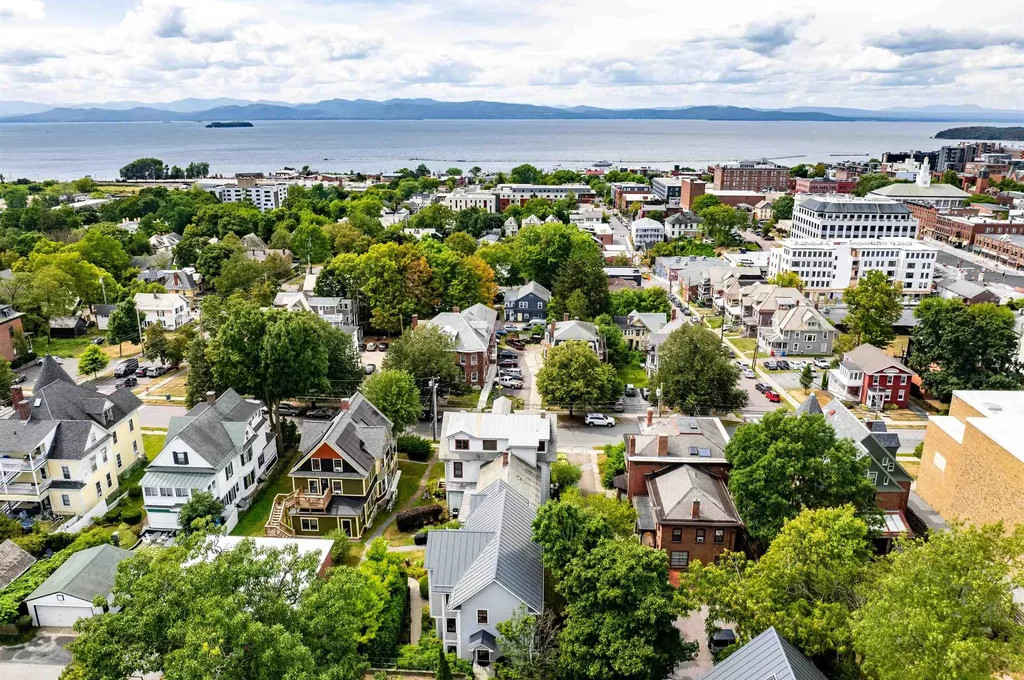
Vermont’s housing market has reached a point where headlines can be misleading if you don’t look closely at the data.
You may hear numbers like $540,000 being thrown around as the “average” home price in Vermont. In reality, the statewide median sale price is closer to $385,000. That gap isn’t a contradiction — it’s a signal. Location, property type, and buyer intent matter more in 2026 than at any point in the last decade.
Vermont isn’t becoming uniformly expensive overnight. Instead, the market is fragmenting. Certain pockets are commanding premium prices, while others are offering more realistic paths to ownership — if buyers know where to look.
The Real Numbers Behind Vermont’s Market Shift
At a statewide level, Vermont’s median home price rose to $385,000, a 5.8% year-over-year increase. Breaking that down further:
- Single-family homes: Approximately $435,000, up about 5%
- Condos: Roughly $380,000, up around 4%
But regional differences are driving very different outcomes.
In northwest and central Vermont, single-family homes are selling closer to $500,000, reflecting strong demand for space, privacy, and lifestyle-driven purchases. Meanwhile, Chittenden County tells a more nuanced story. Single-family prices there dipped slightly — about 1.5%, settling near $580,000 — while condo prices rose over 5% to roughly $399,000.
That divergence is important. Even in Vermont’s most expensive county, buyers are becoming selective. Premium pricing still works, but only when it’s clearly justified.
Where the $540K Conversations Are Coming From
The $540,000 figure often cited by agents reflects activity in Vermont’s upper-tier markets, not the entire state. These are areas where lifestyle and usability drive value:
- Waterfront homes in the Champlain Valley
- Ski-adjacent properties near Stowe or Killington
- Renovated farmhouses on large parcels of land
The buyers competing in these markets are typically remote professionals, second-home buyers, and long-term investors. They’re paying for more than square footage — they’re paying for flexibility, outdoor space, and proximity to recreation.
This concentration of high-end demand is why averages can feel disconnected from reality. It also creates opportunity. When certain markets run hot, nearby towns often see spillover demand, giving informed buyers a chance to find better relative value.
Inventory Is Growing — and That Changes the Game
One of the most meaningful shifts heading into 2026 is inventory expansion.
- New listings for single-family homes are up roughly 20%
- Homes are now spending 43 to 83 days on the market, depending on location and price
The chaotic bidding wars of 2022 and early 2023 are largely behind us.
For buyers, this means leverage is back. Homes that sit for 60 days or more often come with sellers who are open to price adjustments, closing cost credits, or flexible terms. On average, single-family homes are selling about 2% below asking, with condos closer to 1% below.
For sellers, the message is clear: pricing and presentation matter again. Homes that are move-in ready, well-photographed, and realistically priced are still moving. Everything else is taking longer — sometimes much longer.
Multi-Family Properties Are the Quiet Standout
While much of the attention stays focused on single-family homes, multi-family properties are emerging as the strongest-performing segment in Vermont’s market.
Median prices in this category jumped nearly 27%, with units sold up close to 28%. This isn’t just investor speculation. It reflects a structural response to housing shortages and affordability pressures.
Multi-family homes offer flexibility that appeals to multiple buyers:
- Owner-occupants offsetting costs with rental income
- Investors seeking stability in a high-price environment
- Families planning for multi-generational living
The best opportunities are appearing in towns with strong rental demand and limited new construction — particularly areas surrounding Burlington, as well as places like Brattleboro and St. Johnsbury.
Practical Strategies for Finding Value in 2026
In a high-priced market, value isn’t about finding “cheap” homes. It’s about buying intelligently.
Look beyond core markets. If Chittenden County pricing feels out of reach, neighboring counties like Franklin or Grand Isle may offer better entry points with similar lifestyle benefits.
Prioritize income potential. Homes with accessory dwelling unit (ADU) potential or finished lower levels can dramatically improve affordability through rental income.
Target cosmetic fixers. As homes sit longer on the market, properties needing light renovation are seeing softer demand. Buyers willing to handle cosmetic updates often gain meaningful negotiating power.
Consider condos strategically. In premium locations, condos are frequently the most efficient way to buy into strong markets while avoiding the maintenance and price premiums of single-family homes.
What Mortgage Rates Mean for Vermont Buyers
Mortgage rates are expected to remain in the 6.0% to 6.8% range throughout 2026. While higher than pre-pandemic levels, this stability is enough to bring sidelined buyers back into the market.
On a $385,000 home with 20% down, the difference between a 6.8% rate and a 6.0% rate is roughly $140 per month — more than $50,000 in interest over the life of the loan.
For investors, this rate environment makes properly priced multi-family properties workable again, especially in regions with tight rental supply.
Vermont’s Place in the Broader New England Market
Compared to neighboring states, Vermont continues to show relative pricing strength. Limited land availability, strict zoning, long permitting timelines, and challenging terrain all restrict new construction.
That supply constraint is the underlying reason prices remain elevated despite affordability concerns. It creates long-term appreciation potential — but also higher barriers to entry.