

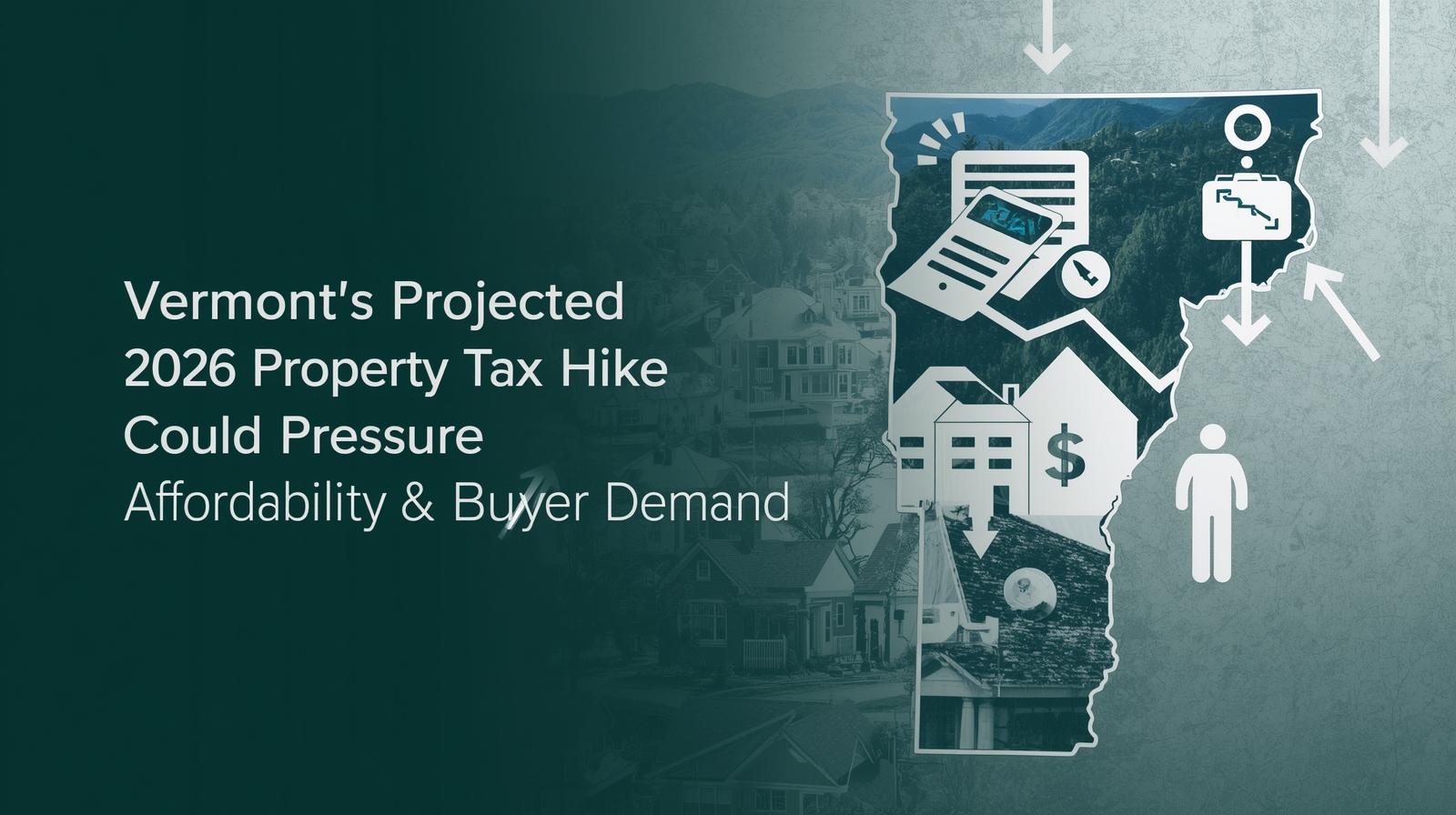
Vermont property owners may soon be facing a notable jump in annual housing costs — and real estate professionals across the state are already paying attention. On December 1, 2025, the state’s tax authorities released new forecasts showing that education property taxes are expected to rise by an average of approximately 11.9% statewide next year. Per Vermont Daily Chronicle, the increase reflects rising school budgets and cost pressures that lawmakers have been grappling with for years.
While nothing is fully final until the legislature weighs in during the 2026 session, the projection has already sparked conversations in brokerage offices, investor circles, and among first-time buyers who are stretching to enter the market.
The Affordability Challenge Gets Tougher
Home values in Vermont have climbed steadily in recent years — especially in areas like Chittenden County, Montpelier, and communities attractive to out-of-state movers. That trend alone has been pushing affordability limits. Add in a double-digit bump in property taxes, and the total cost of ownership could rise faster than many buyers are prepared for.
For someone purchasing a home at the median Vermont sale price, an 11.9% increase in taxes could amount to:
- higher monthly escrow payments
- increased debt-to-income ratios
- more difficulty qualifying for financing
- reconsideration of town-by-town affordability
Even well-qualified buyers may become more cautious as they recalculate budgets going into the new year.
How It Could Shift Buyer Behavior in 2026
If the projected hike takes effect:
1️⃣ Price-sensitive buyers may hit pause
First-time buyers — already stretched by high interest rates in the recent past — may opt to continue renting or wait for clarity from lawmakers.
2️⃣ Investors will adjust return models
Landlords and short-term rental owners will factor higher taxes into operating costs and pricing decisions, potentially driving up rents.
3️⃣ Interest may rise in lower-tax municipalities
Buyers could become more selective based on mill rates and school-district tax history, not just neighborhood appeal.
4️⃣ Sellers may face more negotiation pressure
If affordability tightens, pricing and concessions will matter more — especially for homes needing updates or sitting outside high-demand zones.
What Real Estate Pros Should Do Now
Smart agents will:
✔ Incorporate tax forecasts into buyer consultations
✔ Help sellers price with “total carrying cost” in mind
✔ Stay updated on legislative developments and potential relief plans
✔ Highlight energy efficiency, rental potential, and other factors that offset ownership costs
Knowledge becomes a value-add — especially when clients want clarity in a shifting financial environment.
Overall Implication
A nearly 12% statewide increase in education property taxes — per Vermont Daily Chronicle — could reshape how and where Vermonters buy homes in 2026. With affordability already stretched thin in many areas, even small cost shifts can tip the scales.
While the final numbers remain subject to statehouse debate, real estate professionals should prepare now for conversations focused not just on price, but on the full financial picture of owning a Vermont home.
Check out this article next