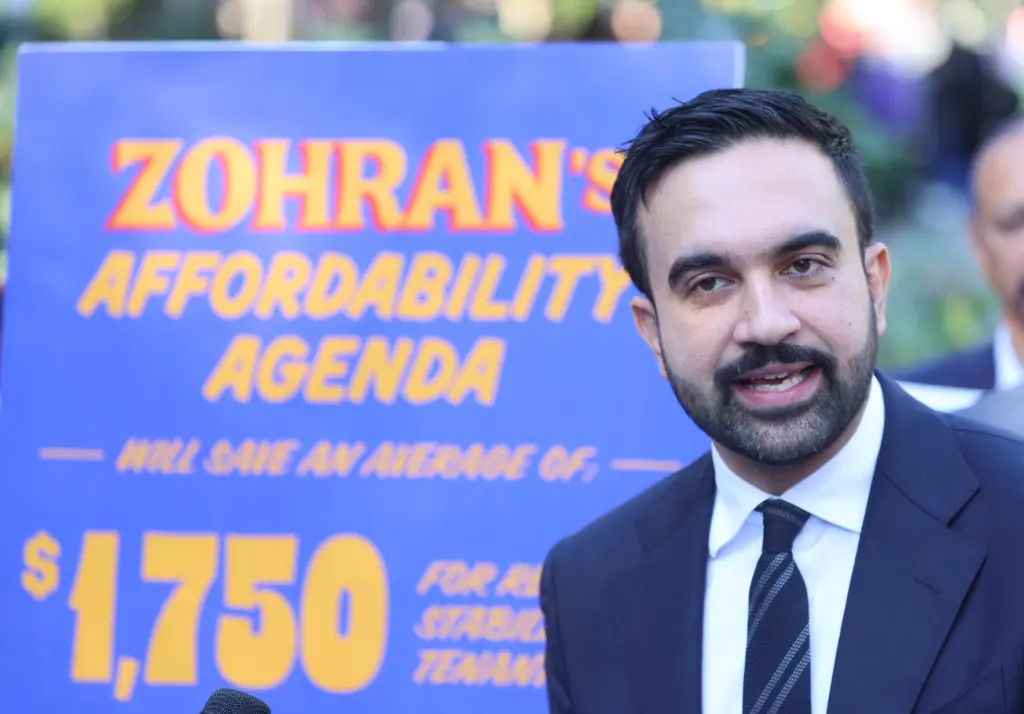
The 2025 mayoral election in New York City disrupted the housing conversation. Zohran Mamdani — campaigning on affordability, rent stabilization, and housing growth — is about to become mayor, and his promises could significantly change the city’s housing market. But with big plans come uncertainties. Whether you’re a tenant, landlord, investor, or real estate professional, it’s important to understand what’s ahead and what could go wrong.
What Mamdani Is Pledging — The Big Vision
- Rent freeze for rent‑stabilized apartments. At the core of Mamdani’s campaign: an immediate freeze on rents for the city’s approximately 1–2 million rent‑stabilized units.
- Build 200,000 permanently affordable, rent‑stabilized housing units over the next decade. That would roughly triple the city’s current production of such units.
- Use public financing and city‑backed funding to support construction and affordability. The plan points to up to $70 billion in new capital over ten years, layered onto existing city investments.
- Reform landlord/tenant regulations: expand protections, increase oversight on neglected properties, and hold property owners more accountable when maintenance is deferred.
- Broader affordability/social programs — such as support for lower‑income households, wage increases, and cost‑of‑living measures tied to the housing plan framework.
In short: the agenda bets on a combination of rent control, affordable‑housing expansion, regulation, and public financing — aiming to shift the balance of power in NYC housing more toward renters and lower-income households.
What the Critics and Experts Are Warning — Risks & Challenges
Mamdani’s housing vision is bold — but many experts, developers, and property owners are sounding alarms. Their concerns fall into several overlapping categories:
- Financial stress on landlords and investors. According to a recent analysis, many rent‑regulated buildings are already struggling: operating costs (maintenance, insurance, utilities) have risen faster than rental revenues. That means freezing rents without offsetting support could make properties financially unviable.
- Deferred maintenance, deterioration of housing stock. If landlords can’t cover costs, there is a risk that older or fully stabilized buildings (especially those outside prime Manhattan zones) could fall into disrepair.
- Reduced private‑sector participation in new builds. Developers warn that heavy regulation, rent freezes, and limited returns could discourage investment. That could make the goal of 200,000 new affordable units hard to realize in practice.
- Fiscal and political constraints. Funding the plan would require massive city borrowing (the $70 billion package), which would exceed debt‑limit thresholds unless state approval and political support are secured.
- Supply‑side inertia vs. demand pressure. Even if the rent freeze happens, many experts say NYC’s affordability gap is so large that a freeze alone won’t fix it.
In short: while the goals are ambitious and laudable, there are serious structural, financial, and political headwinds. For many stakeholders, the question is not whether they agree with the goals — but whether the execution can hold up.
What’s Likely to Happen — Scenarios for 2026–2028
Here are a few possible paths forward, depending on how aggressively the new administration pushes its agenda — and how landlords, developers, and markets respond:
Scenario A — Partial Implementation, Mixed Outcomes
Rent freeze goes through for stabilized units.
Some affordable housing gets funded and built — but far short of the 200,000‑unit target (because of financing, political pushback, or developer pullback).
Older stabilized buildings endure tight margins — some pass to investors; many may struggle.
Market‑rate housing and newer developments become more attractive to private investors, shifting demand and capital away from stabilized stock.
Scenario B — Strong Implementation + Subsidy + Public Buy‑in
Rent freeze held in place, combined with robust subsidies/tax breaks, maybe even expanding programs to support landlords and incentivize maintenance/ upgrades.
Affordable housing expansion proceeds — with a mix of publicly funded, subsidized, and mixed‑income units.
NYC rental market becomes more regulated but more stable; affordability improves modestly; social equity effects begin to show.
Scenario C — Political & Financial Pushback → Delay / Dilution of Agenda
Rent freeze is weakened or delayed (due to pushback, lawsuit, or changes at the Rent Guidelines Board).
Financing for new units stalls; goals trimmed or restructured.
Market reacts: mixed‑use, market‑rate, luxury development rebounds; stabilized housing segment becomes risk‑heavy, perhaps shrinking.
Renter oversupply or shortage uncertain; housing inequities persist.
What You Should Watch — Key Indicators & Action Points
If you’re a real estate professional, investor, landlord, or even a renter, here are the signs and metrics worth tracking in 2026:
- Appointments and composition of the Rent Guidelines Board (RGB) — which will determine whether the rent freeze gets implemented.
- Actual city capital‑plan approvals or bond issuances for the proposed 200,000–unit affordable‑housing buildout.
- Performance (net operating income, maintenance costs) of rent‑stabilized buildings, especially older stock outside Manhattan.
- Number and pace of new affordable‑housing developments, including mixed‑income or subsidized units.
- Vacancy rates, rent levels, and rental‑to‑income ratios across different boroughs — to see whether affordability improves or pressure shifts.
- Market behavior: Are investors and capital flowing into market‑rate/new build housing over stabilized housing? Is there a flight from a regulated stock?
What It Means — From Different Perspectives
For Renters & Low‑to‑Moderate Income Households:
Mamdani’s agenda offers a real chance for relief: if implemented, stabilized tenants could see rents frozen for multiple years, and additional affordable‑housing units could become available. For many, this could be a reprieve in a city long defined by exorbitant rents.
For Landlords, Small Owners & Investors in Stabilized Stock:
Caution is warranted. Without subsidies or policy support for maintenance and rising costs, holding stabilized properties could become risky. Some may choose to sell, others may struggle to stay afloat, or maintenance could slip — affecting property value long‑term.
For Developers & Market‑Rate Housing Investors:
Opportunities may shift. If regulation squeezes stabilized rental stock, demand and capital could flow toward market‑rate, luxury, or newer developments. But success will depend on city financing, zoning, and broader economic conditions.
For Real Estate Professionals & Brokers:
Flexibility will matter. You’ll need to adapt — some neighborhoods or property types may become less desirable; demand could shift. Data‑driven advice, scenario planning, and honest risk assessments will be more important than ever.
A Potential Turning Point — But Uncertainty Is Real
Zohran Mamdani’s housing agenda could mark one of the boldest shifts in NYC real estate policy in decades. If fully implemented — rent freeze, massive affordable‑housing build‑out, regulatory reforms — the city could see meaningful progress toward affordability and housing equity.
But the obstacles are significant: financial viability, developer cooperation, political constraints, and the sheer scale of what’s being proposed. For real estate pros, landlords, investors, and tenants alike — this isn’t a time for assumptions. It’s a time for careful tracking, conservative underwriting, and flexible strategy.
Because as much as this could be a turning point, it may also be a moment of shake‑out for parts of the market that can’t adapt.
Check out this article next