

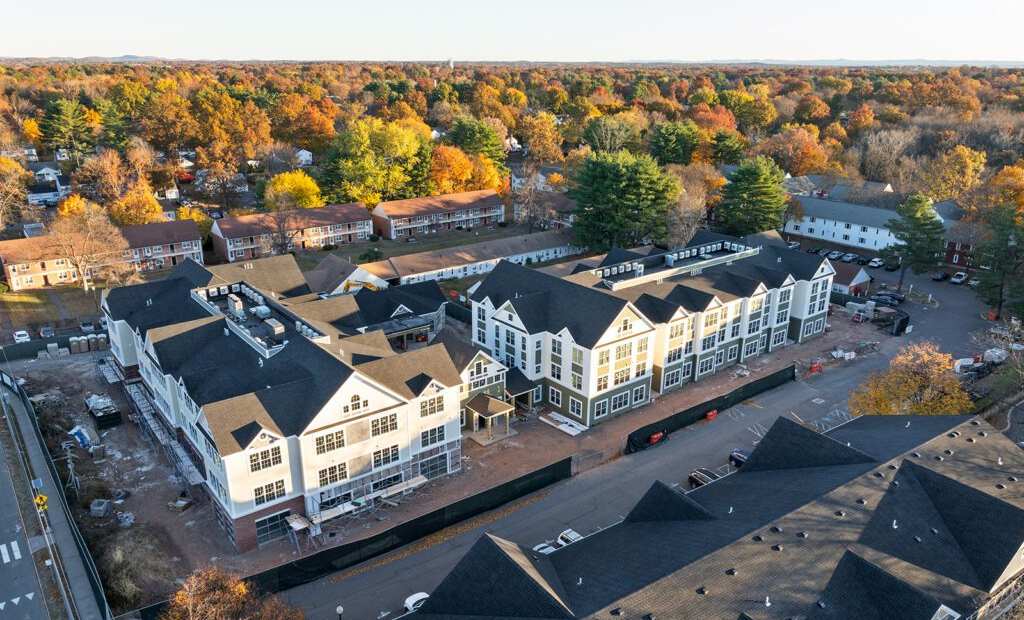
In West Hartford, CT, an aging but much-needed affordable housing complex is being completely redeveloped — and the latest phase gives real estate professionals a clear signal: senior and affordable housing remain a vital, growing segment.
A Little History — What Is Fellowship Housing?
The complex dates back more than 50 years; for decades, it has provided affordable housing for seniors (62+) and adults with disabilities on town-owned land at 10-50 Starkel Road. Before redevelopment, the campus consisted of 24 buildings offering 213 apartments.
But many of the buildings, constructed decades ago, lacked modern amenities, accessibility (e.g., elevators), and sufficient living space. Recognizing this, local stakeholders and housing advocates launched a multi-phase redevelopment to bring the property up to modern standards — and expand capacity while preserving affordability.
The Redevelopment Plan — Scope, Phases, and What’s New
The overhaul is a $100 million, four-phase project that will gradually replace 23 of the 24 existing buildings with six new buildings, resulting in a total of 300 modern apartment units.
Phase I — Completed
- Delivered 65 new units: a mix of studios, one-bedroom, and two-bedroom apartments.
- Units are 30–40% larger than the old ones.
- New buildings include modern features: elevators (for multi-story buildings), in-unit laundry, updated appliances, and accessibility features.
- Common amenities added: a community room, café, fitness room, art room, multipurpose spaces, clinic — enhancing community and livability compared to the old units.
The first phase’s completion was celebrated in mid-2025, marking a key milestone for both residents and the town.
Phase II — Underway (New 77-Unit Expansion)
- The second phase will add 77 additional units targeted at seniors and adults with disabilities with limited incomes.
- The project recently secured funding: $6.2 million from the state (via the Connecticut Department of Housing — DOH) plus tax-credit financing and private investment through the Connecticut Housing Finance Authority (CHFA). Combined financing and investment for this phase is expected to approach $27 million.
- With this second phase, WHFH moves closer to its goal of 300 units, replacing older buildings with newer, more livable housing.
Full Project — What It Will Look Like
- Once all phases are complete, the complex will consist of six new buildings — offering modern, accessible apartments significantly upgraded from the aging pre-redevelopment units.
- The redevelopment aims to preserve affordability: WHFH remains committed to serving seniors and adults with disabilities, many of whom rely on limited incomes.
Why This Project Matters — What Real Estate Pros, Investors & Community Stakeholders Should Know
1. Growing Senior & Supportive Housing Demand — Opportunity for Agents & Developers
With an aging population and increased demand for affordable senior living, WHFH’s expansion speaks to a major market need. For real estate professionals focusing on senior, accessible housing, this project highlights the viability and demand for such developments.
2. Modern, Market-Responsive Affordable Housing
The new units are not just old buildings with a few repairs — they are thoughtfully redesigned, accessible, and offer improved living conditions. This raises the bar for what “affordable housing” looks like. It also means residents get dignity, stability, and quality — which may translate into long-term occupancy and steady demand.
3. Public + Private Financing Model — Template for Future Affordable Housing
The project leverages state funding (DOH), tax-credit financing (CHFA), and private investment — a financial structure that can serve as a model for other towns. For developers or nonprofit housing providers, this shows that with the right financing, large-scale affordable housing redevelopment can be feasible and sustainable.
4. Strategic Supply Increase Amid Housing Shortages
By expanding from 213 units to 300, WHFH delivers a roughly 40% increase in capacity, helping alleviate pressure in a tight affordable housing market.
Given that many current residents reportedly live on low incomes (some earning less than $1,350/month), the expanded capacity will likely meet urgent, unmet needs.
5. Redevelopment Avoids Displacement Where Possible
During Phase I demolition and construction, residents were relocated within the property, helping maintain community stability and minimizing displacement.
This respectful, phased approach can serve as a best-practice blueprint for other redevelopment projects seeking to upgrade aging housing stock while preserving tenant stability.
What to Watch For — Key Upcoming Milestones
- Completion of Phase II — expected by winter 2026.
- Phase III and Phase IV — already funded or planned; will continue replacing older buildings and adding modern units, bringing the total to 300.
- Waitlist & Demand Pressure — given the long history and demand for affordable senior housing in WHFH, expect a re-opening of waitlists and strong interest as more units come on stream.
- Potential Model for Statewide Replication — as statewide housing needs remain high, WHFH may serve as a template for other Connecticut towns looking to preserve or expand affordable senior and supportive housing.
Key takeaway
The redevelopment of West Hartford Fellowship Housing isn’t just an upgrade — it’s a reinvention of what affordable, accessible senior housing can be: modern, dignified, and community-oriented.
For real estate professionals, developers, and investors, this project underscores that senior and supportive housing — especially when backed by public and private financing — remains a high-opportunity, socially vital sector. The expansion shows demand, feasibility, and public commitment.
For community stakeholders, it’s a promise kept: affordable housing isn’t just about roofs over heads, but about stable, safe, and quality living — now and for generations to come.
Check out this article next