


Pittsburgh is entering 2026 with a wave of bold development projects spanning residential, commercial, cultural, transportation, and entertainment sectors. From waterfront revitalization and downtown housing conversions to historic neighborhood growth and airport modernization, these developments have far‑reaching implications for property values, neighborhood desirability, and investment opportunities throughout the city.
In this comprehensive look at the major Pittsburgh developments to watch in 2026, we’ll break down what’s happening, where it’s happening, and why it matters for real estate professionals, buyers, sellers, and investors alike.
1. The $740 Million Esplanade Project — A Waterfront Renaissance
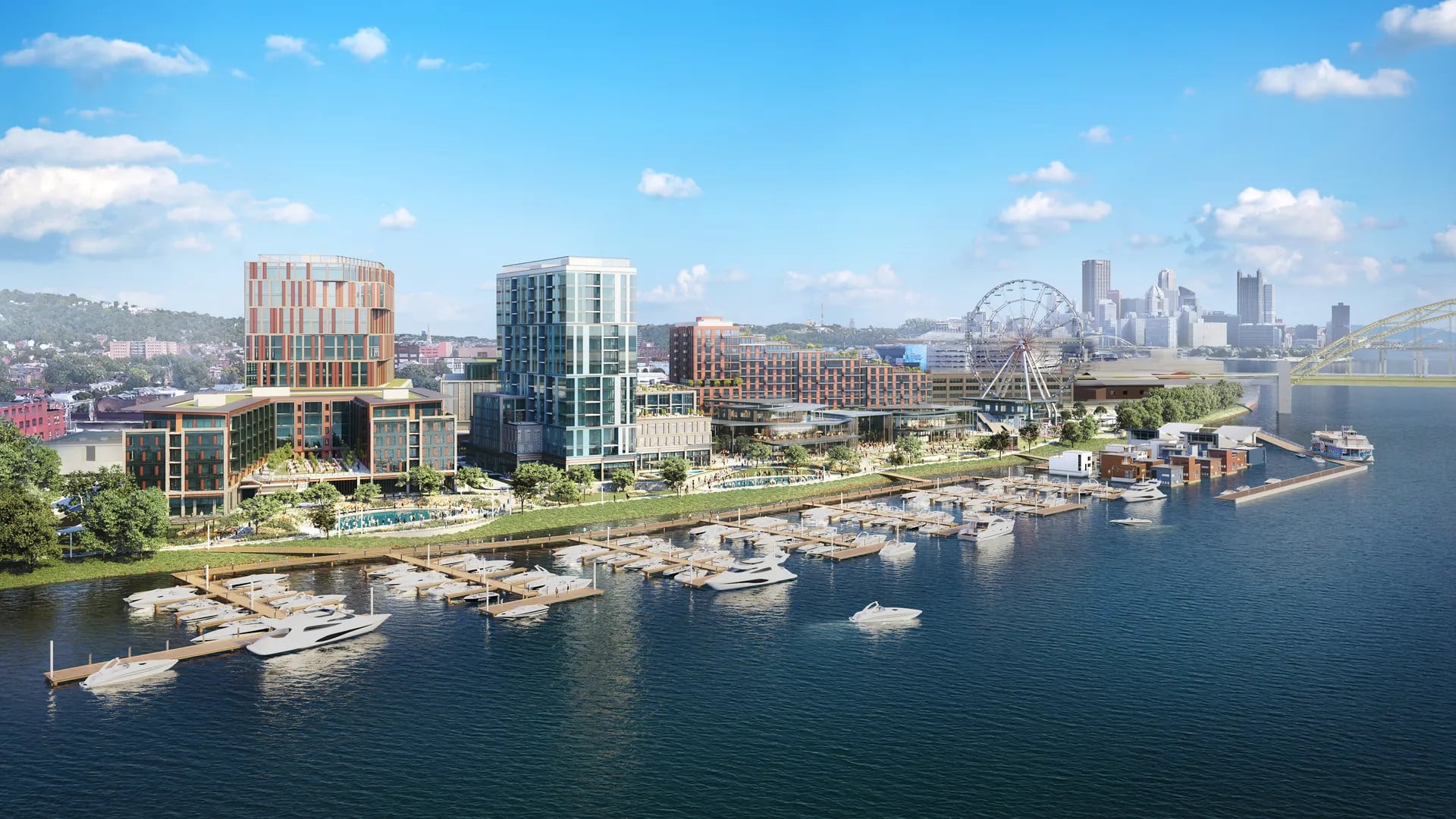
One of the most transformative projects underway in Pittsburgh is The Esplanade, a massive mixed‑use development on the North Shore waterfront. After years of planning and approval processes, construction has officially begun on this ambitious $740 million project, per Axios Pittsburgh.
What The Esplanade Includes
- Housing: Approximately 750 new residential units, 20% designated as affordable to low‑ and middle‑income families.
- Entertainment & Recreation: A signature 180‑foot Ferris wheel, amphitheater with riverfront views, trails, and marina access.
- Commercial & Hospitality: Restaurants, retail spaces, hotel accommodations, and a large public parking garage.
- Future Phases: Potential additions include an aquarium, movie theater, grocery store, and other entertainment venues.
The project is designed to reconnect neighborhoods like Chateau and Manchester to the riverfront and tie together North Shore attractions with new housing, public space, and commercial opportunities.
Real Estate & Economic Impact
The Esplanade stands to reshape residential demand in the North Shore and surrounding communities. Waterfront projects often attract premium rents and property values, especially when combined with entertainment and public amenities. Developers and investors eye such mixed‑use hubs as long‑term opportunities, and early phases of Esplanade are anticipated to drive increased attention from prospective residents and tenants looking for vibrant, urban living close to downtown Pittsburgh.
2. Downtown Pittsburgh’s $600 Million Revitalization
Another headline‑making initiative for 2026 is the $600 million downtown revitalization plan, which focuses on converting under‑utilized office space into residential units and updating public spaces like Market Square to support the city’s evolving urban identity.
Office‑to‑Residential Conversions
City and regional partners — including the Urban Redevelopment Authority (URA), Allegheny Conference on Community Development, and Gov. Shapiro’s administration — are advancing multiple projects to convert historic downtown office buildings into housing. These efforts aim to bring 217 new residential units downtown, with a portion designated as affordable housing to support inclusive growth.
Modernizing Market Square
Market Square, a historic and vibrant public gathering space in the heart of downtown, is being modernized with improved infrastructure, lighting, event spaces, and pedestrian enhancements. Construction began in April 2025 and is slated for completion in early 2026, just in time for national events like the NFL Draft.
These revitalization efforts are designed to make downtown Pittsburgh more livable, walkable, and attractive to residents who may otherwise choose suburban locations. By updating public spaces and creating housing opportunities in the core of the city, Pittsburgh is betting on a renewed urban renaissance.
3. Healthcare Expansion: UPMC’s Kamin Tower
Healthcare infrastructure is a major economic driver in many cities, and Pittsburgh is no exception. The University of Pittsburgh Medical Center (UPMC) is building a new specialty care facility — Kamin Tower — in its flagship hospital campus.
Why It Matters to Real Estate
Healthcare expansions like Kamin Tower typically generate long‑term employment growth, attract medical professionals, and support ancillary development such as housing for staff and patients’ families. Expanded medical facilities can also make surrounding neighborhoods more desirable due to increased economic activity and improved amenities, thus influencing residential demand and local property values.
4. Pittsburgh International Airport’s $1.7 Billion Terminal Upgrade
Pittsburgh International Airport is undergoing a major transformation with a $1.7 billion terminal modernization, enhancing passenger experience, security, and amenities.
Real Estate & Economic Impact
- Airports are often catalysts for regional economic development. A modern, efficient airport boosts connectivity, tourism, and business travel — all of which can have secondary effects on local hospitality markets, short‑term rentals, and commercial real estate.
- Additionally, improved airport facilities can stimulate demand for nearby hotels, restaurants, and logistics facilities.
For investors and real estate professionals, this upgrade points toward long‑term regional growth that could support industrial and commercial property interest around the airport corridor.
5. Strip District Expansion & Historic Bittner Building Condos
The Strip District — one of Pittsburgh’s fastest‑evolving neighborhoods — continues its transition from traditional markets and warehouses to a mixed‑use residential and commercial hub. A recent proposal would convert the historic Bittner Building at 80 26th Street into 39 new condominium units, blending preservation with modern living.
Why This Is Significant
- The Strip District’s appeal rests on its walkable streets, local food culture, and proximity to downtown.
- Adding residential units — particularly condos — supports the neighborhood’s growth beyond retail and daytime activity.
- Preservation and adaptive reuse projects like the Bittner Building signal investor confidence and community desire for balanced, sustainable development.
Neighborhoods with mixed‑use vibrancy often command higher price appreciation, making the Strip District a key area for buyers and investors during 2026.
6. Monroeville Mall Transformation & Retail Redevelopment
Though not in the city core, the Monroeville Mall plays a significant role in the Pittsburgh regional economy. After decades as a retail anchor east of the city, the mall is set for a full redevelopment into the “Monroeville Mall Gateway”, a mixed‑use complex with retail, dining, and entertainment offerings.
Retail to Mixed‑Use Shift
- Traditional malls have faced decline due to e-commerce and changing consumer patterns. However, strategic redevelopment into mixed‑use real estate — which may include housing, offices, and entertainment — can breathe new life into these large regional sites.
- For the Pittsburgh market, this signals a recognition that flexible, experience‑oriented developments are key to attracting both residents and visitors.
Real estate professionals should monitor redevelopments like this as indicators of retail evolution and regional housing demand shifting beyond downtown into suburbs and satellite communities.
7. Bridge and Infrastructure Projects
Major infrastructure projects — including a bridge replacement near the Squirrel Hill Tunnel scheduled for 2026 — will impact daily commuting patterns and long‑term accessibility.
While short‑term disruptions may affect traffic flow, the long‑term improvements can enhance connectivity between neighborhoods, potentially making previously less‑accessible areas more desirable for residents and investors.
Infrastructure investment is often correlated with neighborhood revitalization, better property values, and increased appeal for urban living.
8. Downtown Residential Momentum & Other Developments
Beyond headline projects, several other developments are shaping Pittsburgh’s real estate scene:
21 West — New Multifamily Housing
The Oxford Development JV secured $67 million to build 21 West, an 11‑story, 291‑unit multifamily community with amenities such as a sky bar, pool, coworking spaces, and wellness center.
This project aligns with broader trends of adding quality rental housing in downtown and entertainment districts — a sign of confidence in long‑term tenant demand.
Why These Developments Matter to 2026 Real Estate Trends
Taken together, these projects reflect several overarching trends in Pittsburgh’s 2026 real estate market:
A. Urban Revitalization Drives Demand
From Market Square to the Strip District and the North Shore, the city is making intentional investments in placemaking and walkability. As urban living grows in appeal, these improvements can support rising property values and stabilize rental markets.
B. Mixed‑Use Living Becomes Central to City Identity
Developments that combine housing, entertainment, and commercial use — such as The Esplanade — signal Pittsburgh’s shift toward live‑work‑play ecosystems that attract a broad demographic of residents.
C. Infrastructure & Connectivity Enhance Long‑Term Growth
Airport upgrades, bridge replacements, and transit improvements increase accessibility and strengthen Pittsburgh’s position as a regional hub — a factor that supports both residential and commercial real estate interests.
D. Historic Preservation with Adaptive Reuse
Projects like the Bittner Building condos show how historic spaces can be repurposed to meet modern demand without losing character — an approach that tends to attract buyers seeking culture and authenticity.
What This Means for Buyers, Sellers & Investors in 2026
Here’s how these developments are likely to influence the real estate market as we move through 2026:
For Buyers
- Urban professionals and younger buyers may be drawn to new residential offerings near downtown, the Strip District, and waterfront amenities.
- First‑time buyers might find opportunities in emerging mixed‑use neighborhoods with strong long‑term prospects.
For Sellers
- Sellers in areas near major developments may enjoy value appreciation as infrastructure and demand increase.
- Properties within redevelopment corridors often experience better liquidity compared with stagnant markets.
For Investors
- Multifamily properties and adaptive reuse projects remain appealing due to strong tenant demand and long‑term urban revitalization trends.
- Mixed‑use and commercial real estate near major projects can offer diversification and higher returns.
Pittsburgh’s Growth Story in 2026
Pittsburgh is positioned for a transformative year in 2026, with major development projects touching everything from the waterfront and downtown core to historic neighborhoods and suburban nodes. These efforts — rooted in infrastructure enhancements, mixed‑use strategy, and vibrant public spaces — suggest that the city is embracing a 21st‑century model of growth.
Whether you’re a buyer exploring neighborhoods, a seller considering timing, or an investor looking for solid long‑term markets, understanding these developments — and their ripple effects on housing demand, property values, and community vitality — will be crucial for navigating Pittsburgh’s real estate market in 2026 and beyond.