



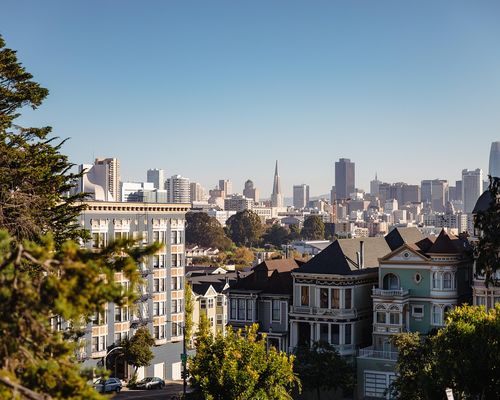
San Francisco’s housing market is showing just how powerful the artificial intelligence boom has become, with wealthy tech workers helping drive demand for expensive homes even as much of the U.S. housing market struggles with high mortgage rates and affordability concerns.
New Redfin data shows home sales in San Francisco jumped 9% year over year in July, while sales in Seattle—a major technology hub facing greater economic uncertainty—fell 9%. The contrast highlights how differently the AI boom is affecting housing markets that were once driven by many of the same technology-industry forces.
The biggest impact is being felt at the luxury end of the market.
Earlier Redfin data showed San Francisco luxury home sales increased 22.2% year over year in March, marking the fifth consecutive month of double-digit growth. The median luxury sale price reached approximately $6.8 million, up 9% from a year earlier. Luxury homes were also going under contract in a median of just 12 days.
AI is playing a major role in that surge. Employees at companies such as OpenAI and Anthropic can earn substantial compensation through salaries, bonuses and stock, giving some buyers far more purchasing power than the typical household. Stock-market gains tied to the technology sector can also provide additional wealth for buyers making large down payments or purchasing homes with cash.
That has allowed the luxury market to remain active despite mortgage rates that would normally discourage buyers.
A Growing Divide in Housing
The San Francisco boom illustrates a broader divide developing across the U.S. housing market.
Affluent households are generally better positioned to absorb higher borrowing costs because they can make larger down payments or avoid financing altogether. Middle-income buyers, meanwhile, remain much more sensitive to monthly mortgage payments and high home prices.
Nationally, Redfin found that luxury home prices were rising significantly faster than prices for non-luxury homes earlier this year. The median U.S. luxury sale price rose 4.7% year over year, compared with just 1.5% for non-luxury homes. San Francisco has been one of the strongest luxury markets in the country.
Limited inventory is adding another layer of pressure. In San Francisco, luxury listings were down roughly 15% year over year in March, even as demand was increasing. With fewer high-end properties available, wealthy buyers are competing for a relatively small number of homes.
The result is a market where desirable properties can still attract multiple offers while buyers in other segments are gaining more negotiating power.
IPO Wealth Could Add More Pressure
The AI-driven housing boom could become even more pronounced if major technology companies successfully move toward public offerings.
Redfin estimated in July that current and former employees of OpenAI and Anthropic could theoretically purchase nearly 29% of all homes in San Francisco using potential wealth generated from their IPOs. The estimate demonstrates the extraordinary scale of wealth concentrated among employees of the companies driving the current AI expansion.
That does not mean those employees will actually purchase anything close to that amount of housing. But the analysis highlights the potential purchasing power being created in the Bay Area's technology economy.
For San Francisco homeowners, that could provide continued support for high-end property values. For buyers without access to technology-sector wealth, however, the trend could make an already expensive market even more difficult to enter.
San Francisco’s housing boom is increasingly becoming a story about wealth—not simply mortgage rates. As AI companies create highly compensated employees and new fortunes, that money is finding its way into the local real estate market.
The result is an unusual housing environment: while many American buyers remain constrained by affordability, San Francisco’s wealthiest buyers are competing for multimillion-dollar homes.
And as the AI industry continues to expand, the housing market may be one of the clearest places where its economic impact becomes visible.
Discussion
Thoughts from readers and local market watchers.