



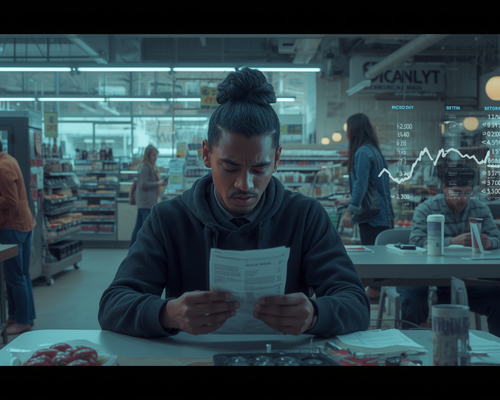
For much of the past year, the U.S. economy appeared surprisingly resilient. Hiring remained steady, unemployment stayed relatively low, and Wall Street continued riding the massive AI-driven technology boom. On paper, the economy looked stable.
But for millions of Americans, everyday life is telling a very different story.
Gasoline prices are climbing again. Grocery bills remain painfully high. Credit card balances continue rising. Rent, insurance, utilities, and transportation costs are still squeezing household budgets. And now, consumer confidence in the United States has fallen to one of the lowest readings ever recorded.
The growing disconnect between economic headlines and everyday reality is quickly becoming one of the biggest financial stories in America right now.
Consumer Confidence Falls to Historic Lows
According to the University of Michigan’s latest consumer sentiment survey, U.S. consumer confidence dropped sharply in early May to a reading of 48.2, significantly below expectations and one of the weakest readings on record. Economists say Americans are increasingly anxious about inflation, especially the recent surge in fuel prices tied to ongoing geopolitical tensions in the Middle East.
What makes this especially notable is that the decline is happening despite relatively solid economic fundamentals. Normally, strong employment numbers and stable growth help support consumer optimism. This time, however, rising living costs appear to be overpowering positive economic indicators.
In simple terms, people may still have jobs, but they no longer feel financially comfortable.
Gas Prices Are Once Again Driving Economic Anxiety
One of the biggest reasons Americans are suddenly feeling uneasy again is gasoline prices.
Over the past several weeks, oil markets have surged following escalating tensions involving Iran and global shipping disruptions. Analysts warn that reduced supply and refinery pressure could continue pushing fuel prices higher throughout the summer travel season.
National average gasoline prices are now reportedly hovering around $4.50 to $4.60 per gallon in many parts of the country, with some states already seeing prices move above $5 per gallon.
For consumers, gas prices have an emotional impact beyond the actual dollar amount. Americans see fuel costs almost every day on giant signs outside gas stations, making inflation feel constant and unavoidable.
And fuel prices don’t just affect transportation.
When gasoline and diesel prices rise, businesses face higher shipping and logistics costs. Trucking companies pay more to move products. Airlines pay more for jet fuel. Grocery chains spend more on transportation. Eventually, many of those higher costs get passed directly to consumers.
That creates a ripple effect across the economy.
Grocery Prices Continue Pressuring Families
Even though inflation has cooled somewhat compared to the peaks seen in previous years, food prices remain a major burden for many households.
Global food prices reportedly rose again for the third consecutive month, with increases in cereals, meat, and vegetable oils contributing to higher grocery costs worldwide.
For many Americans, grocery shopping has become one of the clearest reminders that inflation never fully disappeared.
Consumers are increasingly trading down to cheaper brands, buying fewer discretionary items, and searching for discounts more aggressively than before. Industry analysts say middle-income families are showing some of the largest pullbacks in spending behavior.
This is particularly important because consumer spending drives a massive portion of the U.S. economy. If households begin cutting back more aggressively, economic growth could eventually slow.
The Labor Market Still Looks Surprisingly Strong
One of the strangest parts of today’s economy is that employment data still looks relatively healthy.
The U.S. economy added approximately 115,000 jobs in April, significantly beating expectations. Healthcare, transportation, retail, and social assistance sectors all posted strong hiring gains, while unemployment held steady around 4.3%.
Under normal circumstances, strong job growth would improve public confidence.
But Americans increasingly appear to care less about headline economic numbers and more about the cost of daily life.
A person earning a paycheck may still feel financially stressed if rent, food, insurance, gas, and utilities are rising faster than wages.
That disconnect is becoming one of the defining economic themes of 2026.
Why Inflation Feels Worse Than Official Numbers Suggest
Another major reason inflation remains such a sensitive topic is that people experience inflation emotionally, not mathematically.
Official inflation reports may show overall price growth slowing compared to previous years, but consumers don’t compare prices month-to-month the way economists do. Instead, they compare current prices to what they remember paying a few years ago.
A gallon of milk that used to cost $3 but now costs $5 still feels expensive, even if inflation technically slowed from 8% to 3%.
The same applies to:
- Gasoline
- Fast food
- Insurance
- Rent
- Electricity
- Streaming services
- Household essentials
Many Americans feel like the overall cost of living has permanently reset higher after the inflation surge of the early 2020s.
That lingering frustration is now showing up clearly in sentiment surveys.
Wall Street and Main Street Are Seeing Two Different Economies
Another reason this story is gaining national attention is because of the growing divide between financial markets and everyday consumers.
The stock market has remained relatively strong in 2026 thanks largely to artificial intelligence optimism, semiconductor growth, and strong earnings from major tech companies.
But many ordinary Americans are not feeling those benefits directly.
Instead, they’re dealing with:
- Higher borrowing costs
- Expensive mortgages
- Rising auto insurance premiums
- Increased utility bills
- Higher grocery costs
- More expensive travel
As a result, Wall Street optimism and Main Street sentiment are moving in opposite directions.
Economists say this disconnect can become politically and economically significant if it continues for an extended period.
Could Inflation Become a Bigger Problem Again?
One of the biggest concerns now is whether rising energy costs could reignite broader inflation pressures later this year.
If oil prices remain elevated for months, transportation and manufacturing costs may continue climbing. Businesses may once again begin raising prices to protect margins, potentially creating another wave of inflation across the economy.
Some analysts are even warning about the possibility of “sticky inflation,” where prices remain stubbornly elevated even if economic growth slows.
The Federal Reserve now faces a difficult balancing act:
- Cut rates too early, and inflation could accelerate again.
- Keep rates high too long, and economic growth could weaken further.
Markets are closely watching upcoming inflation reports for signs of whether current energy-related price increases are temporary or the beginning of another larger inflation cycle.
Americans Are Becoming More Cautious With Spending
Early signs suggest consumers are already starting to pull back.
Analysts have noticed softer spending on discretionary purchases like:
- Appliances
- Electronics
- Vehicles
- Vacations
- Home improvement projects
Moderate-income households appear especially cautious as financial pressure builds. Credit card debt and delinquency concerns are also rising nationally.
If consumer spending slows meaningfully, businesses may eventually respond by reducing hiring or slowing expansion plans.
That’s why economists pay close attention to consumer confidence data — declining sentiment can sometimes become a leading indicator for broader economic slowdowns.