



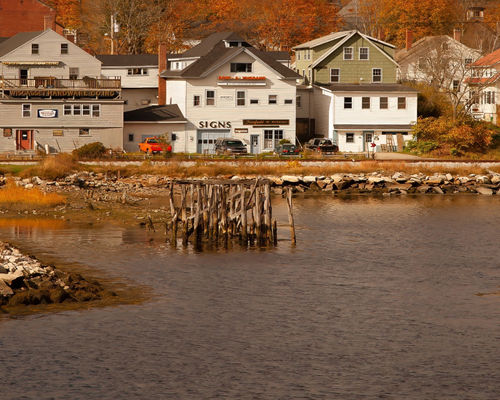
A housing controversy unfolding in Wiscasset is becoming one of the more talked-about development stories in Maine right now — not because of the housing project itself, but because of what disrupted it.
A proposed affordable housing initiative in the town reportedly lost access to approximately $240,000 in expected funding after tensions surrounding a nearby data center proposal complicated the broader development conversation in the community. The situation is drawing attention across Maine because it highlights how deeply connected housing, infrastructure, energy policy, and local politics have become in 2026.
What began as a debate over a large-scale industrial project has now spilled into the housing conversation, raising concerns among developers and housing advocates about how unrelated controversies can affect urgently needed residential projects.
How the Situation Developed
The issue centers around a growing public debate tied to a proposed data center development in the region. Data centers have become increasingly controversial in Maine over the past year, largely because of concerns related to energy consumption, electrical grid strain, environmental impact, and land use.
At the same time, Maine continues to face a severe housing shortage, especially when it comes to affordable and workforce housing.
In Wiscasset, those two conversations unexpectedly collided.
According to reporting on the issue, an affordable housing effort that was expected to receive around $240,000 in support became entangled in broader tensions surrounding nearby development discussions. As public attention and political focus shifted toward the data center issue, the housing proposal reportedly lost momentum and funding support tied to local negotiations and planning dynamics.
For many housing advocates, the outcome is frustrating because the affordable housing initiative itself was not the source of controversy. Instead, it became caught in the crossfire of a much larger debate.
A Sign of a Larger Shift in Maine Development
What makes this story significant is not just the loss of funding — it’s what the situation reveals about the changing nature of development in Maine.
Increasingly, projects are no longer being evaluated independently. Housing proposals, infrastructure investments, commercial development, energy usage, and environmental concerns are all becoming interconnected in ways that can complicate even relatively straightforward projects.
This reflects a broader trend happening across the state:
Large-scale projects are facing more scrutiny, and community conversations around development are becoming more layered and politically sensitive.
Data centers, in particular, have emerged as a major flashpoint in 2026. Earlier this spring, Maine lawmakers debated what would have been the nation’s first statewide moratorium on large data center construction before Governor Janet Mills ultimately vetoed the measure. The debate revealed growing concern about how energy-intensive developments could affect electricity costs, infrastructure planning, and local communities.
Now, the Wiscasset situation is showing how those concerns can spill over into housing discussions as well.
Why Housing Advocates Are Concerned
For affordable housing groups and developers, the bigger worry is precedent.
Maine is already struggling to build enough housing to meet demand. Financing for affordable projects is often complex and fragile, relying on grants, public support, tax credits, partnerships, and layered funding sources. Even relatively small disruptions can delay or derail projects entirely.
When broader political or infrastructure battles begin affecting housing proposals indirectly, it creates another layer of uncertainty in a market that is already difficult to navigate.
Developers and housing advocates fear that:
- Local controversies could make communities more cautious about approving projects
- Infrastructure debates could slow unrelated residential development
- Political pressure could make funding harder to secure
In practical terms, that means projects intended to ease affordability pressures may take longer to move forward — or fail altogether.
Maine’s Housing Challenges Aren’t Going Away
The timing of this situation is particularly notable because Maine remains under intense pressure to increase housing supply statewide.
Home prices are still historically elevated, inventory remains limited compared to pre-pandemic levels, and affordability continues to be one of the state’s biggest economic concerns. State leaders have spent the past several years promoting zoning reform, accessory dwelling unit expansion, and affordable housing incentives in an effort to increase production.
But stories like this demonstrate that solving the housing shortage is not simply about approving more homes.
It’s also about:
- Infrastructure capacity
- Community acceptance
- Energy policy
- Development coordination
- Political alignment
All of those factors are increasingly influencing whether projects actually get built.
The Growing Tension Between Growth and Infrastructure
At the center of the issue is a broader question Maine is still trying to answer:
How does the state encourage economic development and infrastructure investment while also protecting affordability and quality of life?
Large-scale projects like data centers can bring jobs, tax revenue, and redevelopment opportunities. But they also raise legitimate concerns about energy demand, environmental impact, and community change.
Affordable housing projects, meanwhile, are widely acknowledged as necessary — yet they often compete for the same political attention, infrastructure resources, and public support.
That overlap is creating new tensions in communities that are simultaneously trying to grow, preserve character, manage costs, and plan for the future.
What This Means for Real Estate Professionals
For Maine real estate professionals, the Wiscasset situation is another reminder that policy and infrastructure discussions are becoming just as important as traditional market conditions.
Development today is influenced by far more than supply and demand. Community sentiment, utility capacity, political debates, and regional planning decisions are all playing larger roles in shaping what gets approved and funded.
That means agents, investors, and developers increasingly need to monitor:
- Local planning discussions
- Infrastructure proposals
- State policy changes
- Community reactions to development
Because in Maine’s current market, housing projects are no longer operating in isolation.