


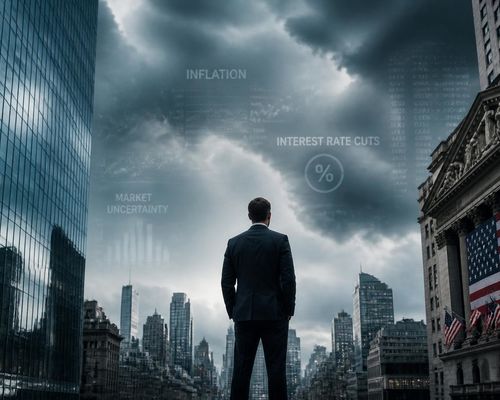
A major shift is unfolding across financial markets and the broader economy: expectations for Federal Reserve interest rate cuts are being pushed further into the future.
In one of the clearest signs yet that the “higher-for-longer” interest rate environment may be here to stay, UBS Global Wealth Management now expects the Federal Reserve to delay rate cuts until December 2026 and March 2027, abandoning earlier forecasts that anticipated cuts beginning later this year.
The revision reflects a growing consensus among major financial institutions that inflation remains too persistent—and the economy too resilient—for the Fed to begin easing policy anytime soon.
This marks a major reversal from the outlook earlier in 2026, when many investors expected multiple rate cuts before the end of the year. Now, many economists and traders believe the Fed may not cut rates at all in 2026.
Inflation Is Proving More Persistent Than Expected
The biggest reason behind the shift is simple: inflation is no longer cooling fast enough.
Recent inflation data showed consumer prices accelerating again, with annual inflation climbing to around 3.8% in April, the highest pace in roughly three years.
A major driver of that increase has been energy prices.
The ongoing conflict involving Iran has kept oil prices elevated above $100 per barrel for weeks, raising transportation, manufacturing, and consumer costs throughout the economy. According to UBS analysts, energy costs alone accounted for more than 40% of the recent increase in inflation.
This matters because energy inflation spreads quickly. Higher fuel prices increase the cost of shipping goods, operating businesses, and commuting, which eventually feeds into broader consumer prices.
For the Federal Reserve, that creates a serious problem. Officials had hoped inflation would steadily move closer to the Fed’s 2% target in 2026. Instead, recent data suggests inflation pressures are reaccelerating.
The Labor Market Is Still Too Strong for the Fed to Ease
At the same time, the labor market continues to show surprising strength.
Recent employment reports revealed stronger-than-expected job growth, while the unemployment rate held steady around 4.3%, reinforcing the idea that the economy is still expanding at a healthy pace.
Normally, the Fed cuts interest rates when economic growth weakens or unemployment rises sharply. But neither of those conditions has emerged yet.
Instead, the economy remains resilient enough that policymakers feel less urgency to provide stimulus through lower rates.
This is one reason why several Federal Reserve officials have recently taken a more hawkish tone.
Minneapolis Fed President Neel Kashkari emphasized this week that the central bank remains “dead serious” about bringing inflation down and even left open the possibility of future rate hikes if inflation worsens.
Boston Fed President Susan Collins echoed similar concerns, warning that rates may need to stay restrictive for longer—and could even rise further if inflation does not cool.
These comments reflect a growing realization inside the Fed: inflation risks may now outweigh recession risks.
Markets Are Rapidly Repricing Expectations
The shift in Fed expectations is already rippling through financial markets.
Earlier this year, traders widely expected at least two quarter-point rate cuts in 2026. That outlook has now changed dramatically.
According to CME FedWatch data cited by Reuters, markets now assign a very high probability that rates will remain unchanged through much of the year.
At the same time:
- Treasury yields have surged
- Bond markets have become more volatile
- Investors are increasingly pricing in prolonged inflation pressure
Long-term Treasury yields recently climbed back toward levels not seen since 2023, reflecting fears that borrowing costs could stay elevated for years rather than months.
This is important because long-term yields heavily influence everything from business loans to mortgages.
Why Housing Is Directly Affected
The housing market may ultimately feel the effects of this shift more than almost any other sector.
Mortgage rates are closely tied to Treasury yields and inflation expectations. When investors believe inflation will remain elevated, bond yields rise—and mortgage rates usually follow.
That means delayed Fed cuts could keep mortgage rates in the mid-to-high 6% range for much longer than buyers and sellers had hoped.
This has several major consequences for housing:
- Monthly payments remain elevated
- Affordability stays strained
- Buyers remain cautious
- Sellers remain reluctant to move
The market has already shown how sensitive it is to rates. Even small increases in borrowing costs have caused noticeable slowdowns in demand throughout 2026.
At the same time, higher financing costs also pressure builders and developers, making new construction more expensive and limiting future supply growth.
The Iran Conflict Is Now a Central Economic Factor
One of the most important developments in 2026 is how deeply geopolitical events are influencing domestic economic conditions.
The war involving Iran is no longer just a foreign policy issue—it has become a major economic driver.
Through oil prices and supply chain disruptions, the conflict is now influencing:
- Inflation
- Interest rates
- Consumer confidence
- Housing affordability
- Global financial markets
This represents a major shift from previous housing cycles, where domestic economic factors played a larger role.
Now, global energy dynamics are increasingly shaping the direction of U.S. real estate and borrowing costs.
A “Higher-for-Longer” Economy Is Becoming the Base Case
Taken together, the latest developments point toward a new reality: The era of quick rate cuts and easy borrowing may not return anytime soon.
Instead, the economy appears to be entering a prolonged period where:
- Inflation stays above target
- Interest rates remain restrictive
- Borrowing costs stay elevated
- Growth continues, but under pressure
This does not necessarily mean the economy is headed for recession. In fact, the resilience of the labor market suggests the economy is still fundamentally stable.
But it does mean businesses, consumers, and housing markets may need to adjust to a very different financial environment than the one that existed during the ultra-low-rate years of the pandemic era.