



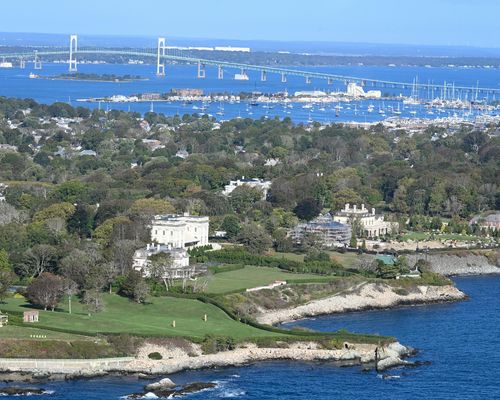
One of the most closely watched real estate developments in Rhode Island is now just weeks away from becoming reality.
Beginning July 1, 2026, the state will officially implement its new Non-Owner Occupied Property Tax, a measure that will impose an additional annual tax on certain residential properties assessed above $1 million that are not used as a primary residence. As the effective date approaches, the policy is drawing increasing attention from homeowners, investors, real estate professionals, and local officials across the state.
While supporters view the tax as a tool to address Rhode Island's housing shortage and generate funding for housing initiatives, critics argue it could have unintended consequences for investment, seasonal communities, and coastal real estate markets.
The debate has become one of the most significant housing-policy stories in Rhode Island heading into the summer.
What the New Tax Does
The new law applies to residential properties assessed at more than $1 million that are not occupied by their owners for at least 183 days during the year and do not qualify for certain rental exemptions. The tax officially takes effect on July 1, 2026. (per the Rhode Island Division of Taxation)
Under the law, owners of qualifying properties will pay an additional state tax on the portion of a property's assessed value that exceeds $1 million.
The tax rate is set at $2.50 for every $500 of assessed value above the $1 million threshold. According to state guidance, a non-owner-occupied home assessed at $1.2 million would owe approximately $1,000 annually under the new tax. A property assessed at $3 million would owe roughly $10,000 annually. (per the Rhode Island Division of Taxation)
State officials have emphasized that the tax is not intended to apply to primary residences. Properties rented for at least 183 days during the year may also qualify for exemptions under the law. (per the Rhode Island Division of Taxation)
Why Rhode Island Created the Tax
The policy emerged from a broader debate over housing affordability and housing supply.
Supporters argue that Rhode Island has seen a growing number of high-value homes used primarily as seasonal residences or vacation properties, particularly in coastal communities. At the same time, local residents continue struggling with limited housing inventory, rising home prices, and affordability challenges.
Lawmakers backing the measure say the tax is intended to encourage better utilization of existing housing stock. By imposing an additional cost on homes that sit vacant for much of the year, policymakers hope some owners will choose to either occupy the properties more frequently or make them available for long-term or short-term rental use. (per the Rhode Island Division of Taxation)
The measure is also expected to generate additional revenue that can be directed toward housing-related initiatives.
Coastal Communities Are Watching Closely
While the law applies statewide, much of the attention has focused on Rhode Island's coastal markets.
Communities such as Newport, Westerly, Narragansett, Charlestown, and other shoreline destinations have seen substantial growth in second-home ownership over the past decade. Many of these areas feature high concentrations of properties that exceed the $1 million threshold and are occupied only part of the year.
As a result, many industry professionals believe the greatest impact will be felt in Rhode Island's luxury and vacation-home markets.
Some property owners are currently evaluating whether to increase occupancy, expand rental activity, or simply absorb the additional cost. Others are reviewing ownership structures and usage patterns to determine whether they qualify for exemptions.
For many seasonal homeowners, the coming months represent a period of adjustment as they prepare for the new requirements.
Why Some Call It the "Taylor Swift Tax"
Although the law officially carries the name Non-Owner Occupied Property Tax, it has become widely known as the "Taylor Swift Tax."
The nickname stems from the pop superstar's well-known waterfront estate in Watch Hill, one of Rhode Island's most prominent luxury properties. While the law does not specifically target any individual homeowner, the association has helped bring national attention to the measure and its potential impact on high-value second homes. (per Realtor.com and multiple industry reports)
The nickname may be catchy, but the policy itself affects a much broader group of property owners throughout Rhode Island.
As luxury home values have increased dramatically in recent years, a growing share of second homes now exceed the $1 million assessment threshold.
Real Estate Industry Concerns
Not surprisingly, the tax has generated significant discussion within Rhode Island's real estate industry.
Some brokers and property owners worry the additional tax burden could discourage investment or reduce demand for second homes in certain markets. Others have expressed concern about long-term impacts on vacation-home communities that depend heavily on seasonal residents.
Industry groups have also questioned whether taxing second homes will meaningfully increase housing availability for year-round residents.
Critics argue that many luxury vacation properties are unlikely to become attainable housing options for average Rhode Islanders regardless of tax policy. They also point out that many second-home owners already contribute substantially through local property taxes, spending, and economic activity.
These concerns have fueled ongoing debate about whether the policy will ultimately achieve its intended goals.
Supporters Say Housing Requires New Solutions
Supporters of the tax see the issue differently.
Housing advocates argue that Rhode Island's housing shortage has reached a point where policymakers must explore multiple strategies to increase housing availability and affordability.
They contend that properties sitting vacant for large portions of the year represent an underutilized housing resource, particularly in communities facing severe inventory shortages.
From their perspective, the tax creates a financial incentive for owners to either use their properties more actively or contribute to the rental housing supply.
Supporters also note that the law includes exemptions for properties rented for at least 183 days annually, meaning owners who actively participate in the housing market may avoid the tax altogether.
What Happens Next
With the July 1 implementation date approaching, attention is now shifting from legislative debate to practical application.
Property owners, tax professionals, real estate agents, and attorneys are reviewing state guidance and determining how the new rules will affect individual properties.
The first year of implementation will likely serve as a test case for how the tax influences owner behavior and whether it produces the outcomes lawmakers intended.
Questions remain about whether the measure will increase rental inventory, encourage more year-round occupancy, generate meaningful housing revenue, or alter purchasing decisions in Rhode Island's luxury markets.
Those answers may not become clear for several years.
Discussion
Thoughts from readers and local market watchers.