



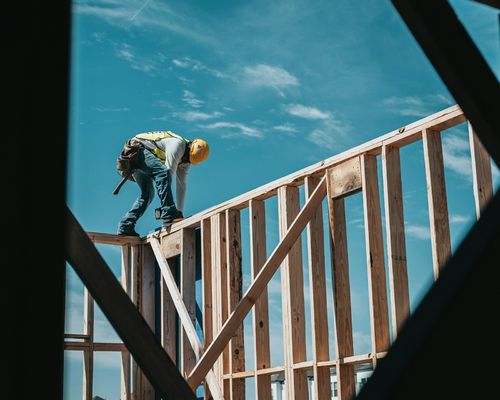
Developers Warn Regulatory Delays Are Driving Up Costs and Worsening the State’s Housing Shortage
As Pennsylvania lawmakers search for solutions to the state's growing housing affordability crisis, one message has emerged repeatedly from builders, developers, and housing industry leaders: Pennsylvania is making it too difficult, too expensive, and too time-consuming to build new homes.
The argument has become one of the most significant themes in the Commonwealth's ongoing housing debate. Industry representatives say the problem is not a lack of demand, a lack of land, or even a lack of interest from builders. Instead, they argue that a complex web of regulations, approvals, permitting requirements, and zoning restrictions is slowing construction at a time when Pennsylvania desperately needs more housing.
The issue received renewed attention during recent legislative hearings in Harrisburg, where developers testified that residential projects often spend years navigating the approval process before a single foundation is poured.
As Pennsylvania faces mounting concerns about affordability, rising home prices, and a shortage of starter homes, builders are increasingly warning that regulatory barriers may be contributing to the very problems policymakers are trying to solve.
A Long Road From Proposal to Construction
For many homebuilders, the biggest challenge begins long before construction crews arrive on site.
Before a project can move forward, developers often must obtain approvals from multiple agencies and governing bodies. Depending on the location and size of the project, that process may involve local planning commissions, zoning hearing boards, municipal councils, county agencies, environmental regulators, transportation departments, utility providers, engineering reviews, stormwater management assessments, and public hearings.
Each step can take months to complete.
In some cases, a project may receive approval from one agency only to encounter delays from another. Additional revisions, studies, legal reviews, or public objections can further extend the timeline.
Builders told lawmakers that navigating this process has become increasingly complicated over the past decade.
Many developers now view projects receiving final approvals within two years as unusually fortunate outcomes.
For larger developments, timelines can stretch significantly longer.
The challenge, builders say, is that housing demand continues growing while projects remain tied up in regulatory review.
Time Is Money in Residential Development
Developers argue that every month of delay adds new costs to a project.
Land must continue to be financed while approvals are pending. Loans accrue interest. Engineering consultants, attorneys, architects, and planners continue billing for their work. Construction material prices may rise unexpectedly. Labor costs can increase as market conditions change.
By the time a project receives final approval, the financial assumptions that existed when planning began may no longer be valid.
The cumulative effect can dramatically increase the final cost of development.
Industry groups argue that those higher costs eventually appear in the price of homes.
Builders maintain that many of today's affordability problems are not simply the result of market demand but are also influenced by the cost of navigating lengthy and uncertain approval systems.
The longer a project takes to move forward, the more expensive it becomes to build.
The Disappearing Starter Home
One of the most concerning consequences of these rising costs is the decline of entry-level housing.
Throughout Pennsylvania, builders report that starter homes have become increasingly difficult to develop economically.
The reason is straightforward.
Many regulatory expenses apply regardless of whether a home sells for $250,000 or $750,000. Infrastructure requirements, permitting costs, engineering studies, legal fees, utility connections, and approval expenses often remain relatively fixed regardless of the home's final selling price.
As development costs rise, builders may find that constructing higher-priced homes offers a better financial return than building affordable entry-level housing.
The result is a market producing fewer starter homes and more upscale housing.
For first-time buyers, this trend has created growing challenges.
Younger households entering the market often discover that affordable options are limited, particularly in suburban communities where inventory remains tight and competition remains strong.
Housing advocates warn that the shrinking supply of starter homes is making homeownership increasingly difficult for many Pennsylvanians.
Younger Buyers Are Feeling the Pressure
The impact is particularly noticeable among younger adults and first-time buyers.
Just a decade ago, many middle-income households could realistically expect to purchase a starter home within a few years of entering the workforce. Today, that path has become significantly more difficult.
Rising home prices, higher mortgage rates, increased insurance costs, and larger down-payment requirements have all created additional barriers.
The shortage of entry-level inventory only compounds the problem.
In many Pennsylvania markets, buyers searching for affordable homes are competing against multiple offers, cash buyers, investors, or households willing to move farther from employment centers.
As affordability continues to decline, some younger residents are postponing homeownership entirely.
Others remain in rental housing longer than previous generations.
Housing economists increasingly warn that these trends could have long-term implications for household wealth creation and economic mobility.
Local Governments Defend Their Role
Not everyone agrees that reducing regulations is the answer.
Local officials argue that planning reviews and zoning regulations exist for important reasons.
Communities must ensure that new developments can be supported by roads, schools, water systems, sewer infrastructure, emergency services, and environmental protections.
Residents often expect local governments to carefully evaluate how new projects may affect traffic patterns, stormwater management, public safety, and neighborhood character.
Many municipal leaders contend that eliminating reviews or weakening zoning authority could create unintended consequences that communities would ultimately have to manage.
For this reason, the debate has become less about whether regulations should exist and more about whether the current system is appropriately balanced.
Supporters of reform say Pennsylvania can maintain oversight while reducing unnecessary delays.
Critics worry that streamlining approvals could undermine local decision-making and community planning.
Housing Is Becoming an Economic Issue
What makes the debate particularly significant is that housing affordability is increasingly being viewed as an economic development issue rather than solely a housing issue.
Business leaders have begun warning that housing shortages can affect workforce growth and business recruitment.
Employers looking to expand often evaluate whether workers can find affordable housing near employment centers. When housing becomes scarce or expensive, attracting and retaining employees becomes more difficult.
Pennsylvania's efforts to attract investment in advanced manufacturing, technology, logistics, energy production, and artificial intelligence infrastructure have intensified concerns about future housing availability.
State officials increasingly recognize that economic growth and housing supply are closely linked.
Without enough housing, future workforce expansion could become more difficult.
A Growing Political Debate
The discussion now unfolding in Harrisburg is likely to shape Pennsylvania's housing policy for years to come.
Lawmakers are considering a variety of proposals aimed at increasing housing production, reducing approval timelines, modernizing zoning regulations, and encouraging construction of workforce housing.
The challenge will be finding a balance between protecting local authority and creating conditions that allow more homes to be built.
Builders argue that meaningful reform is necessary if Pennsylvania hopes to address its housing shortage.
Local officials insist that communities must retain the ability to guide development responsibly.
What both sides increasingly agree on is that housing affordability has become one of Pennsylvania's most urgent policy challenges.
As lawmakers continue debating potential solutions, the question at the center of the discussion remains straightforward: can Pennsylvania make it easier to build housing without sacrificing the protections and oversight that communities expect?
The answer could determine not only the future of homeownership in Pennsylvania but also the state's long-term economic competitiveness in the years ahead.
Discussion
Thoughts from readers and local market watchers.