



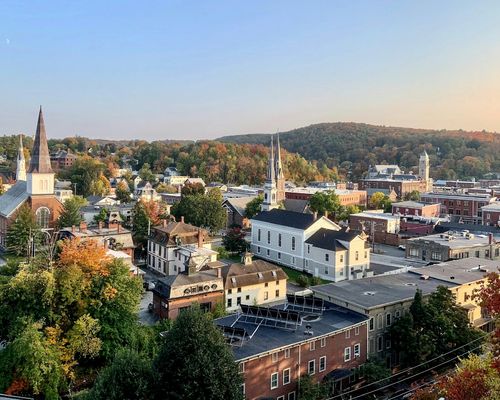
July 1, 2026, marks an important milestone for Vermont's housing market. After months of debate, committee hearings, amendments, and final approval during the 2026 legislative session, several housing- and property-related laws are now officially in effect.
While lawmakers spent much of the past year discussing how to address Vermont's persistent housing shortage, attention is now shifting from legislation to implementation. Municipalities, developers, property owners, and real estate professionals across the state are beginning to work under a new legal framework that aims to encourage housing construction while continuing to balance environmental protections and community planning.
For many communities, July 1 represents the beginning of the next phase in Vermont's long-term effort to increase housing supply and improve affordability.
From Legislative Debate to Real-World Implementation
The 2026 legislative session was dominated by housing policy.
Lawmakers repeatedly identified housing as one of Vermont's biggest economic challenges, citing shortages of workforce housing, affordable rental units, and homes for first-time buyers. Business organizations, employers, municipalities, and housing advocates all argued that the lack of available housing had become a barrier to workforce recruitment, business expansion, and population growth.
After months of negotiations, lawmakers approved a package of reforms intended to make housing development more predictable and reduce unnecessary obstacles that have slowed construction in recent years.
Now that those measures have officially taken effect, communities throughout Vermont are beginning the process of putting them into practice.
Continued Implementation of Act 181
One of the most closely watched components of the new framework is the continued implementation of Act 181, Vermont's broad housing and land-use reform initiative.
Although portions of the legislation were revised before final passage—including changes affecting environmental mapping requirements—the law continues to serve as one of the state's primary tools for encouraging additional housing development.
The legislation is intended to modernize Vermont's development process by directing growth toward areas that already have infrastructure while preserving environmentally sensitive land elsewhere.
Supporters believe this approach can help communities accommodate new housing without encouraging uncontrolled sprawl.
As municipalities begin applying the updated rules, developers will gain a clearer understanding of how future housing projects will move through the planning and permitting process.
Expanded Support for Accessory Dwelling Units
Another important part of Vermont's housing strategy involves Accessory Dwelling Units (ADUs).
State leaders continue promoting ADUs as one of the fastest and most cost-effective ways to increase housing supply because they allow homeowners to create additional living space on existing residential properties.
These smaller housing units can provide rental opportunities for local workers, aging family members, young adults entering the housing market, or residents seeking more affordable living options.
Programs such as the Vermont Housing Improvement Program (VHIP) continue supporting many of these projects through grants that help property owners construct or renovate accessory apartments.
Housing advocates view ADUs as an important piece of the overall solution because they can add housing without requiring large-scale subdivisions or major new infrastructure investments.
Housing Growth Areas Begin Taking Shape
Another significant change involves the continued development of Housing Growth Areas.
Communities across Vermont are working to identify locations where future housing development can occur more efficiently.
These designated areas are generally intended to be located near existing infrastructure such as roads, water systems, wastewater service, schools, and commercial centers. By focusing growth in these locations, state leaders hope to reduce development costs while making better use of existing public investments.
Earlier this year, lawmakers revised portions of the Housing Growth Area framework after concerns that the original definitions would have limited the amount of land eligible for streamlined development.
Those revisions expanded opportunities for municipalities to designate additional housing growth areas while continuing to encourage compact development around downtowns and village centers.
Over the coming months, many communities will continue refining maps and local plans that identify where future residential growth should occur.
Reducing Barriers to Construction
At the heart of the new reforms is a broader effort to make housing development more achievable.
For years, developers, builders, and housing organizations have argued that complicated permitting processes, infrastructure limitations, high construction costs, and regulatory uncertainty have slowed housing production across Vermont.
The updated framework does not eliminate those challenges, but it is designed to reduce some of the barriers that have made housing projects more difficult to complete.
State leaders hope that clearer regulations, expanded development opportunities, and continued investment in housing programs will encourage more projects to move forward over the next several years.
Why This Matters for Real Estate Professionals
For real estate professionals, July 1 is more than just the effective date of new legislation.
It signals the beginning of a period in which housing policy may increasingly influence local market conditions.
Communities that successfully establish Housing Growth Areas may attract additional residential development. Property owners interested in creating Accessory Dwelling Units may find new opportunities through state-supported programs. Developers may begin pursuing projects that previously faced greater regulatory uncertainty.
Although these changes will not immediately solve Vermont's housing shortage, they have the potential to gradually increase inventory over time.
That could influence everything from new construction activity and land values to housing affordability and buyer options.
Challenges Still Remain
Despite the new laws taking effect, housing leaders caution that Vermont's challenges are far from over.
Construction costs remain elevated. Labor shortages continue affecting builders across the state. Financing remains more expensive than it was several years ago, and many communities still face infrastructure constraints that limit growth.
Housing advocates also note that increasing supply will take time.
Planning new developments, securing permits, financing projects, and completing construction often requires several years. As a result, the full impact of the 2026 reforms is unlikely to be felt immediately.
Instead, July 1 marks the beginning of what many expect will be a gradual transition toward increased housing production.
Discussion
Thoughts from readers and local market watchers.