



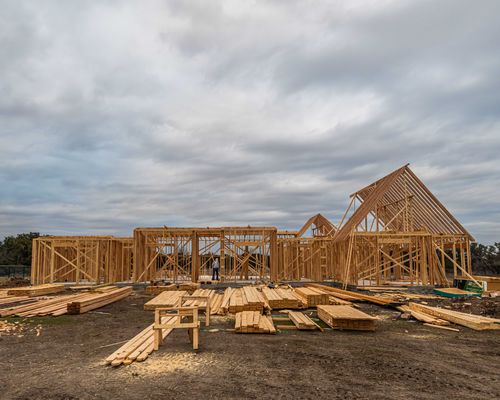
America's housing shortage isn't disappearing—but the pace of new home construction continues to lose momentum.
The latest figures from the U.S. Commerce Department show that single-family housing starts edged down 0.2% in June to a seasonally adjusted annual rate of 895,000 homes, marking the third consecutive monthly decline. At the same time, builders pulled back on future projects, with single-family building permits falling 2.4% to their lowest level in 10 months, signaling that construction activity is likely to remain subdued through the second half of the year.
The slowdown reflects a housing market caught between strong long-term demand and increasingly difficult short-term conditions.
For much of the past several years, builders have worked to close the nation's housing supply gap. But that effort has become more challenging as mortgage rates remain above 6%, financing costs stay elevated, and affordability continues to discourage many prospective buyers from entering the market.
While demand for housing remains fundamentally strong, fewer buyers are able—or willing—to purchase new homes at today's borrowing costs.
Builders are also facing higher land prices, labor shortages, and elevated material costs, all of which continue squeezing profit margins. At the same time, inventories of completed but unsold new homes have grown in many markets, prompting some builders to slow the pace of new construction until demand stabilizes.
At first glance, the broader housing-starts report appeared encouraging. Total housing starts increased 19% in June, largely because of a surge in multifamily apartment construction. However, economists say that figure masks the more important trend.
The single-family market remains the backbone of U.S. homeownership, and continued weakness in that segment suggests many households are still being priced out of buying despite modest improvements in inventory.
The slowdown does not necessarily indicate that builders have become pessimistic about the long-term outlook.
Instead, many are taking a more cautious approach while waiting for better market conditions. Incentives such as mortgage-rate buydowns, closing-cost assistance, and selective price reductions remain common across much of the country as builders compete for a smaller pool of qualified buyers.
There is also cautious optimism surrounding the recently enacted 21st Century ROAD to Housing Act, one of the most significant federal housing reforms in decades.
The new law aims to streamline portions of the development process, modernize federal housing programs, and reduce regulatory barriers that have slowed residential construction for years. If implemented successfully, those changes could help increase housing production over time and improve affordability by making it easier to build new homes.
However, industry experts caution that the benefits will not be immediate.
Federal agencies must first develop and implement the new regulations, and builders will still face ongoing challenges related to labor availability, financing, local zoning, and construction costs. Even under the most optimistic scenarios, it will likely take years before the legislation has a meaningful impact on national housing supply.
For now, the latest construction data reinforces a broader trend that has defined much of 2026.
The housing market is not suffering from a lack of demand—it is struggling with affordability.
Millions of Americans still want to buy a home, but elevated mortgage rates and high monthly payments continue limiting purchasing power. Until financing costs ease or housing supply expands enough to improve affordability, builders are expected to remain measured in their approach to new development.
The June report underscores that reality. Despite a persistent need for more housing nationwide, builders are slowing construction in response to current market conditions, illustrating just how closely the pace of new homebuilding is tied to affordability and consumer confidence.
Discussion
Thoughts from readers and local market watchers.