



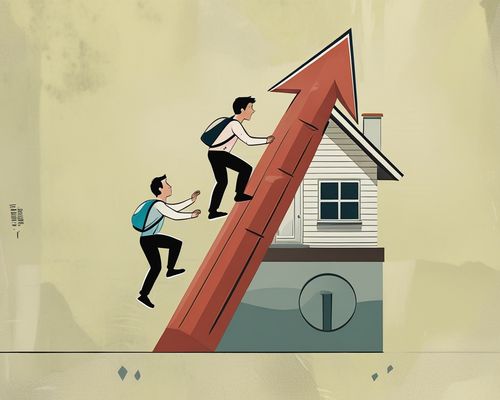
The U.S. housing market is facing renewed pressure as mortgage rates climb to their highest level in more than a year, making homeownership increasingly difficult for millions of Americans and prompting many prospective buyers to delay their plans.
According to the Mortgage Bankers Association (MBA), the average rate on a 30-year fixed mortgage increased to 6.81%, the highest level in over a year. The jump came after a selloff in the U.S. bond market pushed Treasury yields higher, increasing borrowing costs across the housing market. As a result, mortgage activity weakened almost immediately. Total mortgage applications declined 2.9%, while both purchase and refinance applications slipped below last year's levels, underscoring how sensitive buyers remain to changes in interest rates.
The latest increase is another reminder that today's housing market is being driven less by a lack of demand and more by affordability. Many Americans still want to buy a home, but higher financing costs have significantly reduced purchasing power. Even relatively small increases in mortgage rates can translate into substantially higher monthly payments, making it more difficult for households to qualify for loans or stay within their budgets.
MarketWatch reports that the recent rise in rates adds roughly $80 to the monthly payment on a median-priced home, or approximately $28,000 in additional payments over the life of a typical 30-year mortgage. For many first-time buyers, those added costs are enough to delay purchasing altogether or force them to search for smaller homes and less expensive markets.
The pressure on affordability comes despite signs that the housing market itself is becoming more balanced. Housing inventory has gradually improved over the past year, giving buyers more choices than they have had since the pandemic housing boom. Sellers are becoming more willing to negotiate on price, offer closing-cost assistance, or provide mortgage-rate buydowns to attract buyers. Under normal circumstances, those trends would likely support stronger sales.
Instead, elevated borrowing costs continue to outweigh many of those improvements.
Economists say much of the recent increase in mortgage rates can be traced back to broader economic forces rather than conditions within the housing market itself. Persistent inflation concerns, elevated energy prices, and geopolitical tensions have pushed investors toward higher bond yields. Because mortgage rates closely follow the yield on the 10-year U.S. Treasury note, those market movements have quickly translated into more expensive home loans.
This has created an unusual environment where inventory is improving, home-price appreciation has slowed, and sellers are becoming more flexible, yet overall housing activity remains subdued because financing costs remain elevated.
Housing economists emphasize that demand has not disappeared. Instead, many buyers have entered a waiting period, hoping mortgage rates stabilize or decline before making one of the largest financial decisions of their lives. That hesitation is reflected in declining mortgage application volumes, which remain below both last week's and last year's levels despite the traditional summer homebuying season.
Looking ahead, the direction of mortgage rates will largely depend on inflation and the bond market rather than the Federal Reserve alone. While any improvement in inflation could eventually ease pressure on borrowing costs, economists caution that meaningful relief may not come quickly if energy prices remain elevated and financial markets continue pricing in inflation risks.
For now, the housing market remains caught between improving supply and worsening affordability.
Buyers have more homes to choose from than they have in years, and sellers are becoming increasingly willing to negotiate. Yet until mortgage rates begin moving lower, affordability is likely to remain the defining challenge of the market. The result is a housing sector that is gradually becoming more balanced—but also one where many Americans are still finding it difficult to turn homeownership into a reality.
Discussion
Thoughts from readers and local market watchers.