




The U.S. housing market is showing fresh signs of weakness as home sales fell sharply in July, with high prices, elevated mortgage rates and growing economic uncertainty keeping many prospective buyers from moving forward.
According to new data from Redfin, U.S. home sales fell 4.1% in July from June, pushing sales to their lowest level in nearly two years. Pending home sales also declined 2.5%, reaching their lowest level since December, suggesting that the slowdown is not limited to completed transactions. Buyer demand itself is weakening.
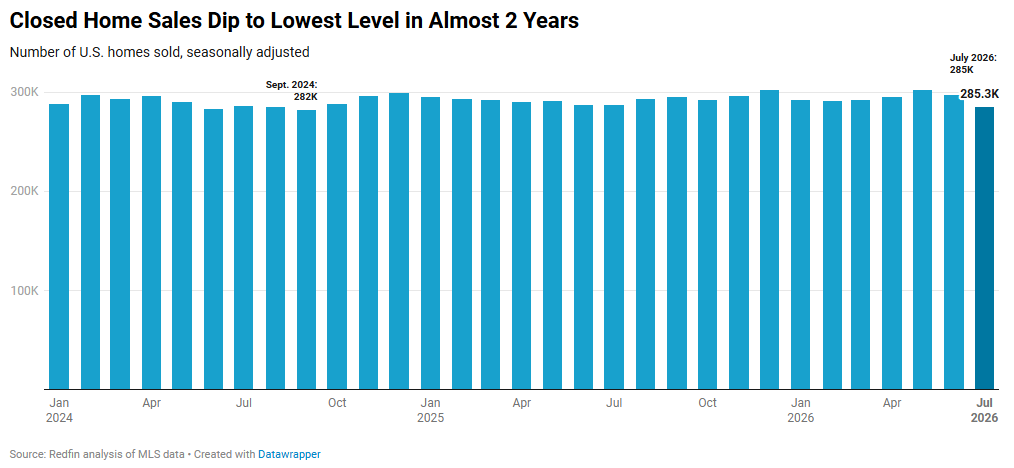
At the same time, home prices remain stubbornly high. The median U.S. home-sale price reached $407,730 in July, up 3.2% from a year earlier and representing the highest July price on record. Mortgage rates averaged approximately 6.54% during the month, creating a difficult combination for households trying to enter the market.
That combination is becoming one of the biggest problems facing buyers. Even though the housing market has more inventory than it did during the pandemic-era shortage, the cost of purchasing a home remains high enough to keep many households on the sidelines. Buyers are finding more properties to choose from, but they are also confronting monthly payments that remain far above what many households can comfortably afford.
The weakness is particularly pronounced in some major markets. Texas and Seattle have seen some of the sharpest declines in demand, with high housing costs weighing on buyers in Texas and layoffs and uncertainty in the technology sector adding pressure in Seattle. Meanwhile, markets such as West Palm Beach, San Francisco and Milwaukee have continued to perform better, demonstrating how increasingly divided the national housing market has become.
Sellers are also becoming more cautious. New listings fell to their lowest level in nearly two years, as some homeowners decided against putting their properties on the market amid weaker demand. For homeowners who locked in mortgage rates at historically low levels during the pandemic, selling can also mean giving up a cheap mortgage and taking on a new loan at today's much higher rates.
That dynamic is helping prevent the market from experiencing a broad price decline, even as sales weaken. Buyers are pulling back, but many potential sellers are staying put as well.
The result is an increasingly unusual housing market in which buyers have more negotiating power but still lack sufficient purchasing power. Homes are taking longer to sell in many areas, price reductions are becoming more common, and sellers are offering concessions to attract buyers. Yet the combination of home prices above $400,000 nationally and mortgage rates around the mid-6% range continues to make homeownership difficult for millions of Americans.
The latest data also reinforces the growing importance of local market conditions. A national slowdown does not necessarily mean prices are falling everywhere. Some markets continue to see strong demand, while others are experiencing much weaker sales and greater buyer leverage.
For now, the housing market appears to be stuck between improving supply and limited affordability. More homes are available, but buyers still need cheaper financing to turn that inventory into actual sales.
If mortgage rates eventually move lower, the buyers currently waiting on the sidelines could return quickly. Until then, economists expect housing activity to remain relatively subdued, with affordability continuing to determine how much momentum the market can regain during the second half of 2026.
Discussion
Thoughts from readers and local market watchers.