



Vermont is making one of its most important housing programs a permanent part of the state's budget, giving communities and property owners a more dependable source of funding to create and preserve housing.
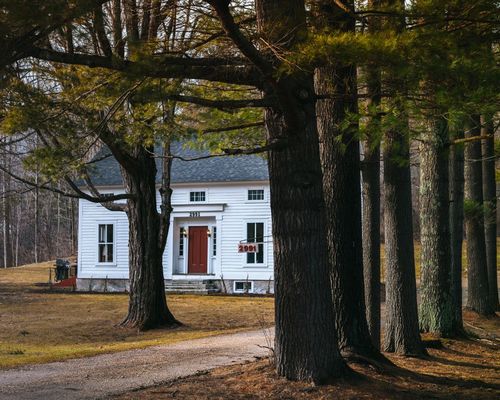
Governor Phil Scott highlighted the change this week at a recently renovated fourplex in Bradford, where state funding helped transform a previously vacant property into housing. The visit brought attention to the Vermont Housing Improvement Program (VHIP), which will now receive $4 million in annual base funding after lawmakers approved permanent support during the 2026 legislative session.
The decision is significant because VHIP has traditionally depended heavily on temporary funding. Making the program part of the state's ongoing budget provides greater certainty for property owners, developers, municipalities, and housing organizations planning projects.
Since the program was created during the pandemic, VHIP has provided nearly $49 million in grants and forgivable loans, helping create or renovate 1,229 housing units across Vermont. The program supports a range of smaller-scale projects, including vacant apartment renovations, multifamily properties, additions, and accessory dwelling units (ADUs).
The Bradford fourplex demonstrates the type of project VHIP is designed to support. Developer Noah Ponzio received a $180,000 VHIP grant to renovate the property after it had become vacant and uninhabitable. The completed building now provides four apartments, with rents ranging from approximately $1,300 to $1,800 for two- and three-bedroom units. The apartments are now occupied by local workers, including people employed in education, manufacturing, and the automotive industry.
Projects like this are particularly important in Vermont because adding housing does not always require constructing an entirely new development. Thousands of properties across the state have potential for rehabilitation, conversion, or expansion. Programs that help property owners overcome renovation costs can bring those units back into the market faster than some large-scale developments.
The permanent funding also comes as Vermont continues facing a substantial housing shortage. State officials and housing advocates have increasingly emphasized that solving the shortage will require a combination of new construction and rehabilitation of existing properties.
For real estate professionals, VHIP could become an increasingly important tool for identifying opportunities. Vacant multifamily buildings, older properties that require substantial improvements, and homes with potential for ADUs may become more attractive when financial assistance is available to offset rehabilitation expenses.
The program also fits into Vermont's broader housing strategy. State policymakers have spent much of 2026 working on land-use reforms, Housing Growth Areas, infrastructure financing, and other measures intended to increase housing production. Permanent VHIP funding adds another piece to that effort by focusing specifically on properties that can be improved or converted into usable housing.
However, the program will not solve Vermont's housing shortage on its own. Construction costs, labor availability, financing conditions, permitting, and infrastructure limitations continue to affect development throughout the state.
Still, the decision to provide VHIP with $4 million every year represents a meaningful change. Rather than treating housing rehabilitation as a temporary response to a crisis, Vermont is establishing it as a continuing part of its housing policy.
For communities searching for practical ways to add housing, that stability could matter just as much as the funding itself.
As Vermont moves through the second half of 2026, the focus is increasingly shifting from passing housing legislation to putting money and policy into projects that produce actual homes. VHIP's permanent funding gives property owners and developers another avenue to do exactly that, while helping return vacant and underused properties to productive use.
For Vermont's real estate market, the message is clear: housing policy is increasingly focused not only on building new homes, but also on finding ways to make existing properties part of the state's future housing supply.
Discussion
Thoughts from readers and local market watchers.