



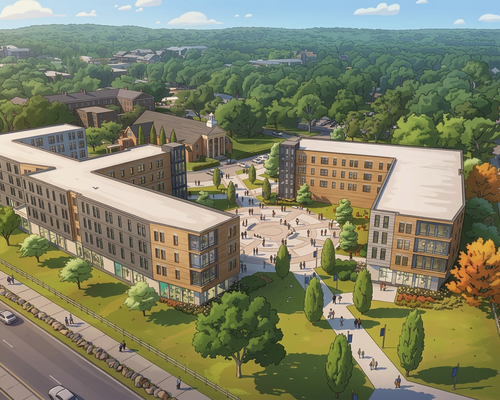
Merrimack College has opened a $90 million student housing development in North Andover, adding hundreds of new beds as the college continues to grow. The project is also an example of how public-private partnerships are helping Massachusetts institutions expand their residential capacity.
The new Essex and Shawsheen residence halls were developed through a partnership between Merrimack College and Greystar. Together, the buildings add approximately 140,000 square feet of space and 540 student beds, providing additional housing for the 2026-27 academic year.
The four-story buildings include a mix of traditional residence rooms and suite-style accommodations, along with student amenities and more than 12,600 square feet of academic space. The development is designed to give students both residential and educational facilities in one location.
Merrimack’s investment comes as the college has experienced significant enrollment growth. With more students comes greater demand for campus housing, making new residential construction an increasingly important part of university expansion.
A Partnership Model Worth Watching
The project is particularly notable because it was delivered through a public-private partnership involving Merrimack, Greystar and Collegiate Housing Foundation. Tax-exempt bonds issued through MassDevelopment were also used to help finance the development.
That approach could become more common as colleges look for ways to build needed housing while managing rising construction costs. Private developers can provide specialized expertise and financing capabilities, while universities bring a built-in demand for housing.
The project also has implications for the surrounding North Andover real estate market. By adding 540 beds on campus, Merrimack can accommodate more students within its own housing system, potentially reducing some pressure on nearby rental properties.
For Massachusetts real estate professionals, the development highlights an important trend: universities are becoming increasingly significant players in the housing market. As enrollment grows and communities struggle to add conventional housing, institutional developments such as Merrimack’s could provide another source of residential growth.
The $90 million project will not solve Massachusetts’ larger affordability challenges, but it demonstrates how partnerships between institutions and private developers can move substantial housing projects from planning to completion. With demand for housing remaining high across the state, student housing and other specialized residential developments will be worth watching closely.
Discussion
Thoughts from readers and local market watchers.