



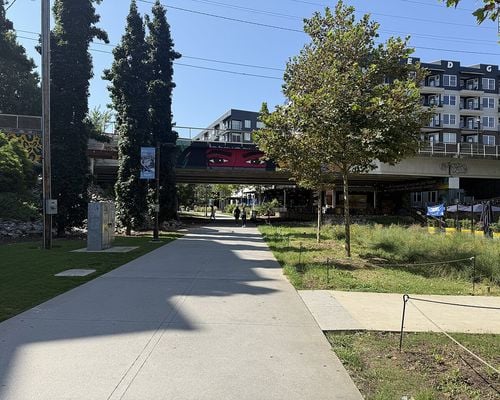
The Atlanta BeltLine has reached a major milestone in its long-running development, securing all of the land rights needed to complete its planned 22-mile mainline trail loop. After roughly two decades of property negotiations and acquisitions, Atlanta BeltLine, Inc. announced that the final piece of the real estate puzzle was secured, clearing a major hurdle for the project’s remaining construction.
The final acquisition involved a 0.2-acre vacant parcel in Atlanta’s Blandtown neighborhood. The property, located on English Street, closed on September 22 and was purchased for approximately $550,000, according to Atlanta BeltLine officials and local reports. Although relatively small, the parcel was essential because it filled a remaining gap in the planned Northwest Trail alignment.
A Two-Decade Land Assembly
Reaching this point required an extensive real estate effort involving nearly 200 closings, more than $200 million in property purchases, and over 270 acres of land. The acquisitions included approximately 90 property purchases and 230 easements, with individual transactions ranging from a tiny 15-square-foot parcel to a 65-acre tract. The BeltLine negotiated with railroads, utilities, major corporations, homeowners, apartment complexes and other property owners along the route.
The Northwest Trail presented one of the most complicated sections of the project because there was no abandoned railroad corridor available to serve as a ready-made route. Instead, BeltLine planners worked with residents, businesses and other property owners to establish a new alignment through existing neighborhoods and commercial areas. The completed Northwest Trail is planned to extend approximately 4.3 miles, connecting the Blandtown area with Lindbergh and helping close the gap between the western and northeastern portions of the loop.
Development Impact Beyond the Trail
The BeltLine has become much more than a transportation and recreation project. Its development has helped reshape surrounding neighborhoods and attract significant private investment. A recent economic impact analysis cited by BeltLine officials found approximately $14.2 billion in private investment within the BeltLine Planning Area, with development activity frequently following new trail openings.
That development has also created challenges around housing affordability and displacement. In response, the BeltLine has assembled approximately 94 acres for affordable housing and commercial development. The organization says 4,555 affordable housing units have been created or preserved within the BeltLine Tax Allocation District, representing about 81% of its goal of 5,600 units by 2030.
Construction Now Moves Into the Next Phase
With the necessary land secured, attention now shifts toward completing the remaining trail segments. Nearly 17 miles of the mainline trail were open as of June, and construction is underway on portions of the Northwest Trail, including a segment that will feature a pedestrian bridge over Northside Drive. The full 22-mile loop remains targeted for completion by 2030.
For Atlanta’s real estate market, the milestone provides greater certainty around the BeltLine’s long-term footprint. As additional trail segments are completed, neighborhoods along the remaining corridor could see continued interest in residential, commercial, mixed-use and affordable housing projects. The BeltLine itself also plans to continue strategically acquiring property for housing, commercial space, trail improvements and connections to other parts of Atlanta’s transportation network.
The final land acquisition marks the end of one of the BeltLine’s most complicated development phases and the beginning of its final push toward a complete 22-mile loop. With the real estate foundation now in place, Atlanta BeltLine, Inc. can focus more directly on construction and the broader development, housing and connectivity goals surrounding one of Atlanta’s most significant urban redevelopment projects.
Discussion
Thoughts from readers and local market watchers.